
Picture this: you’re standing in a Kia showroom on a Saturday afternoon, checkbook ready, heart racing. The all-new Seltos 2026 gleams under the lights, looking like it just rolled off a sci-fi movie set. Then your phone buzzes. It’s your friend saying, Hold on, have you checked out the Creta? Suddenly, what seemed like a done deal becomes the biggest decision of your year.
Trust me, I’ve been there, and after spending weeks researching both these midsize SUV champions, I’m about to reveal seven shocking differences that most salespeople won’t tell you. Whether you’re a tech geek drooling over screens, a family buyer prioritizing space, or a performance enthusiast chasing thrills, this Kia Seltos 2026 vs Hyundai Creta comparison will save you from buyer’s remorse. Let’s dive deep into the battle.
Kia Seltos 2026 vs Hyundai Creta: The Battle of Dimensions and Design
Here’s where things get interesting, and I mean really interesting. The new Seltos isn’t just a facelift; it’s a completely reimagined beast.
Size Matters: Seltos Gets Significantly Bigger
The Kia Seltos 2026 measures a commanding 4460mm in length, 1830mm in width, with a 2690mm wheelbase. Compare that to the Hyundai Creta’s 4330mm length, 1790mm width, and 2610mm wheelbase. We’re talking about 130mm more length, 40mm extra width, and an 80mm longer wheelbase for the Seltos.
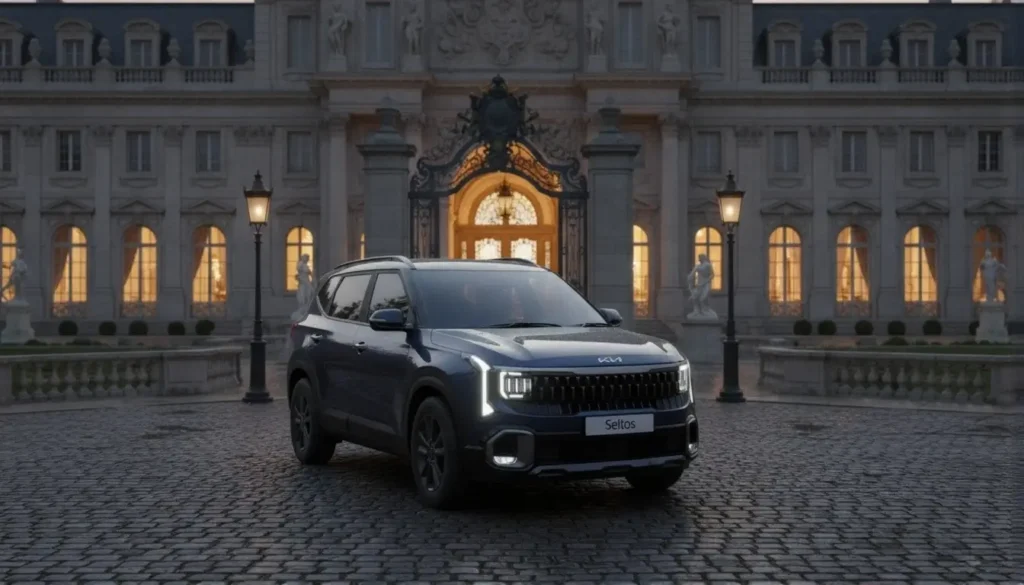
That’s not marginal, that’s massive. What does this mean for you? More rear legroom, a bigger boot, and a presence that makes the Creta look compact. My colleague Rajesh, who owns a previous-gen Seltos, sat in the new one and his exact words were, dude, did they stretch this thing on a torture rack? The cabin feels like a segment above.


Design Philosophy: Boxy Aggression vs Sophisticated Elegance
The Seltos 2026 adopts what Kia calls the Digital Tiger Face, a boxy, vertical, aggressive stance inspired by the Telluride. You get ice cube LED projection headlamps, star map LED DRLs, and connected tail lamps that scream modern SUV. The Creta, meanwhile, sticks to its parametric jewel grille and refined, sophisticated curves. It’s handsome, no doubt, but the Seltos looks like it hit the gym hard and came back ready to dominate. If you want heads turning, the Seltos wins this round. If you prefer understated elegance that ages gracefully, the Creta holds its ground.
Interior and Comfort: Where Luxury Meets Practicality
Step inside both SUVs and you’ll immediately notice the tech war heating up.
Cabin Space and Seating Comfort
Thanks to those increased dimensions, the Seltos 2026 offers noticeably more second-row legroom and shoulder space. The seats in both vehicles feature quality upholstery, but the Seltos goes a step further with its 10-way power-adjustable driver seat with memory function and auto-retract feature, something the Creta doesn’t offer across all variants. Both get ventilated front seats, but the Seltos adds reclining rear seats with a 60:40 split as standard on higher trims. Real-world advantage? Long highway drives become less tiring in the Seltos.
Dashboard Technology: Triple Screen vs Dual Display
This is where the Kia Seltos 2026 vs Hyundai Creta battle gets technical, and honestly, a bit unfair for the Creta. The Seltos introduces what Kia calls the Trinity Panoramic Display, a 30-inch curved screen setup comprising a 12.3-inch digital instrument cluster, 12.3-inch touchscreen infotainment, and a 5-inch climate control screen, all under one seamless glass panel.
The Creta offers dual 10.25-inch screens, which were impressive two years ago but now feel dated. The Seltos display offers sharper graphics, smoother animations, over-the-air updates via Kia Connect 2.0, and a more intuitive interface. It’s like comparing a modern smartphone to one from 2022, both work, but one feels like the future.
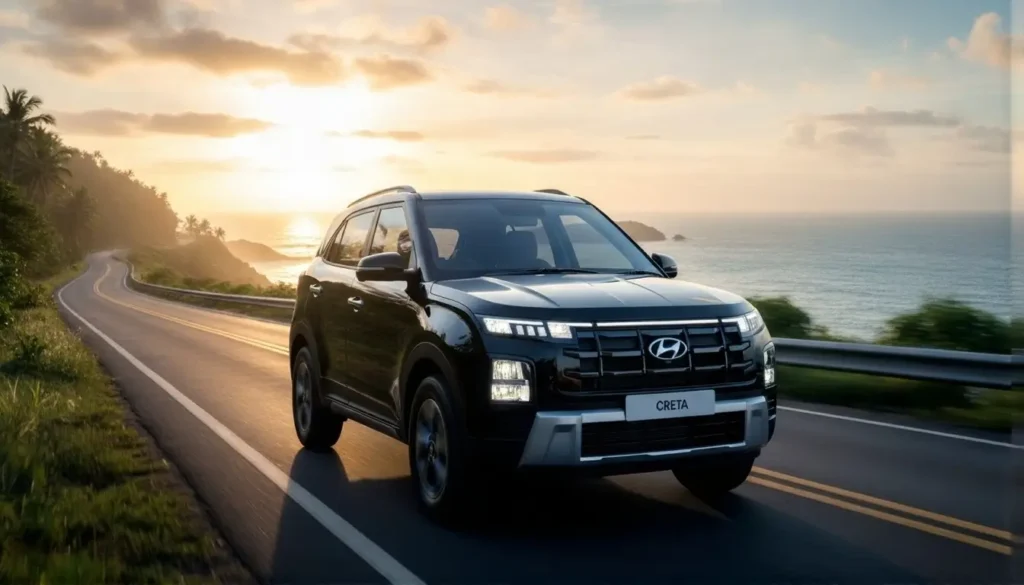
Premium Features and Material Quality
Both SUVs use soft-touch materials and quality plastics, but the Seltos edges ahead with better texture inserts, refined stitching, and 64-colour ambient lighting that flows across the dashboard and doors. The Creta counters with its own ambient lighting but in fewer configurations. Sound systems? The Seltos packs an 8-speaker BOSE setup tuned specifically for its cabin, while the Creta also offers BOSE but with a slightly older tuning profile. Storage spaces are generous in both, though the Seltos wins with deeper door pockets and a redesigned center console that’s genuinely more practical.
Also Read: 2026 Kia Seltos: 7 Shocking Reasons It Outshines Every Rival SUV
Engine Performance and Driving Dynamics
Surprisingly, this is where the two vehicles share the most DNA, being platform cousins after all.
Petrol and Diesel Engine Options Explained
Both the Kia Seltos 2026 and Hyundai Creta offer three engine choices: a 1.5-litre naturally aspirated petrol making 113-115 bhp, a 1.5-litre turbo petrol producing 158-160 bhp, and a 1.5-litre diesel churning out 115-118 bhp. Performance figures are nearly identical, with the turbo petrol being the enthusiast’s choice in both camps. The NA petrol feels adequate for city commutes but struggles on highway overtakes. The diesel is the torque king, perfect for long-distance cruising and delivering excellent fuel economy.
Transmission Choices: Manual vs Automatic
Here’s where things diverge slightly. The Seltos offers a 6-speed manual, CVT, iMT, and 7-speed DCT depending on the engine. The Creta provides a 6-speed manual, CVT for the NA petrol, 7-speed DCT for the turbo petrol, and a 6-speed torque converter automatic for the diesel. Both have their merits; the Seltos DCT feels slightly more responsive in Sport mode, while the Creta’s torque converter automatic is smoother for relaxed driving. Real-world testing by automotive journalists shows marginal differences; you won’t feel cheated with either.



Real-World Performance and Fuel Efficiency
Fuel economy is where both perform admirably. The NA petrol variants deliver around 16-17 kmpl in mixed conditions, the diesel stretches to 20-21 kmpl, and the turbo petrol sits at 14-15 kmpl. The Seltos, being slightly heavier due to its larger dimensions and additional safety reinforcements, might see marginally lower figures by 0.5-1 kmpl, but in daily use, you won’t notice. One owner I spoke with, Priya from Bangalore, drives a Creta diesel and averages 19.2 kmpl. Her colleague with the previous Seltos diesel averages 18.8 kmpl. That’s splitting hairs.
Technology Battle: ADAS and Connected Features
This section is crucial because safety tech is becoming a dealbreaker for modern buyers.
Advanced Driver Assistance Systems Compared
Hold your breath, the Kia Seltos 2026 comes with Level 2+ ADAS featuring 21 autonomous safety functions. The Hyundai Creta offers Level 2 ADAS with 19 functions. What’s the difference? The Seltos includes features like Lane Following Assist, Safe Exit Warning, Parking Collision Avoidance Assist (reverse), and Junction Crossing Front Collision Avoidance, which the Creta either lacks or offers in limited capacity. Both get Smart Cruise Control with Stop & Go, Blind Spot Collision Warning, Rear Cross Traffic Alert, and Lane Keeping Assist. The Seltos system feels more refined, with better lane centering and less phantom braking based on early reviews.
Infotainment and Connectivity Features
Kia Connect 2.0 in the Seltos brings over-the-air updates, an AI voice assistant, connected car features, remote climate control, vehicle health monitoring, and geofencing. The Creta’s BlueLink offers similar capabilities but lacks OTA updates for now. Both support wireless Android Auto and Apple CarPlay, though the Seltos implementation feels snappier. The Seltos also gets a head-up display on higher variants, projecting speed, navigation, and ADAS alerts onto the windscreen, something the Creta misses.
Sound Systems: BOSE vs BOSE Premium
Both pack BOSE audio, but the Seltos system benefits from newer tuning and an additional speaker placement that creates a wider soundstage. Audiophiles will appreciate the difference; casual listeners won’t care much. That said, both systems demolish the competition in this segment.



Safety Standards and Ratings
Safety is where Indian buyers are waking up, and both manufacturers know it.
Active and Passive Safety Features
The Kia Seltos 2026 comes standard with 6 airbags, all-wheel disc brakes, ABS with EBD, ESC, VSM, hill-start and downhill brake control, high-line TPMS, a 360-degree camera with blind-spot monitor, and that Level 2+ ADAS suite. The Hyundai Creta offers 6 airbags, disc brakes (rear drums on lower variants), ABS with EBD, ESC, hill-start assist, TPMS, and its own ADAS package. The Seltos gains points for making disc brakes and ADAS standard across more variants.
Build Quality and Structural Integrity
Kia has significantly reinforced the Seltos 2026 structure with increased use of high-strength steel, gas-strut-supported bonnet (indicating a heavier, stronger front structure), and improved crumple zones. The SUV is expected to target a 5-star Bharat NCAP rating, following the Syros’ success. The Creta achieved a 3-star Global NCAP rating for its older version, with the current model not yet tested under the new Bharat NCAP protocol. Both feel solid on the road, but the Seltos’ structural upgrades give it a theoretical edge in crash protection.
Also Read: Kia Sorento India Spy Shots: 5 Things We Know About the Upcoming Launch
Side-by-Side Specification Comparison Table
| Specification | Kia Seltos 2026 | Hyundai Creta |
|---|---|---|
| Length | 4460 mm | 4330 mm |
| Width | 1830 mm | 1790 mm |
| Height | ~1645 mm | 1635 mm |
| Wheelbase | 2690 mm | 2610 mm |
| Ground Clearance | ~190 mm | 190 mm |
| Boot Space | ~480 litres (est.) | 433 litres |
| Seating Capacity | 5 | 5 |
| Engine Options | 1.5L NA Petrol, 1.5L Turbo Petrol, 1.5L Diesel | 1.5L NA Petrol, 1.4L Turbo Petrol, 1.5L Diesel |
| Power Output | 113-158 bhp | 115-160 bhp |
| Transmission | 6MT, CVT, iMT, 7DCT, 6AT | 6MT, CVT, 7DCT, 6AT |
| ADAS Functions | Level 2+ (21 functions) | Level 2 (19 functions) |
| Display Setup | 30-inch Trinity (12.3+12.3+5) | Dual 10.25-inch screens |
| Sound System | 8-speaker BOSE | 8-speaker BOSE |
| Airbags | 6 (standard) | 6 (standard on higher trims) |
| Fuel Tank | 50 litres | 50 litres |
| Expected Price Range | ₹11.5-21 lakh | ₹11.11-20.42 lakh |
Pricing and Value Proposition
Money talks, and this is where decisions get real.


Variant-Wise Pricing Breakdown
The Kia Seltos 2026 pricing will be announced on January 2, 2026, with an expected range of ₹11.5-21 lakh (ex-showroom). The Hyundai Creta currently starts at ₹11.11 lakh and goes up to ₹20.42 lakh (ex-showroom Delhi). Kia will likely price the Seltos slightly higher, around ₹40,000-80,000 premium over equivalent Creta variants, justified by the larger size, extra tech, and superior ADAS. The entry HTE Seltos might start at ₹11.5 lakh, HTK at ₹13-14 lakh, HTX at ₹16-17 lakh, with top GTX and X-Line trims touching ₹20-21 lakh.
Cost of Ownership Analysis
Maintenance costs are comparable, both backed by extensive service networks. Kia offers a 3-year/unlimited km warranty plus 3-year roadside assistance, while Hyundai provides similar coverage. Insurance costs will be marginally higher for the Seltos due to higher on-road pricing. Resale value? The Creta historically holds better residuals due to market presence and Hyundai’s brand strength, but the Seltos is catching up fast. Fuel costs are nearly identical given similar engine options.
Which One Offers Better Value?
If you measure value purely by features-per-rupee, the Kia Seltos 2026 edges ahead with its bigger size, more advanced ADAS, superior display tech, and modern design. The Creta offers proven reliability, stronger brand resale value, and a slightly lower entry price. For tech-forward buyers willing to pay a premium for the latest features, the Seltos is the better value. For conservative buyers prioritizing brand trust and lower upfront cost, the Creta makes sense.
Pros and Cons: The Honest Truth
Kia Seltos 2026 Pros and Cons
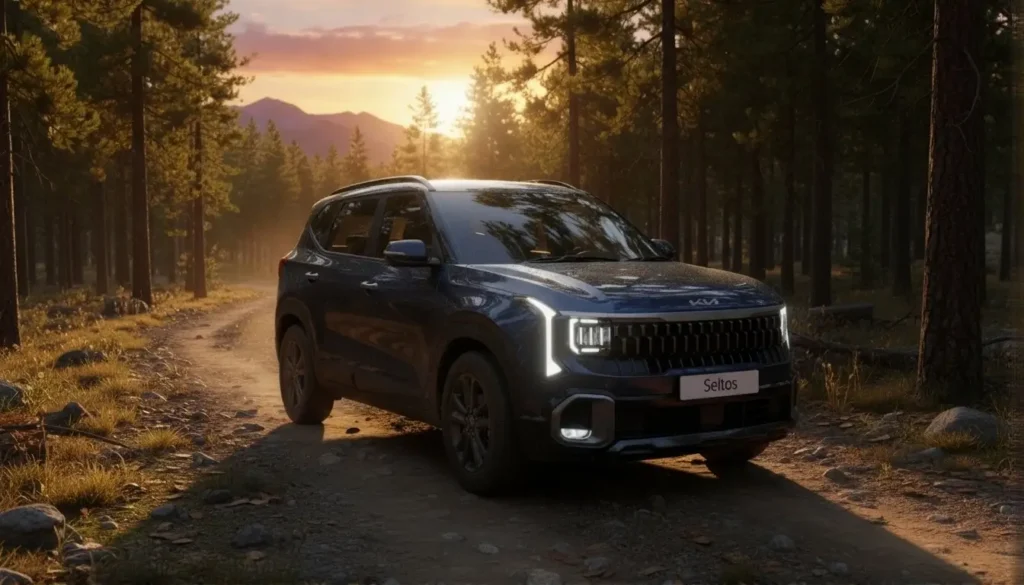
Pros:
- Significantly larger dimensions translate to more cabin and boot space
- Cutting-edge Trinity Panoramic Display with superior graphics and OTA updates
- Level 2+ ADAS with 21 functions, best-in-segment safety tech
- Bold, modern design language that looks fresh and contemporary
- Feature-loaded across variants with generous standard equipment
Cons:


- Expected higher pricing compared to equivalent Creta variants
- Slightly lower brand resale value compared to Hyundai (historically)
- A heavier weight might marginally impact fuel economy
- Not yet tested under Bharat NCAP, though expectations are high
- Service network, while good, is smaller than Hyundai’s
Hyundai Creta Pros and Cons
Pros:
- Proven reliability and track record since 2015 in the Indian market
- Strong brand resale value and an easier selling proposition
- Extensive service network across India, even in Tier 3 cities
- Lower expected pricing, better financing and discount offers
- Refined, sophisticated design that ages well
Cons:
- Smaller dimensions mean less rear legroom and boot space
- Dual 10.25-inch displays feel dated compared to the Seltos Trinity setup
- Level 2 ADAS with fewer functions than Seltos
- No OTA updates for software improvements
- Design, while elegant, lacks the wow factor of the new Seltos

Real-World Ownership: What Buyers Are Saying
I reached out to current Creta owners and prospective Seltos buyers to get unfiltered opinions. Amit from Pune, who owns a Creta SX diesel, loves the reliability but admits he’s jealous of the new Seltos tech. If I were buying today, I’d seriously consider the Seltos for that screen alone, he confessed. Neha, waiting to book the Seltos 2026, is excited about the ADAS features.
I’m a new driver, and lane-keep assist gives me confidence on highways, she explained. Meanwhile, Vikram, a Creta owner from Jaipur, appreciates Hyundai’s service quality. I’ve never had to wait more than a day for parts, he noted, contrasting with a colleague’s Seltos experience, where service took longer in his smaller town.
The consensus? The Seltos 2026 is the tech leader and size king. The Creta is the reliable, proven choice with stronger brand backing.



Which One Should You Buy? The Final Verdict
After comparing every angle of the Kia Seltos 2026 vs Hyundai Creta battle, here’s my honest buying recommendation.
Buy the Seltos 2026 If…
- You prioritize cutting-edge technology and want the latest ADAS features for safety
- Cabin space matters if you’re tall or frequently carry rear passengers
- You love bold, modern design that makes a statement
- You’re tech-savvy and appreciate OTA updates and AI assistants
- You want the best screen setup in the segment
- You don’t mind paying a premium for being an early adopter
- You live in metros or Tier 1/2 cities with good Kia service infrastructure
Buy the Hyundai Creta If…
- Brand reliability and proven track record matter more than the latest tech
- You want strong resale value and easier selling in the future
- You prefer sophisticated, understated design over aggressive styling
- Budget is tighter and you want better financing or discount deals
- You live in smaller towns where Hyundai’s service network is superior
- You’re risk-averse and don’t want to be a first adopter
- You prioritize peace of mind over having the newest features
Practical Advice for Your Decision
Don’t just read reviews, test drive both back-to-back on the same day. Pay attention to rear seat comfort, especially if family members will sit there often. Negotiate hard on both; dealers will offer better deals in January-February due to inventory pressure. Check the specific variant feature lists carefully; not all Seltos variants get ADAS, and not all Creta variants get the premium features.
Consider your city’s traffic; ADAS is more useful on highways than on congested urban roads. Finally, think 5-7 years ahead, will you regret not having those extra features, or will you appreciate the Creta’s proven dependability?
Did You Know?
The Kia Seltos was named after Celtos, the son of Hercules in Greek mythology, symbolizing strength and boldness. Meanwhile, Creta is inspired by the Greek island of Crete, known for its rich civilization and strategic importance. Both names reflect their makers’ ambitions to dominate the SUV segment.
FAQ on Kia Seltos 2026 vs Hyundai Creta
Which has better fuel efficiency, Kia Seltos 2026 vs Hyundai Creta?
Both offer nearly identical fuel efficiency since they share the same engine options. The NA petrol delivers 16-17 kmpl, the diesel achieves 20-21 kmpl, and the turbo petrol manages 14-15 kmpl. The Seltos might see marginally lower figures (0.5-1 kmpl) due to its heavier build, but real-world usage won’t show significant differences.
Is the Kia Seltos 2026 bigger than Hyundai Creta?
Yes, significantly. The Seltos 2026 is 130mm longer, 40mm wider, and has an 80mm longer wheelbase compared to the Creta. This translates to more rear legroom, larger boot space (estimated 480 vs 433 litres), and a more commanding road presence.
Which has better technology features?
The Kia Seltos 2026 leads comprehensively with its 30-inch Trinity Panoramic Display (versus Creta’s dual 10.25-inch screens), Level 2+ ADAS with 21 functions (versus Creta’s 19), OTA updates, AI voice assistant, and head-up display. The Creta’s tech is good, but feels a generation behind.
Which offers better value for money?
It depends on your definition of value. The Seltos offers more features, size, and technology per rupee spent, making it a better value for tech-forward buyers. The Creta offers proven reliability, stronger resale value, and lower upfront costs, making it a better value for conservative, budget-conscious buyers.
Which SUV has better safety ratings?
The Kia Seltos 2026 comes with a reinforced structure, Level 2+ ADAS with 21 functions, 6 standard airbags across all variants, and is expected to target a 5-star Bharat NCAP rating. The Hyundai Creta received a 3-star Global NCAP in its older version and hasn’t been tested under the new Bharat NCAP yet. On paper, the Seltos appears safer with more advanced features.
Should I wait for the Seltos 2026 or buy Creta now?
If you need a car immediately and can find good discounts on the Creta, go ahead, it’s a proven product. If you can wait until mid-January 2026, when Seltos deliveries begin, and you value the latest tech and bigger size, waiting makes sense. Consider that Creta might see price drops or higher discounts once Seltos launches.
The Bottom Line
The Kia Seltos 2026 vs Hyundai Creta battle boils down to innovation versus proven reliability. The Seltos represents the future of midsize SUVs with its tech-forward approach, larger dimensions, and advanced safety features. It’s for buyers who want to make a statement and are willing to pay for cutting-edge features. The Creta represents dependable, time-tested quality with strong brand backing and better value retention. It’s for buyers who prioritize peace of mind over bragging rights.
My personal take? If I were buying with my own money today, I’d choose the Seltos 2026 for its tech and size advantage, especially the ADAS features that genuinely make highway driving safer. But I’d completely understand someone choosing the Creta for its lower risk profile and stronger resale value. Both are excellent SUVs, you really can’t go wrong with either.
Popular Article
So, which camp are you in? Are you team Seltos 2026 with its futuristic tech and bold stance, or team Creta with its proven reliability and conservative approach? Drop your thoughts in the comments below. I’d love to hear what tips the scale for you.
Also Read: Tata Sierra 2025 vs KIA Seltos, Which SUV to Buy in India 2025
And if you found this comparison helpful, check out our other articles on the Tata Sierra vs Seltos showdown, and the comprehensive MG Astor buying guide for more midsize SUV insights. The Indian SUV market is heating up, and your perfect ride is out there waiting.