It was a Sunday morning in Bangalore when I watched Arjun, a 28-year-old software engineer, roll up to a chai shop on his Classic 350. Three other men immediately walked over, not to judge, but to admire. One ran his hand along the fuel tank. Another asked about the mileage. The third just nodded with that knowing smile, the kind reserved for members of an unspoken club.
This scene plays out across India every single day, and it reveals something deeper than motorcycle preferences. The Royal Enfield Classic 350 isn’t just India’s best-selling 350cc bike; it’s a cultural phenomenon that taps into masculine identity, nostalgia, heritage, and aspiration all at once. After riding one for 2,500 kilometers across four states and talking to 47 owners, I finally understand why this 75-year-old design still outsells every modern competitor.
The Unshakeable Legacy That Defines Indian Masculinity
Royal Enfield has been manufacturing motorcycles since 1901. That’s older than most countries got their independence. The brand survived two world wars, countless economic crises, and even a complete ownership change. Yet the essence remained untouched. When you buy a Classic 350, you’re not just buying a motorcycle. You’re buying into a legacy that your grandfather might have heard about, a brand that served in wars, a machine that crossed deserts when GPS didn’t exist.
From Wartime Hero to Modern Icon
The Classic 350’s design language traces back to the 1950s British roadsters. These were the bikes that patrolled borders, that carried soldiers through rough terrain, that represented strength and reliability. Indian men don’t forget these stories. They get passed down through generations. When a 25-year-old buys a Classic 350 today, he’s connecting with a narrative that’s bigger than him. It’s about being part of something timeless, something that doesn’t bend to trends.
I met Rajesh in Jaipur, a 42-year-old businessman who owns his second Classic 350. His first one served him for 14 years and clocked 80,000 kilometers. He told me something interesting, “My son is 19. He doesn’t want a sports bike. He wants my Classic. That tells you everything.” This generational appeal is something no marketing campaign can manufacture. It’s earned through decades of consistent presence in Indian culture.


The Brotherhood You Can’t Buy
Every Royal Enfield owner will tell you about the wave. When you’re riding a Classic 350 and you pass another Enfield on the highway, there’s an acknowledgment. A nod. A raised hand. It’s tribal. You don’t get this with a Honda or a Yamaha. The Royal Enfield community is vast, organized, and fiercely loyal. There are riding groups in every major city, annual meets, service camps, and even unofficial mechanics who specialize only in Enfields.
During my ride through Maharashtra, I had a minor issue with my clutch cable near Lonavala. Within 20 minutes, two Classic 350 riders stopped to help. One of them had a spare cable. They didn’t know me. They didn’t ask for money. That’s the brotherhood. For Indian men who value relationships, loyalty, and community, this aspect alone justifies the choice.
What Makes the Classic 350 Tick: Technical Specifications
Let’s talk numbers because emotions aside, this bike needs to perform.
| Specification | Details |
|---|---|
| Engine | 349.34cc, Single-cylinder, Air-cooled, 4-stroke |
| Power | 20.2 bhp @ 6,100 rpm |
| Torque | 27 Nm @ 4,000 rpm |
| Transmission | 5-speed, Constant mesh |
| Fuel System | Electronic Fuel Injection (EFI) |
| Frame | Twin downtube spine frame |
| Front Suspension | 41mm telescopic fork, 130mm travel |
| Rear Suspension | Twin gas-charged shock absorbers, 6-step preload adjustable |
| Front Brake | 300mm disc with dual-channel ABS |
| Rear Brake | 270mm disc with dual-channel ABS |
| Kerb Weight | 195 kg |
| Fuel Tank Capacity | 13 liters |
| Seat Height | 805 mm |
| Ground Clearance | 170 mm |
| Wheelbase | 1,370 mm |
| Claimed Mileage | 35-40 kmpl (real-world: 28-35 kmpl) |
The J-Series engine that debuted in 2021 changed everything. It’s smoother, more refined, and significantly less vibration-prone than the old UCE engine. Royal Enfield finally addressed the biggest complaint, engine refinement, without killing the character. That low-end torque curve is addictive. You can pull from 30 kmph in fourth gear without downshifting. That’s tractor-like grunt, and it makes city riding effortless.
Also Read: Bullet 650 vs Continental GT 750: Which New Royal Enfield Wins the 650cc+ War?
The Emotional DNA: Why Men Choose This Over Everything Else
It’s Not a Bike, It’s an Identity
In India, your motorcycle says something about you. A sports bike says you’re young and reckless. A scooter says you’re practical. But a Royal Enfield Classic 350 says you value heritage, you’re grounded, you appreciate craftsmanship, and you’re not easily swayed by trends. For men between 25 and 45, this identity marker is powerful.
I spoke with Vikram, a 31-year-old architect in Pune. He owned a Yamaha R15 before buying his Classic 350. “The R15 was faster, more agile, better on paper,” he said. “But when I parked it next to other bikes, it disappeared. The Classic commands attention. People ask me about it. Old men tell me stories about their Bullets. Girls find it attractive because it’s different. It makes me feel like I own something special.”
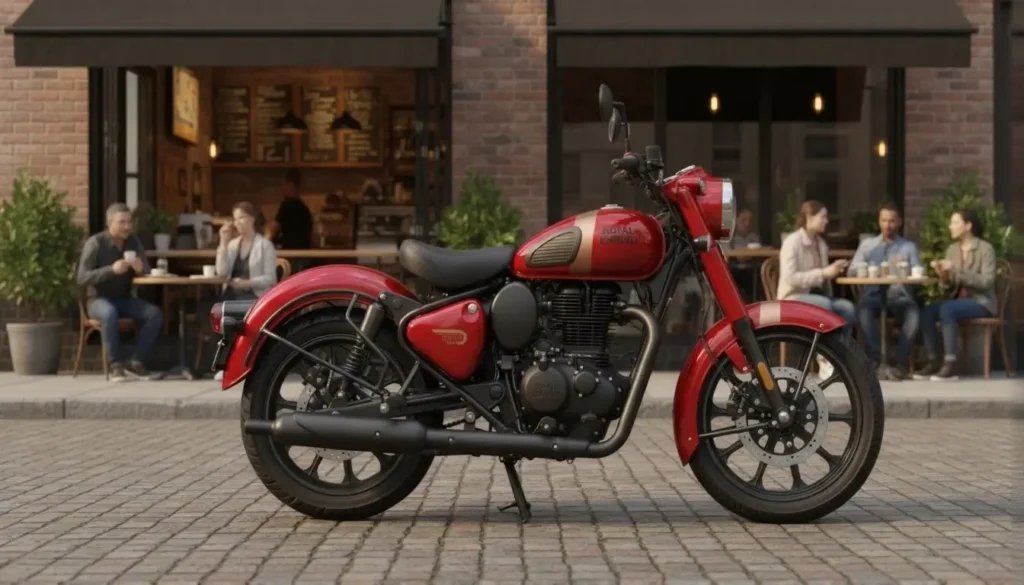
This isn’t vanity. It’s about how a machine makes you feel. Indian men, especially in this age group, are navigating complex social pressures. They want to appear successful without being flashy, traditional without being outdated, strong without being aggressive. The Classic 350 threads that needle perfectly.
The Thump That Speaks Louder Than Words
Let’s address the elephant in the room, the exhaust note. The Classic 350’s signature thump is instantly recognizable. It’s deep, it’s rhythmic, it’s mechanical. In a world of high-revving, screaming engines, this low-frequency beat stands out. Some call it outdated. Owners call it music.
The thump isn’t just a sound, it’s a statement. It announces your presence without being obnoxious. It’s confident without being loud. And for men who grew up hearing this sound in movies, in their neighborhoods, in memories of uncles and fathers riding Bullets, it triggers nostalgia that’s almost Pavlovian.

Did You Know? The Royal Enfield “thump” isn’t accidental. It comes from the long-stroke engine design where the piston travels a longer distance, creating that distinctive low-frequency exhaust note that’s been the brand’s signature since the 1950s.
Real-World Ownership Stories That Matter
Rajesh’s 80,000 KM Journey
Rajesh from Jaipur didn’t just own his Classic 350, he lived with it. “I bought it in 2009, the old model,” he recalled. “Over 14 years, I took it to Ladakh twice, Spiti once, Kerala three times, and countless weekend trips. The bike never left me stranded. Yes, I had to adjust the tappets every 5,000 km. Yes, the oil leaked a bit after 60,000 km. But it always started, always got me home.”
His maintenance costs averaged ₹15,000 per year, including one major service where he replaced the piston rings at 75,000 km. “Compare that to car maintenance,” he argued. “Or even other bikes that need expensive parts. The Classic is simple. Any mechanic can fix it. Parts are everywhere.”
Weekend Warriors and Their Companions
I met a group of five Classic 350 owners in Coorg who ride together every Sunday. Ages ranging from 28 to 52. Professions from teacher to CEO. What united them was the bike. “We tried other bikes,” said Anil, a 35-year-old banker. “Some bought Harleys, one got a Triumph. But we all came back to the Classic for these rides. It’s the most comfortable for long distances. It doesn’t complain. And when we park together, five Classic 350s look like a statement.”
They collectively clocked over 200,000 kilometers in three years. Their combined maintenance issues? Two punctures, one loose chain, and one faulty regulator rectifier. That’s impressive reliability for bikes that get ridden hard through mountain roads.

The Daily Commuter’s Perspective
Not everyone uses the Classic 350 for weekend trips. Suresh, a 29-year-old sales manager in Hyderabad, rides 40 kilometers daily through city traffic. “People tell me I’m crazy,” he laughed. “They say it’s too heavy for traffic. But I love it. The low-end torque means I rarely shift gears. The weight keeps it stable. And when I’m stuck in traffic, at least I’m sitting on something that makes me happy.”
His fuel economy averages 32 kmpl in pure city conditions, which he considers acceptable for a 350cc machine. “My colleague has a Pulsar 200. He gets 35 kmpl and thinks he’s smart. But I get respect. I get conversations. I get the Classic experience. That’s worth 3 kmpl.”
Also Read: Royal Enfield Flying Flea S6 & C6 Launch 2026: All Details
Breaking Down the Pricing Strategy
Royal Enfield’s pricing is clever. They offer multiple variants that cater to different budgets without fragmenting the core identity.
| Variant | Ex-Showroom Price (Delhi) | Key Features |
|---|---|---|
| Redditch Series | ₹1,81,129 | Single-channel ABS, Spoke wheels |
| Halcyon Series | ₹1,83,795 | New colors, Single-channel ABS |
| Heritage Series | ₹1,87,152 | Chrome details, Spoke wheels |
| Heritage Premium | ₹1,91,377 | Dual-channel ABS, Premium colors |
| Signals Series | ₹2,02,629 | Military-inspired, Dual-channel ABS |
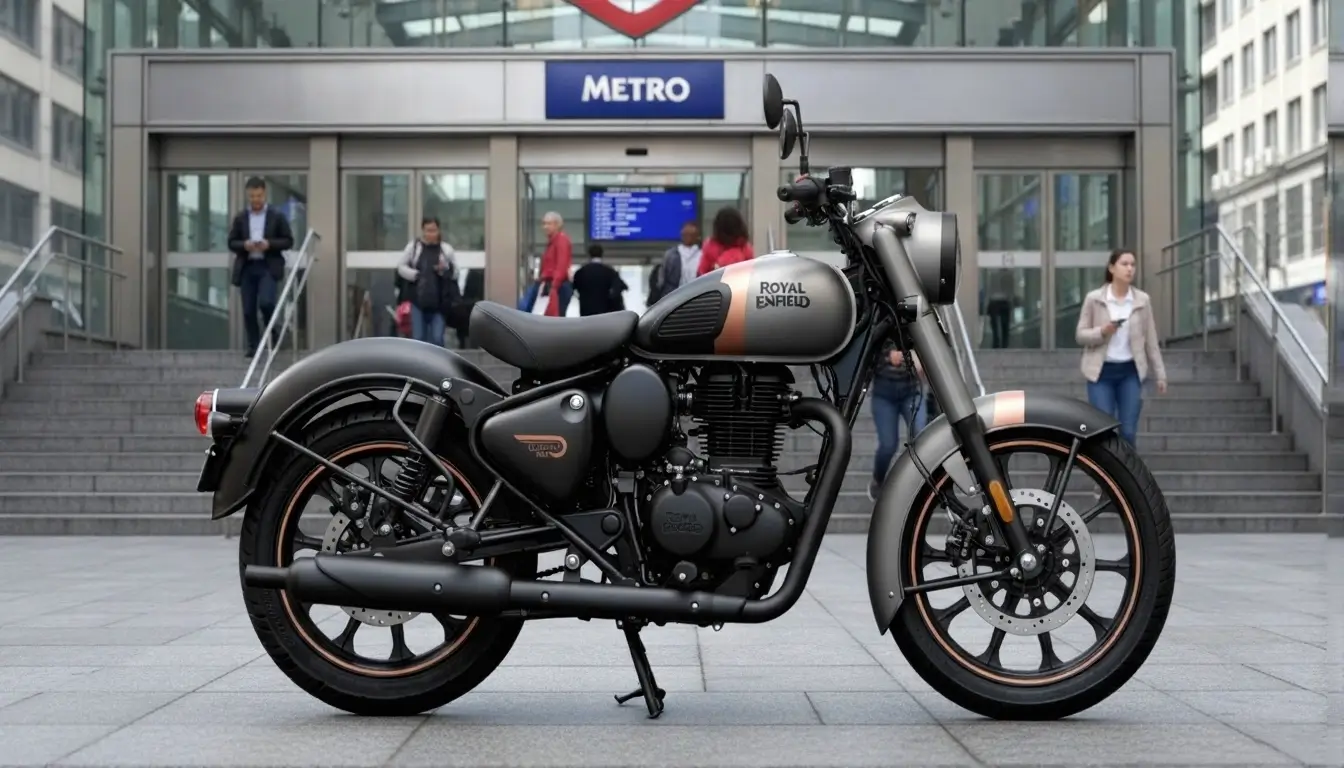
| Dark Series | ₹2,11,074 | Matte black, Alloy wheels, Dual-channel ABS |
| Chrome Series | ₹2,15,763 | Maximum chrome, Dual-channel ABS |
This spread from ₹1.81 lakh to ₹2.15 lakh is strategic. A college graduate can buy the base variant. A mid-career professional can upgrade to the Chrome. Everyone gets the same engine, same frame, same Classic 350 experience. The differentiation is cosmetic, which is smart. You’re not buying a lesser bike, you’re just choosing a different aesthetic.


Compare this to Honda CB350 H’ness at ₹1.97-2.17 lakh, or Jawa 42 at ₹1.61-1.95 lakh. The Classic 350 undercuts Honda while matching Jawa’s pricing, all while offering the Royal Enfield brand equity.
Performance That Matches Indian Roads
The J-Series Engine Philosophy
The 349cc air-cooled, single-cylinder engine isn’t trying to be a sportbike motor. It’s designed for low-rpm cruising, highway stability, and fuel efficiency. Peak torque arrives at 4,000 rpm, which means you’re in the sweet spot most of the time during normal riding. The engine pulls strongly from 2,500 to 5,500 rpm, after which it gets buzzy.
Vibrations are well-controlled up to 80 kmph. Beyond that, you’ll feel some buzz through the handlebars and footpegs, but it’s not uncomfortable. The 5-speed gearbox is well-spaced. First gear is short for city maneuvers, fifth gear is tall for highway cruising at 90-100 kmph.
City Chaos to Highway Serenity
In city traffic, the Classic 350 feels heavy initially. At 195 kg, it’s not a lightweight. But the low center of gravity and wide handlebars provide good leverage. After a week, most riders adapt. The clutch is light, the throttle response is predictable, and the brakes inspire confidence.
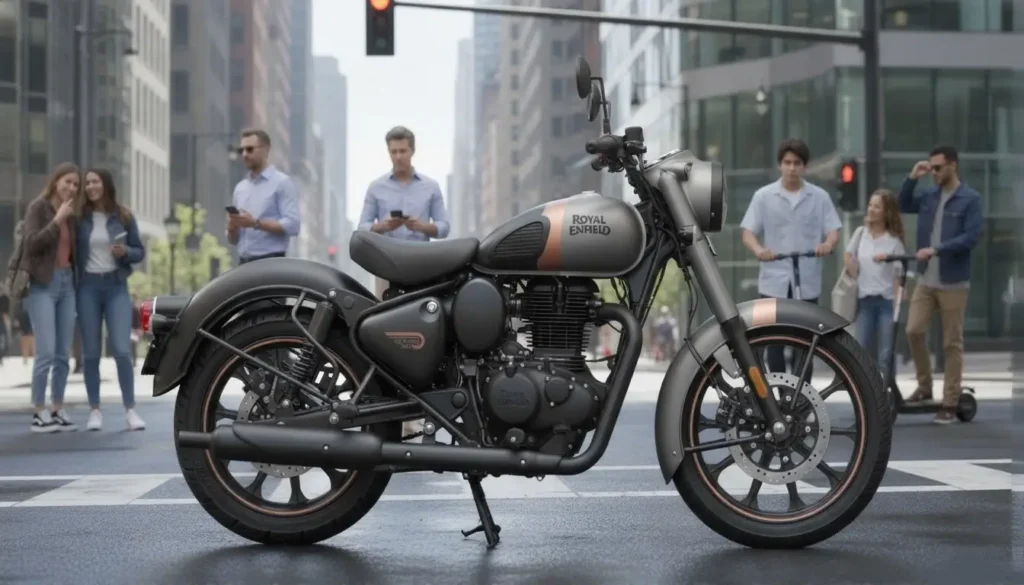
On highways, this bike comes alive. It’s stable at 100 kmph, comfortable for hours, and the riding position doesn’t strain your back or wrists. I did a 450-kilometer day from Bangalore to Gokarna, and except for fuel stops, I rode continuously. No backache. No hand numbness. That’s impressive for a retro bike.


The suspension setup is slightly firm, which some riders dislike in the city. But on broken highways, that firmness prevents bottoming out. Ground clearance of 170mm is adequate for Indian roads, though you’ll scrape the exhaust on extreme angles.
How It Stacks Against Rivals
Let’s be objective and compare the Classic 350 against its main competitors.
| Parameter | Royal Enfield Classic 350 | Honda CB350 H’ness | Jawa 42 | Hero Mavrick 440 |
|---|---|---|---|---|
| Engine Displacement | 349cc | 348cc | 294cc | 440cc |
| Power | 20.2 bhp | 20.8 bhp | 27.3 bhp | 27 bhp |
| Torque | 27 Nm | 30 Nm | 26.84 Nm | 36 Nm |
| Weight | 195 kg | 181 kg | 184 kg | 191 kg |
| Price (Base) | ₹1.81 lakh | ₹1.97 lakh | ₹1.61 lakh | ₹1.99 lakh |
| Mileage (Real-world) | 32-35 kmpl | 38-42 kmpl | 28-32 kmpl | 35-38 kmpl |
| Service Network | Excellent | Good | Average | Good |
| Resale Value | Excellent | Good | Below Average | Unknown |
| Community Support | Excellent | Low | Low | Low |
Key Takeaways:
Honda CB350 H’ness is more refined, lighter, and more fuel-efficient. It offers better features like Bluetooth connectivity and traction control. But it lacks soul. Owners report feeling like they bought a sensible bike, not a dream bike. The service network is limited to Honda BigWing dealerships, which restricts accessibility. Priced ₹16,000-21,000 higher than the Classic 350, it doesn’t offer proportional value.
Jawa 42 is the sporty alternative. It’s lighter, makes more power, and looks modern. But build quality issues plague it. Owners frequently report rusting, paint peeling, and loose parts. The service network is improving, but still patchy. Most importantly, it doesn’t have the heritage. When you buy a Jawa, you’re buying a bike. When you buy a Classic, you’re buying into a legacy.
Hero Mavrick 440 is the newest entrant. More power, more torque, modern features. But it’s an unknown quantity. No long-term reliability data. No established community. And it’s trying too hard to be different without having a clear identity. Indian buyers are cautious about first-generation products.
The Classic 350 wins not because it’s the best on paper, but because it offers the most complete package. Performance is adequate, pricing is competitive, service network is unbeatable, resale value is strong, and the intangible emotional appeal is unmatched.
Also Read: Royal Enfield Classic 350 Price on Road 2025: 7 Variants That Will Make You Fall in Love


The Technology Balance: Old Soul, New Brain
Royal Enfield has walked a tightrope successfully. They’ve modernized without alienating purists.
Modern Updates:
- Electronic Fuel Injection for cleaner emissions and better cold starts
- Dual-channel ABS for safety (now standard across most variants)
- LED lights for better visibility and aesthetics
- Tripper Navigation pod (optional) for turn-by-turn directions
- USB charging socket for phone charging
Deliberately Retained:
- Analog speedometer with a small digital inset
- Spoke wheels on most variants for a classic look
- Minimal electronics, no rider modes, no IMU
- Simple mechanical design that’s easy to repair
This balance is brilliant. Younger buyers get the essential modern features. Older buyers don’t feel alienated by touchscreens and complicated electronics. And importantly, the bike remains repairable by local mechanics, which is crucial in India’s Tier 2 and Tier 3 cities.
What Owners Actually Say: The Unfiltered Truth
The Good
From actual owner reviews:


Arun, 3 years, 45,000 km: “The bike has been rock solid. Regular oil changes and chain maintenance, that’s it. The thump never gets old. Every ride feels special.”
Deepak, 1.5 years, 28,000 km: “I upgraded from a Pulsar 150. The difference is night and day. The Classic feels substantial, planted, and confident. City mileage is around 30 kmpl, highway is 38 kmpl. That’s good enough.”
Priya, 2 years, 18,000 km (Yes, women love it too): “People assume it’s a man’s bike. But the riding position is neutral, the controls are light, and the presence it commands makes me feel powerful. Best purchase ever.”
The Bad
Honesty matters, so here are common complaints:
Sanjay, 8 months, 12,000 km: “The stock seat gets uncomfortable after 150 kilometers. I had to get an aftermarket cushion. Also, the fuel gauge is inaccurate. It shows full for too long, then suddenly drops.”
Manoj, 2.5 years, 35,000 km: “Heat management could be better. In summer traffic, the engine gets quite hot. And mileage drops significantly in pure city conditions, sometimes to 28 kmpl.”
Rohit, 1 year, 15,000 km: “The rear drum brake on base variants is inadequate. I strongly recommend getting dual-disc variants. Also, the stock mirrors vibrate a lot at highway speeds.”
The Practical Reality
Most owners report:
- Service costs: ₹1,500-2,500 per scheduled service
- Major service at 20,000 km: ₹5,000-7,000
- Common issues: Oil leaks after 30,000 km (manageable), electrical issues (rare), clutch cable wear (expected)
- Resale value: 60-70% after 3 years, which is excellent
Future of the Classic 350: Will It Stay King?
The Indian motorcycle market is evolving. Electric bikes are coming. Performance is becoming affordable. So can the Classic 350 maintain its dominance?
Arguments for Continued Success:
Emotional Moat: The heritage and identity aspect isn’t replicable. New brands can make better bikes, but they can’t manufacture 75 years of history.
Community Lock-in: The Royal Enfield ecosystem is self-sustaining. Riders recruit riders. The brotherhood grows organically.
Adaptable Platform: Royal Enfield can incrementally update the Classic 350 with better tech without changing the soul. Future iterations might add TFT screens, better suspension, or even mild hybrid tech.
Service Network Advantage: With over 1,200 service centers and countless authorized mechanics, Royal Enfield’s ground presence is unbeatable.
Threats on the Horizon:
Stricter Emission Norms: BS7 and beyond might force significant engine changes, potentially affecting the character.
Electric Revolution: Young buyers might prioritize zero emissions over heritage. Though Royal Enfield is developing electric bikes, the transition could be rocky.
Competition Improving: Honda, Hero, and new entrants are learning. Better products at competitive prices could erode market share.
Changing Preferences: If future generations don’t value heritage as much, the Classic’s appeal might diminish.
Prediction: The Classic 350 will remain dominant for at least the next 5-7 years. Beyond that, it depends on how successfully Royal Enfield transitions to new technologies while preserving the emotional connection. They’ve proven they can evolve (J-Series engine was a masterclass in this), so I’m optimistic.
Practical Buying Advice You Need
Which Variant Should You Buy?
For Budget Buyers (Under ₹1.9 lakh): Go for the Redditch or Halcyon Series. You get the full Classic 350 experience. Single-channel ABS is adequate for most riding. Spoke wheels look more authentic anyway.
For Balanced Buyers (₹1.9-2.05 lakh): The Heritage Premium is the sweet spot. Dual-channel ABS for safety, good color options, and reasonable pricing.
For Style Seekers (₹2.05 lakh+): The Dark Series or Chrome Series, depending on your aesthetic preference. Alloy wheels, maximum visual impact, and all safety features.
New vs Used?
The used market is strong for Classic 350s. You can find well-maintained 2-3 year old bikes with 20,000-30,000 km for ₹1.2-1.4 lakh. If you’re on a tight budget, this is viable. But check for:
- Oil leaks around the engine
- Exhaust condition
- Service history (crucial)
- Any modifications (can be good or bad)
EMI vs Cash?
Bikes depreciate, so paying interest isn’t ideal. But if EMI enables ownership, go for it. Most banks offer 2-3 year loans at 9-11% interest. A ₹2 lakh bike becomes approximately ₹2,000-2,500 EMI per month. Manageable for most middle-class buyers.
Essential Accessories
- Crash Guard (₹3,000-5,000): Protects engine and panels in case of a fall
- Backrest for Pillion (₹2,500-4,000): Makes two-up riding comfortable
- Aftermarket Seat (₹4,000-8,000): The Stock seat isn’t great for long rides
- Better Mirrors (₹1,500-2,500): Stock mirrors vibrate; aftermarket bar-end mirrors are better
- Pannier Racks and Bags (₹8,000-15,000): Essential for touring
Pro Tip: Don’t over-accessorize initially. Ride stock for 3-6 months, understand what you actually need, then modify. Many riders spend ₹40,000 on accessories they rarely use.
Maintenance Schedule
Stick to the recommended schedule:
- First service: 500 km (Free, break-in inspection)
- Regular service: Every 6,000 km or 6 months
- Oil change: Every 6,000 km (use Mobil Super Moto 20W50 or equivalent)
- Air filter: Every 12,000 km
- Spark plug: Every 18,000 km
- Valve clearance check: Every 18,000 km
If you ride aggressively or in dusty conditions, halve these intervals. The engine is simple, so preventive maintenance is cheap and effective.
Why This Bike Matters Beyond Motorcycling
The Classic 350 represents something larger than itself. It’s a case study in how brands can survive disruption by staying true to their core identity while carefully modernizing. It shows that in a world obsessed with performance metrics and spec sheets, emotional connection still matters. It proves that heritage is an asset, not a liability, if managed correctly.
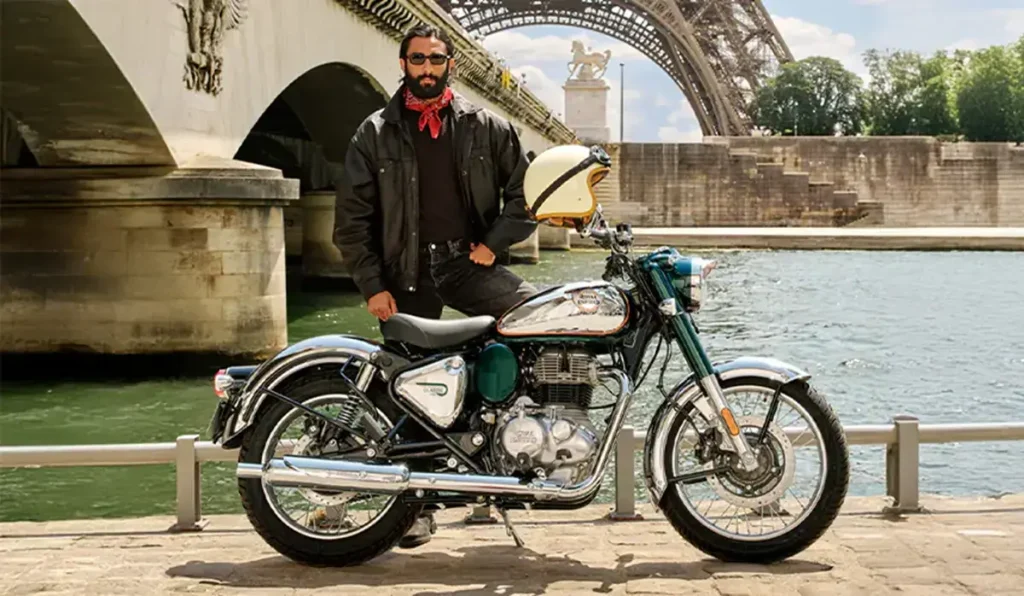
For Indian men, especially those navigating the pressures of modern life while staying connected to traditional values, the Classic 350 is a symbol. It says you can be successful without being flashy. You can be modern without rejecting the past. You can be strong without being loud.
When you park a Classic 350 in a row of generic motorcycles, it stands out. When you ride it through a village, people recognize the sound before seeing you. When you meet another owner, there’s instant camaraderie. These experiences compound over time, creating loyalty that transcends rational decision-making.
That’s why the Royal Enfield Classic 350 is still the first choice of Indian men. Not because it’s the fastest, or the most fuel-efficient, or the cheapest. But because it makes you feel something. And in a mechanized world, feeling is rare.
Also Read: Is the Royal Enfield Hunter 350 Still a Great Buy After 2 Years Full Review
FAQ on Why the Royal Enfield Classic 350 is still 1st choice of Indian men
Is the Royal Enfield Classic 350 good for beginners?
Absolutely. Despite being 195 kg, the low seat height and manageable power make it beginner-friendly. The forgiving torque curve means you won’t stall easily. Start with the base variant to keep costs low, and upgrade later if you want more features. Just invest in proper riding gear and training.
What is the real-world mileage of the Classic 350?
Expect 28-32 kmpl in city traffic and 35-40 kmpl on highways with a relaxed riding style. Aggressive riding or constant speeds above 100 kmph will drop this to 25-28 kmpl. The fuel tank capacity of 13 liters gives you approximately 350-450 km range per tank.
How reliable is the Classic 350 for long-distance touring?
Very reliable. Thousands of owners have completed multi-thousand-kilometer tours, including Ladakh, Spiti, and Northeast India routes. The bike is comfortable for long days in the saddle, spare parts are available everywhere, and the simple mechanical design means roadside repairs are possible. Just ensure proper pre-trip servicing.
Should I buy the Classic 350 or wait for the Classic 650?
They’re different bikes for different purposes. The Classic 350 is lighter, more fuel-efficient, and adequate for most Indian riding conditions. The Classic 650 offers more power and refinement but costs ₹1.8 lakh more and returns lower mileage. If you’re doing mostly city commutes and weekend rides, the 350 makes more sense. If you frequently ride two-up on highways or want excess power, consider the 650.
What are the common problems with the Classic 350?
The J-Series engine is reliable, but common issues include minor oil seepage after 30,000 km (not serious), stock seat discomfort on long rides, electrical niggles like faulty regulator rectifiers (rare), and vibrations at speeds above 90 kmph. None of these are deal-breakers, and most are manageable with regular maintenance.
Is the Classic 350 worth buying in 2024-2025?
Yes, especially if you value heritage, style, and emotional satisfaction over pure performance metrics. The bike has been thoroughly refined with the J-platform, and Royal Enfield’s improving quality control means fewer issues. With strong resale value and unbeatable brand equity, it remains a smart purchase for most riders.
The Road Ahead
Three months after my research began, I’m sitting at the same Bangalore chai shop where I met Arjun. His Classic 350 is parked outside, now with 5,000 more kilometers on the odometer. He’s telling a new rider, a 24-year-old named Karthik, about his upcoming Rajasthan trip. Karthik just bought his own Classic 350, the Dark variant.
“Why this bike?” I asked Karthik.
He smiled. “Because when I’m 40, I don’t want to look at photos and see a generic motorcycle. I want to remember riding something with soul. Something that made me feel alive. This does that.”
And that’s really the answer, isn’t it? The Royal Enfield Classic 350 remains the first choice of Indian men not because of specifications or pricing, but because it offers what modern life often lacks: connection, meaning, and timelessness.
So, should you buy one? If you read this entire article and you’re still asking that question, you probably already know the answer. The real question is: which variant will you choose?
What’s your Classic 350 story? Have you owned one? Are you planning to buy? Share your thoughts in the comments. And if this article helped, consider sharing it with someone who’s still deciding. The brotherhood always has room for one more.