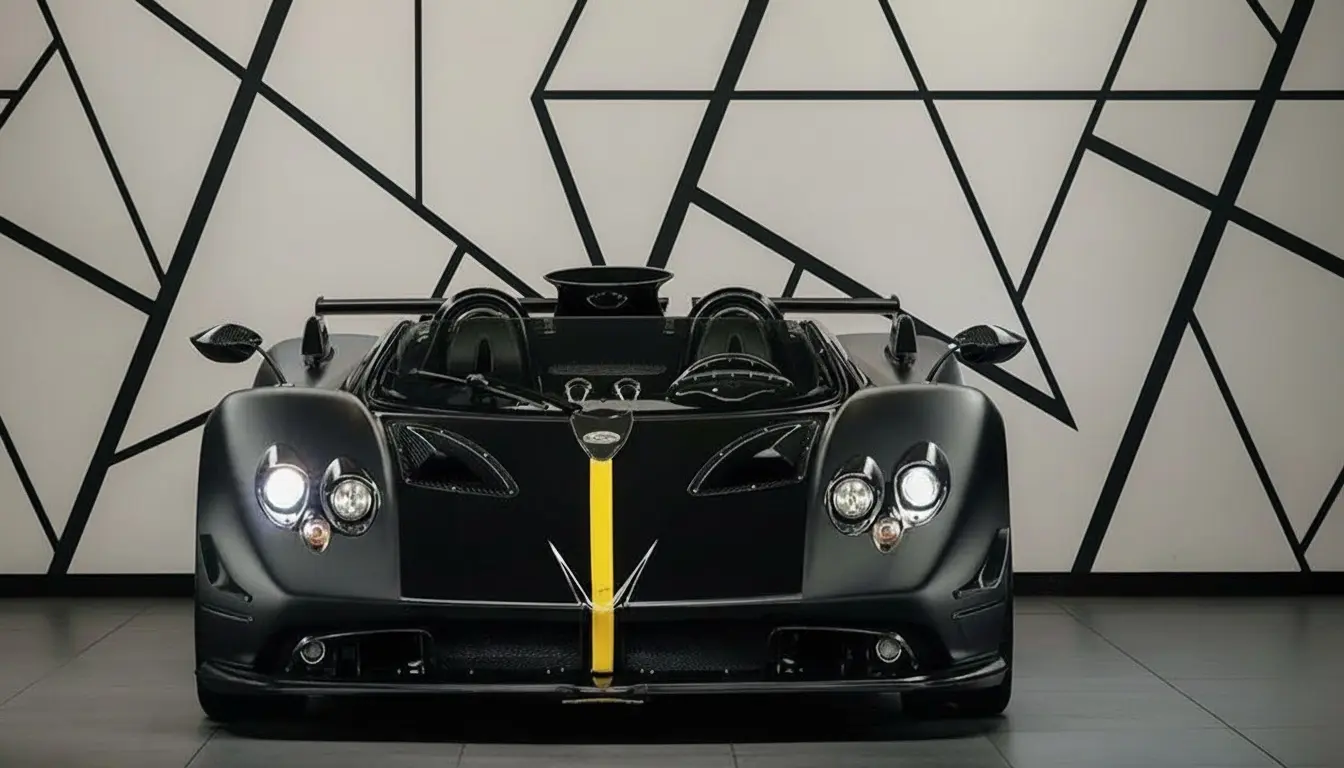
Imagine spending more than the GDP of a small island nation on a car you can’t drive in the rain. Sounds absurd, right? Yet when Horacio Pagani unveiled the Zonda HP Barchetta at his 66th birthday party in 2017, three billionaires immediately opened their checkbooks for what would become the most expensive new car ever sold.
I’ve spent years covering hypercars, from secret garage tours in Monaco to Pebble Beach auctions, and nothing quite captures the intersection of art, engineering, and absolute madness like the Pagani Zonda HP Barchetta. This isn’t just a car. It’s a 789-horsepower sculpture that weighs less than a Honda Civic, costs more than a private jet, and exists in a quantity so rare that your chances of seeing one are statistically zero. Let me take you inside the obsession.
What Makes the Pagani Zonda HP Barchetta So Special?
The Pagani Zonda HP Barchetta isn’t trying to be the fastest hypercar on the planet. It’s not chasing Nürburgring lap records or attempting to break 300 mph. What it does instead is something far more valuable in the world of ultra-wealthy collectors; it represents the absolute pinnacle of automotive artistry combined with engineering that borders on the irrational. Think of it as the automotive equivalent of a Patek Philippe grand complication watch. Sure, your smartphone tells a better time, but that’s completely missing the point.
What sets this machine apart starts with its name. HP stands for Horacio Pagani himself, making this his personal tribute to the Zonda lineage that defined his company. Barchetta, Italian for “little boat,” refers to the open-top roadster configuration that exposes drivers to the full sensory assault of that naturally aspirated V12. But here’s where it gets interesting: unlike modern supercars with their creature comforts and electronic nannies, the Barchetta strips away everything except the essentials. No roof. No windshield. Just a small aerodynamic screen and the raw mechanical symphony of 7.3 liters screaming behind your head.
I spoke with a hypercar broker in Dubai who told me, “When the Barchetta was announced, I had twelve clients asking if I could secure one. The problem? Only three were ever made, and Pagani had already chosen the owners.” That level of exclusivity creates a desire that money alone can’t satisfy. You need connections, history with the brand, and frankly, you need to be someone Horacio personally approves of. It’s the ultimate velvet rope.


The Birth of a Legend: Horacio Pagani’s Personal Dream
Every Pagani has a story, but the HP Barchetta’s origin reads like automotive poetry. Horacio Pagani, the Argentine-Italian maestro who spent years working under Lamborghini before founding his own company in 1992, wanted to create something impossibly personal for his farewell to the Zonda platform. After producing the Zonda for nearly two decades with countless special editions, he envisioned one final iteration that embodied everything he learned, loved, and obsessed over.
The Barchetta concept traces back to Pagani’s fascination with 1950s racing spiders and Group C prototype racers from the 1980s. Those machines prioritized weight savings and driver engagement over comfort. Modern safety regulations make true barchettas nearly impossible to produce, but Pagani found loopholes and engineering solutions that would make lawyers nervous. The result? A road-legal car that feels more like a Le Mans prototype than a street machine.
What’s remarkable is that Pagani kept one of the three examples for himself. This wasn’t a purely commercial exercise. He drives his HP Barchetta on special occasions, treating it as a rolling testament to his life’s work. The other two went to long-time Pagani collectors, individuals who own multiple Zondas and Huayras. One owner reportedly has seventeen Paganis in his collection. When you’re operating at that level of wealth and automotive passion, the HP Barchetta becomes the crown jewel, the Mona Lisa hanging in your garage museum.
Design and Build: Carbotanium Artistry Meets Aerodynamics
Walk around the Pagani Zonda HP Barchetta and your brain struggles to process what it’s seeing. The proportions look wrong in the best possible way. It sits impossibly low, barely reaching your waist. The rear haunches flare out like a predator ready to pounce. Those quad exhaust tips, each the diameter of a coffee can, protrude upward in a design that’s pure racing DNA. And then there’s the complete absence of a roof or conventional windshield, replaced by twin aerodynamic humps behind each seat and a small deflector that does almost nothing to protect you from the elements.
The bodywork utilizes Pagani’s proprietary Carbotanium, a woven composite of carbon fiber and titanium that delivers strength-to-weight ratios that make aerospace engineers jealous. Every panel is hand-laid in Pagani’s Modena facility, a process that takes weeks per car. The weave pattern is visible through the clear coat, creating a texture that shifts and shimmers under different lighting. It’s functional art that happens to cheat physics.
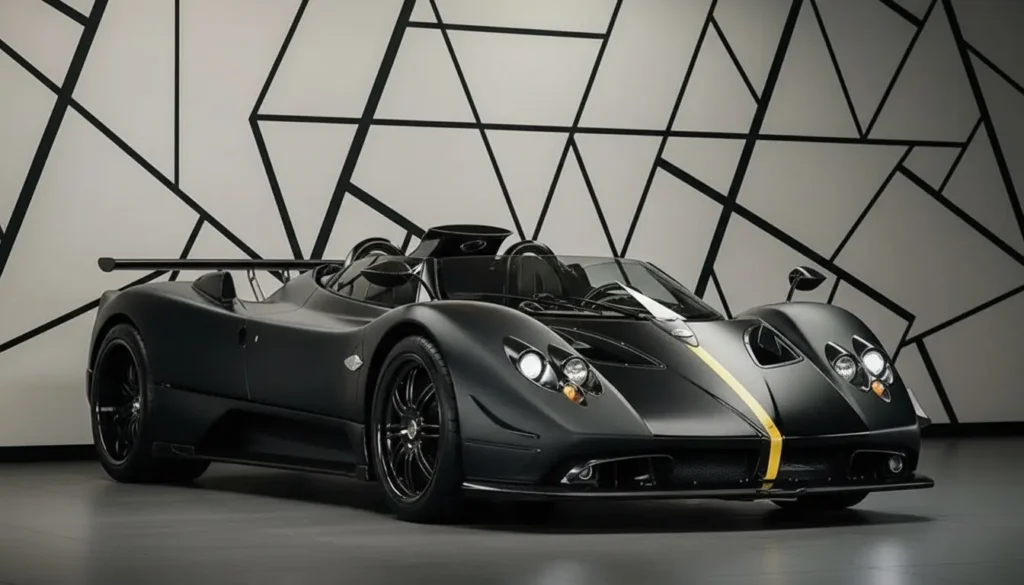
But the real genius shows in the details that obsessive car people notice. The exposed gear linkage is visible through a small window. The billet aluminum mirror stems look like jewelry. The way the side skirts channel air with sculptural precision. Pagani famously said, “If it looks beautiful, it’s probably aerodynamic,” and the Barchetta proves his philosophy. Wind tunnel testing revealed that despite having no roof, the car generates significant downforce at speed while maintaining surprising stability. One owner described highway runs by saying, “It feels like the road is sucking you down. There’s this planted sensation that defies logic, given how exposed you are.”
The interior, what little exists, continues the theme of mechanical pornography. The dashboard is a work of machined aluminum and carbon fiber. The gear shifter gate, a proper open-gate manual, sits exposed like a piece of industrial sculpture. Every switch, dial, and control feels like it belongs in a vintage race car, because that’s exactly the experience Pagani wanted to recreate. Modern touchscreens and digital displays? Not here. This is analog in an increasingly digital world.
The Heart of the Beast: 7.3L V12 Engine and Performance
Pop the rear clamshell and you’re greeted by one of the last naturally aspirated V12 engines Mercedes-AMG will ever produce. This isn’t some off-the-shelf M158 motor. Pagani worked directly with AMG’s performance division to create a 7.3-liter monster that produces 789 horsepower at 6,200 rpm and 575 lb-ft of torque. No turbochargers. No electric assistance. Just pure displacement, high-revving fury, and an exhaust note that could wake the dead three counties over.
The engine connects to a six-speed manual transmission, a choice that sounds insane in 2024 when even base-model family sedans have eight-speed automatics. But this decision represents everything the Pagani Zonda HP Barchetta stands for. Horacio wanted driver involvement, the mechanical connection between human input and machine response that’s vanishing from modern performance cars. Rowing through gears with that exposed linkage while 789 horses scream behind you creates an experience no PDK or dual-clutch can replicate.
Performance numbers? Zero to 60 mph happens in approximately 3.4 seconds, though Pagani never officially published acceleration figures because, frankly, they’re not the point. Top speed is estimated around 220 mph, limited more by aerodynamics and the lack of a roof than engine power. What matters more is how the car delivers its performance. There’s no turbo lag, no artificial throttle mapping. Press the gas pedal and 7.3 liters respond instantly with linear, explosive power that builds to a 6,800 rpm redline.
I talked to a racing instructor who experienced a ride in a client’s HP Barchetta at Mugello Circuit. His description? “Terrifying and transcendent in equal measure. The engine noise at full throttle feels like it’s physically shaking your internal organs. And when the owner heel-toed into third gear for the downhill section, I understood why people spend millions on this experience. It’s not about going fast. It’s about feeling alive in a way nothing else provides.”
The chassis, derived from the Zonda Cinque, uses a carbon-titanium monocoque that weighs just 2,755 pounds despite meeting modern safety standards. That power-to-weight ratio, 1 horsepower for every 3.5 pounds, puts the Barchetta in rarefied company. For comparison, a Bugatti Chiron needs 1,500 horsepower and weighs 4,400 pounds to achieve similar performance. The Pagani does it with brute mechanical simplicity and obsessive weight management.
Why Only Three Exist: The Ultimate Exclusivity Play
In an industry where limited production runs mean 500 units, Pagani’s decision to build only three HP Barchettas seems almost spiteful to collectors desperate for ownership. But this scarcity isn’t artificial marketing, it’s philosophical. Horacio Pagani doesn’t operate like Ferrari or Lamborghini. His company produces fewer than 40 cars annually across all models. The HP Barchetta represents the extreme end of this exclusivity mindset.
Three units means three owners globally can experience this machine. No fourth owner waiting for delivery. No speculation on allocation lists. The cars were essentially sold before public announcement, going to collectors Pagani personally knew and trusted to appreciate what he created. This isn’t about maximizing revenue, if it were, Pagani could have built thirty units and sold every one for $15 million each. Instead, he chose to create something so rare that even billionaires with unlimited resources can’t simply buy their way in.
This exclusivity creates interesting market dynamics. The HP Barchetta immediately became the most expensive new production car ever sold, with reported prices between $15 million and $17.5 million depending on customization. But its real value lies in what it represents within the hypercar collecting world. Owning one signals you’re not just wealthy, you’re part of an inner circle so exclusive that most people will never encounter another member.
A collector who owns both a LaFerrari Aperta and multiple Zondas, but not the HP Barchetta, told me, “I could write a check for thirty million dollars tomorrow and it wouldn’t matter. Those three cars aren’t for sale. Maybe in twenty years, one comes to auction, but even then, you’re competing against people who view cars like Rembrandts. It’s not about driving. It’s about owning something nobody else can have.”
Did you know?
Horacio Pagani’s personal HP Barchetta features unique details not found on the other two cars, including custom interior stitching that incorporates his wife’s initials and a special plaque commemorating his 66th birthday.
Technology Meets Tradition: Manual Mastery in a Digital Age
In 2024, offering a hypercar with a manual transmission seems like commercial suicide. Dual-clutch automatics shift faster, they’re easier to drive, and they appeal to a broader customer base. Yet the Pagani Zonda HP Barchetta proudly features a six-speed manual with an open-gate shifter, and this choice reveals everything about why enthusiasts worship this machine.
The manual transmission here isn’t some nostalgia play or marketing gimmick. It’s a fundamental part of the driving experience Pagani wanted to preserve. That exposed gear linkage, visible through a small window in the center console, shows the mechanical connection between your hand and the gearbox. Moving the shifter physically actuates those linkages, selecting gears through pure mechanical synchronization. There’s no computer intervention, no automatic rev-matching, no safety systems preventing you from selecting the wrong gear and over-revving the engine.
This creates what driving purists call “consequence.” Modern supercars forgive mistakes. Stability control catches slides. Launch control optimizes acceleration. The HP Barchetta offers none of these safety nets. Mistime a downshift and you’ll money-shift that AMG V12 into catastrophic failure. Lose concentration in a corner, and you’re spinning before electronics can save you. It demands complete attention and rewards skill in ways automated systems can’t replicate.
But here’s the fascinating part, Pagani still incorporated cutting-edge technology that enhances rather than replaces driver involvement. The carbon-ceramic brakes, developed with Brembo, provide stopping power that borders on violent. The suspension uses manually adjustable dampers that let owners tune the car for specific conditions. Even the aerodynamics, despite the lack of active systems, were optimized through computational fluid dynamics that would have been impossible a decade earlier.
This philosophy, advanced technology in service of driver engagement rather than replacing it, makes the HP Barchetta feel simultaneously ancient and futuristic. You’re rowing through gears like a 1960s racer while riding in a carbon-titanium composite that wouldn’t exist without 21st-century materials science. It’s a time machine that only goes sideways through corners.
Also Read: US President’s Car: 9 Shocking Reasons Why The Beast Can’t Be Destroyed
Pricing Breakdown: Understanding the $17.5 Million Price Tag
Let’s talk money, because $17.5 million for a car requires some explanation beyond “it’s rare.” Breaking down where that astronomical figure comes from reveals the economics of ultra-luxury automotive production.
Base Manufacturing Costs
The carbon-titanium monocoque alone costs approximately $500,000 to produce. Each body panel requires hundreds of hours of hand-laying carbon fiber, with Pagani’s artisans building every component to tolerances measured in microns. The AMG V12 engine, heavily modified from standard specification, represents another $200,000 in development and production costs. That custom manual transmission? Roughly $150,000 when you factor in engineering, strengthening, and integration.
Customization and Personalization
Every HP Barchetta was extensively customized for its owner. One features a unique blue-tinted carbon weave. Another has custom interior leather from a specific Argentinian tannery. These bespoke details, along with hundreds of small personalization requests, can add $2-3 million to the base price. Remember, you’re not buying a car off a lot. You’re commissioning a piece of rolling art.
Research and Development Amortization
Pagani spent years developing the Barchetta concept, including extensive wind tunnel testing, crash testing, and homologation for various markets. With only three units produced, those R&D costs get divided among fewer customers. If Ferrari spends $100 million developing a new model and produces 1,000 units, that’s $100,000 per car. Pagani spends similar amounts for three cars, which means millions per unit in development costs.
Brand Premium and Market Positioning
Finally, there’s the intangible value of owning something nobody else can have. Pagani could theoretically price the car at $5 million and sell all three units instantly. But pricing it at $17.5 million sends a message about exclusivity and positioning within the hypercar hierarchy. It places the HP Barchetta above LaFerrari Apertas, above Bugatti Divos, in a category occupied by truly one-of-one commissions.
Ongoing Ownership Costs
Buying the car is just the beginning. Annual maintenance runs $50,000-75,000 for routine service. Insurance? Expect $100,000+ per year, assuming you can find a company willing to cover a roofless, manual transmission hypercar worth more than most houses. Many owners budget $200,000 annually just for maintenance, insurance, and storage in climate-controlled facilities.
One owner summarized it perfectly: “The purchase price is the cheapest part of ownership. But when you drive it, when you hear that V12 singing at 6,500 rpm, when other billionaires look at your car with genuine envy, you realize the money is completely irrelevant. This isn’t a depreciating asset. It’s an appreciating piece of automotive history.”
Pagani Zonda HP Barchetta vs. The Competition
Comparing the Pagani Zonda HP Barchetta to other hypercars reveals why it commands such devotion despite not being the fastest or most powerful option available.
| Feature | Pagani Zonda HP Barchetta | Bugatti Divo | LaFerrari Aperta | Koenigsegg Jesko | Rolls-Royce Sweptail |
|---|---|---|---|---|---|
| Price | $17.5M | $5.8M | $2.2M | $3.0M | $13M |
| Production | 3 units | 40 units | 210 units | 125 units | 1 unit |
| Engine | 7.3L V12 NA | 8.0L W16 Quad-Turbo | 6.3L V12 Hybrid | 5.0L V8 Twin-Turbo | 6.75L V12 Twin-Turbo |
| Power | 789 hp | 1,479 hp | 950 hp | 1,600 hp | 453 hp |
| Weight | 2,755 lbs | 4,398 lbs | 3,495 lbs | 3,131 lbs | 5,840 lbs |
| Transmission | 6-speed Manual | 7-speed DCT | 7-speed DCT | 9-speed LST | 8-speed Auto |
| Top Speed | 220 mph | 236 mph | 217 mph | 330 mph | 150 mph |
| 0-60 mph | 3.4s | 2.4s | 2.4s | 2.5s | 5.6s |
| Roof | None | Fixed | Removable | Fixed | Fixed |
The comparison reveals something fascinating. The HP Barchetta isn’t the fastest, most powerful, or even most expensive if you consider the one-off Sweptail. What it offers instead is a unique combination of factors that resonates with a specific type of collector.
The Bugatti Divo delivers more power and speed but feels clinical and somewhat soulless compared to the Pagani’s raw mechanical character. The LaFerrari Aperta, despite being a masterpiece, was produced in 210 units, making it almost common by hypercar standards. The Koenigsegg Jesko pursues absolute performance but lacks the artistic heritage and bespoke craftsmanship that Pagani embodies. The Rolls-Royce Sweptail demonstrates true one-off exclusivity but serves a completely different purpose as a luxury cruiser rather than a driver’s machine.
What makes the HP Barchetta special is how it combines extreme rarity (3 units), driver engagement (manual transmission, no roof), artistic design (Carbotanium craftsmanship), and racing heritage (Group C inspiration) into a package that exists nowhere else in the automotive world. It’s not trying to be the best at any single metric. It’s trying to be the most emotionally engaging, and for its target audience, it succeeds spectacularly.
Also Read: Why Indian Billionaires Can’t Own Pagani Hypercars Despite ₹50 Crore Budget
Investment Potential: Why Collectors Are Betting Big
Let’s discuss something that makes financial advisors nervous but excites car collectors: the investment potential of the Pagani Zonda HP Barchetta. While cars traditionally depreciate faster than ice melts in summer, certain hypercars have proven to be better investments than stocks, real estate, or even art.
Consider the trajectory of previous Zonda models. A standard 2003 Zonda S sold new for approximately $300,000. Today, clean examples trade for $1.5-2 million, a 500-600% appreciation over twenty years. Limited editions like the Zonda Cinque, originally priced at $1.4 million, now command $4-5 million at auction. The pattern is clear: as Zondas age and become increasingly rare through attrition, their values climb.
The HP Barchetta amplifies these investment dynamics exponentially. With only three examples existing, basic supply-and-demand economics suggest massive appreciation potential. But several other factors support the investment thesis:
The End of an Era
The HP Barchetta represents the final evolution of the Zonda platform and possibly the last naturally aspirated V12 hypercar Pagani will ever produce. As emissions regulations tighten globally, engines like the AMG 7.3L become extinct. Twenty years from now, the HP Barchetta will be a time capsule from the golden age of internal combustion, before hybridization and electrification became mandatory.
Horacio’s Personal Touch
Unlike mass-produced vehicles, each Pagani is essentially a piece of automotive art signed by the creator. Horacio’s involvement in every detail, from material selection to final inspection, adds provenance that typically drives art market valuations. When Pagani eventually retires or passes, expect his signature cars to appreciate significantly, similar to how Ferrari models from Enzo’s era command premium pricing.
Ultra-Limited Supply Meeting Growing Demand
The population of ultra-high-net-worth individuals (those with $30+ million in assets) grew by 46% between 2020 and 2024. Meanwhile, the supply of truly exclusive hypercars didn’t increase proportionally. Three HP Barchettas serving a global market of growing billionaires creates a supply-demand imbalance that historically drives massive appreciation.
Future Predictions
Based on current market trends and historical data, here’s what collectors are betting on:
5-Year Outlook (2030): HP Barchetta values likely stabilize around $25-30 million as the hypercar market digests the rarity and significance. One or two units might change hands privately at these levels.
10-Year Outlook (2035): Values could reach $40-50 million as the car achieves legendary status and Horacio potentially retires. The manual transmission becomes increasingly valuable as newer collectors who grew up with automatics seek authentic driving experiences.
20-Year Outlook (2045): If historical patterns hold, the HP Barchetta could become the first $100 million car from the modern era, joining classic Ferrari GTOs and Mercedes 300 SLRs in the ultra-stratospheric tier. At this point, ownership becomes about wealth preservation and museum-quality collecting rather than driving.
A hedge fund manager who collects seven-figure cars told me, “I bought a LaFerrari Aperta as an investment and a Zonda F for passion. If I could get an HP Barchetta, I’d sell both and consider it the smartest financial decision of my life. That car will outlive my grandchildren as a valuable asset. Very few things you can say that about.”
The Billionaire Psychology: Status Beyond Money
Understanding why billionaires obsess over the Pagani Zonda HP Barchetta requires diving into the psychology of wealth at the highest levels. When you have nine or ten figures in the bank, normal status symbols become meaningless. Anyone with $100 million can buy a Lamborghini or a beachfront mansion. The HP Barchetta offers something money alone can’t buy: genuine exclusivity and social capital within the ultra-wealthy community.
There’s a concept in luxury goods called “Veblen goods,” products that become more desirable as their price increases because they signal wealth and status. The HP Barchetta operates beyond even Veblen dynamics. It’s not just expensive, it’s literally unavailable at any price. This creates what psychologists call “scarcity-induced desire,” a phenomenon where the impossibility of acquisition intensifies want beyond rational economic behavior.
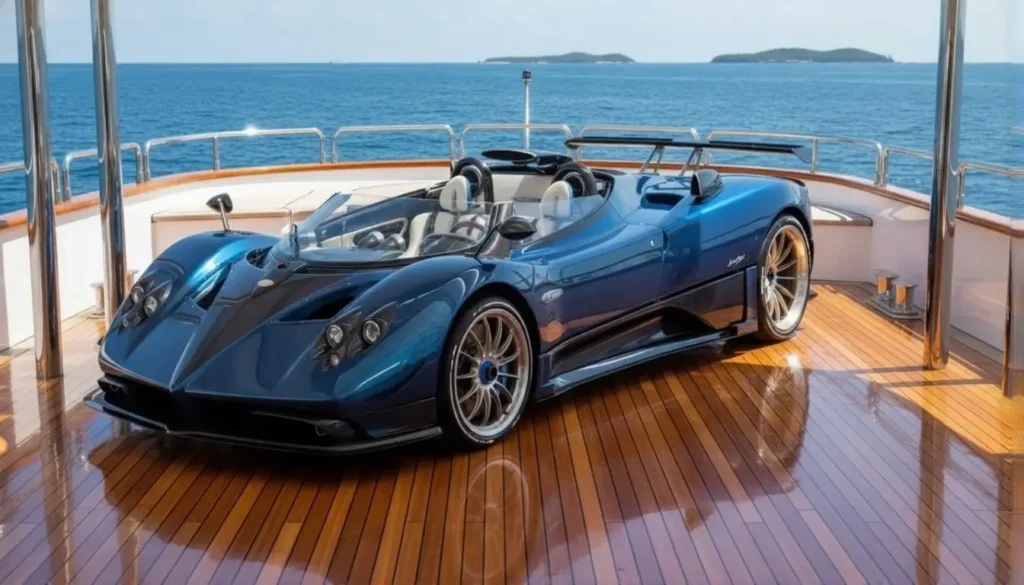
Think about the social dynamics at events like Pebble Beach Concours or the Goodwood Festival of Speed. A billionaire might park a $500,000 Ferrari next to another billionaire’s identical Ferrari. They’ll admire each other’s cars politely, then move on. But roll up in one of three HP Barchettas globally, and suddenly you’re the center of attention. Other collectors, regardless of their wealth, know you possess something they can’t have. That social currency, that moment of recognition and envy, drives behavior at this economic level more than practical transportation needs.
There’s also an element of legacy building. Billionaires increasingly view themselves as stewards of historically significant objects. Owning an HP Barchetta means preserving a piece of automotive history, potentially for donation to a museum or family foundation. One collector described it as “I’m not really the owner. I’m the current custodian for future generations.” This framing transforms the $17.5 million purchase from consumption into cultural preservation, a narrative that justifies the expenditure even by billionaire standards.
Real-World Ownership: What It’s Actually Like
Let’s get brutally honest about what actually owning a Pagani Zonda HP Barchetta entails, because the reality is far more complex and impractical than the fantasy suggests.
First, you can’t really “use” this car in any conventional sense. No roof means you’re entirely dependent on perfect weather. Rain? Not happening. Too hot? The sun roasts you without any shade. Too cold? Same problem. You need ideal conditions, maybe 70 degrees and sunny, just to consider taking it out. One owner joked, “I check weather forecasts more carefully than airlines do. If there’s a 20% chance of rain, the Barchetta stays in the garage.”
Storage presents its own challenges. The car requires a climate-controlled space with specific humidity levels to prevent carbon fiber degradation. Many owners keep it on a battery tender constantly since starting it regularly isn’t practical. Insurance companies sometimes require proof of 24/7 security monitoring. We’re not talking about parking it in your regular garage. We’re discussing what amounts to a museum-quality storage facility.
Actually, driving it proves equally complicated. That manual transmission and lack of electronic aids mean you need genuine skill to operate the car properly without embarrassing yourself or causing damage. Imagine stalling a $17.5 million car at a stoplight while other billionaires watch. It happens. One owner admitted to taking professional racing instruction specifically to feel confident operating his HP Barchetta in public.
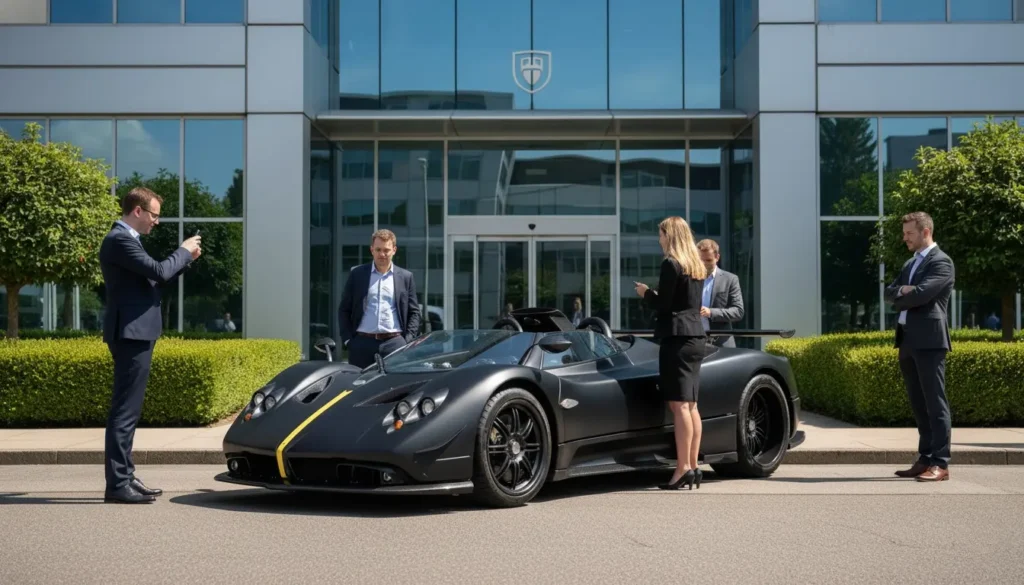
The attention it generates can be both thrilling and exhausting. Roll into any public space and you’re immediately surrounded by phone cameras and questions. Most hypercar owners enjoy some recognition, but the HP Barchetta’s extreme rarity turns every outing into a spectacle. Some owners appreciate this while others find it intrusive and prefer to drive more anonymous vehicles for everyday use.
Maintenance requires shipping the car back to Pagani’s facility in Modena, Italy, for major service work. We’re talking about $50,000 shipping costs plus service fees, and the car might be gone for weeks or months. You can’t just take it to your local mechanic or even a Ferrari dealer. Pagani technicians are the only people qualified to work on many systems.
Yet despite all these complications, owners describe the actual driving experience in almost religious terms. “The first time I took it through Angeles Crest Highway at dawn, I understood why people become obsessed with cars,” one owner recounted. “That V12 screaming, the manual gearbox requiring perfect rev-matching, the sensation of speed without any barrier between you and the environment. It’s not transportation. It’s not even really a car. It’s a mechanical drug that briefly makes you feel immortal.”
Specification Table of Pagani Zonda HP Barchetta
| Specification | Details |
|---|---|
| Engine | 7.3L Mercedes-AMG M120 V12, Naturally Aspirated |
| Power | 789 hp @ 6,200 rpm |
| Torque | 575 lb-ft @ 4,000 rpm |
| Transmission | 6-speed Manual, Open-gate Shifter |
| Drivetrain | Rear-wheel Drive |
| 0-60 mph | ~3.4 seconds (estimated) |
| Top Speed | 220+ mph (estimated) |
| Weight | 2,755 lbs (1,250 kg) |
| Power-to-Weight | 1 hp per 3.49 lbs |
| Chassis | Carbon-Titanium Monocoque |
| Body Material | Carbotanium (Carbon Fiber-Titanium Composite) |
| Brakes | Carbon-Ceramic, Brembo Calipers |
| Wheels | Forged Aluminum, Custom Design |
| Tire Size (Front) | 255/35 R19 |
| Tire Size (Rear) | 345/30 R20 |
| Length | 172.8 inches |
| Width | 79.9 inches |
| Height | 45.7 inches |
| Wheelbase | 105.9 inches |
| Fuel Capacity | 29 gallons (110 liters) |
| Production | 3 units total |
| Price | $15-17.5 million USD |
FAQs on Pagani Zonda HP Barchetta
Can I actually buy a Pagani Zonda HP Barchetta today?
No. All three units were sold before the public announcement to pre-selected collectors. Your only option would be convincing one of the current owners to sell, which seems unlikely given the cars’ significance and value trajectory. Realistically, you’d need to wait years or decades for one to potentially appear at auction.
Is the HP Barchetta street legal?
Yes, though with significant limitations. It’s homologated for road use in most markets, but the lack of a roof and minimal windscreen means it’s not practical for normal driving conditions. Think of it as “technically legal” rather than “sensibly usable.”
How does the manual transmission affect performance compared to modern dual-clutch systems?
Modern DCTs shift faster, no question. But the manual transmission in the HP Barchetta isn’t about lap times. It’s about driver engagement and the mechanical connection between human and machine. Faster isn’t always better when the goal is emotional experience rather than numbers.
What kind of maintenance does a Pagani require?
Annual service runs $50,000-75,000 and must be performed at Pagani’s facility in Modena, Italy. Major work can exceed $100,000. The carbon-ceramic brakes alone cost $30,000+ to replace. Budget significantly for maintenance, and expect the car to spend time traveling for service.
Will Pagani build more Zonda variants in the future?
Pagani officially ended Zonda production with the HP Barchetta. However, the company has a history of creating special one-off commissions for clients, so it’s possible individual bespoke Zondas could appear. But a production run, even a tiny one, seems unlikely.
How does the HP Barchetta compare to Horacio Pagani’s personal car collection?
Horacio owns one of the three HP Barchettas, keeping it as his personal “greatest hits” tribute to the Zonda lineage. His collection includes various Zonda prototypes and development vehicles. The fact that he kept one HP Barchetta for himself, rather than selling all three, speaks to its personal significance.
Final Verdict: Who Should Want This Pagani Zonda HP Barchetta?
The Pagani Zonda HP Barchetta isn’t for everyone, even among billionaires. It’s not the fastest hypercar. It’s not the most powerful. It’s certainly not the most practical. What it represents instead is automotive philosophy taken to its absolute extreme, a machine that prioritizes emotion, artistry, and mechanical purity over every other consideration.
If you’re a collector who values exclusivity above all else, who sees cars as investment-grade art rather than transportation, who appreciates the romance of naturally aspirated engines and manual transmissions, then the HP Barchetta represents the Holy Grail. It’s the car that makes other billionaires jealous, the piece that completes a world-class collection, the asset that might appreciate into nine figures over decades.
But if you want something you can actually drive regularly, something practical for real-world use, or something that delivers pure performance numbers, look elsewhere. The Bugatti Chiron is faster. The McLaren P1 is more usable. The Ferrari SF90 offers more technology. The HP Barchetta isn’t trying to compete on those terms.
Three people in the world own this machine. They’re not necessarily the three wealthiest car collectors or the three most skilled drivers. They’re the three individuals Horacio Pagani chose to entrust with his final Zonda vision. In that sense, the HP Barchetta is less about the car itself and more about the story, heritage, and privilege of custodianship.
So here’s my question for you: If money were no object and you could have any car ever created, would you choose something you could drive every day, or something so rare and special that you’d drive it once a month and spend the rest of the time just staring at it in your climate-controlled garage? Because that distinction defines whether the Pagani Zonda HP Barchetta would be your dream car or an expensive sculpture you’d admire but never fully understand.
What’s your take on cars like this? Are they the pinnacle of automotive passion or examples of wealth taken too far? Drop your thoughts in the comments, I’m genuinely curious whether the enthusiast community sees value in machines this extreme or whether we’ve crossed into absurdity.