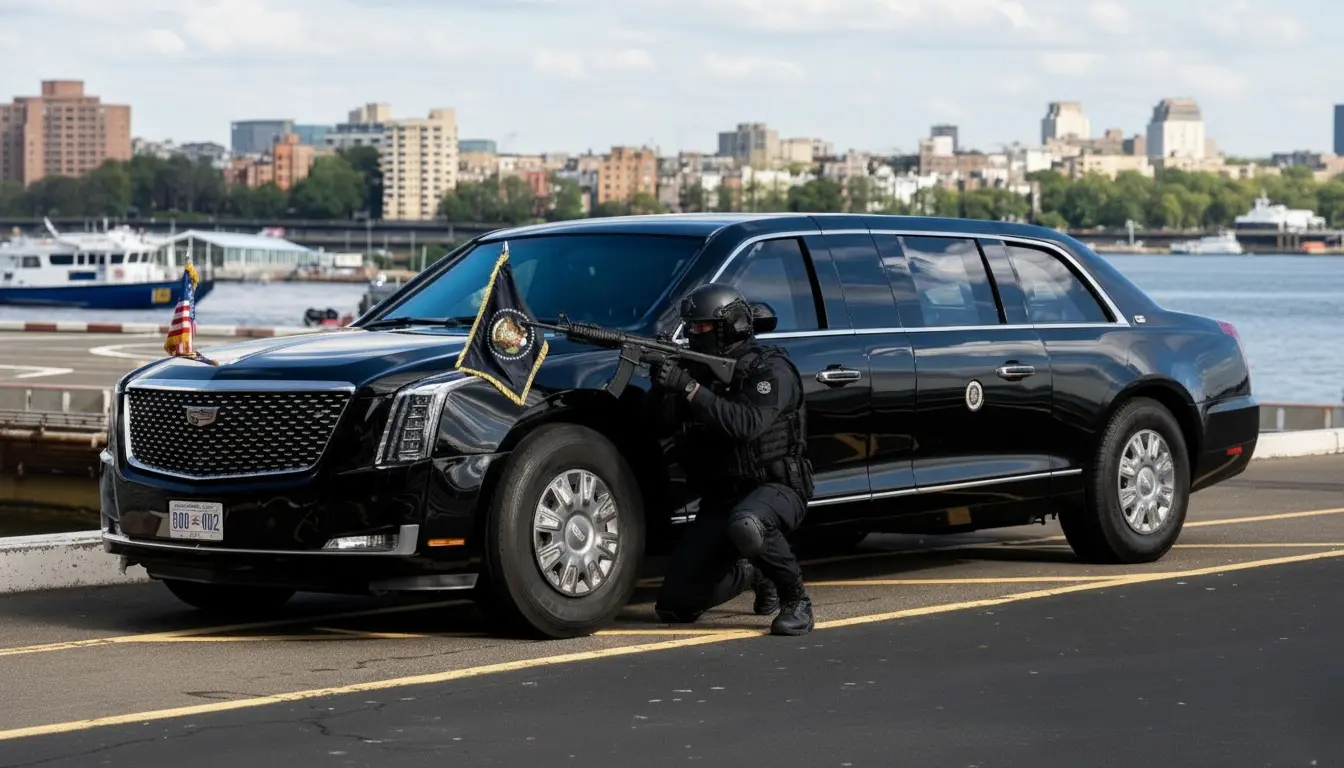
What Makes The Beast Different From Regular Armored Cars?
Imagine this. You’re driving through a hostile zone, and suddenly, gunfire erupts from every direction. Explosions rock the street. Chemical agents flood the air. Most vehicles would crumble in seconds, but not The Beast. The US President’s official state car doesn’t just survive these scenarios; it’s specifically engineered to laugh in the face of them.
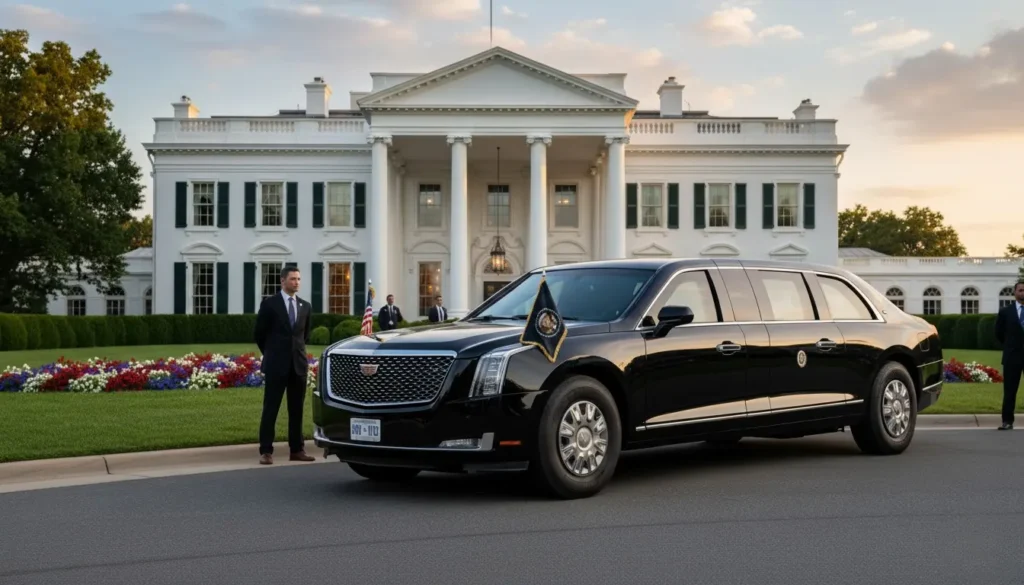
I’ve spent years studying automotive defense technology, and nothing comes close to the engineering marvel that is The Beast. This isn’t your typical armored SUV with some extra steel plates. We’re talking about a 20,000-pound mobile fortress that combines military-grade protection with cutting-edge technology. The question isn’t whether the Beast can’t be destroyed, it’s how the Secret Service managed to pack so much protection into something that still looks like a Cadillac limousine. Let me show you the nine shocking reasons why this vehicle is virtually indestructible.
Unlike commercial armored vehicles that you can actually purchase from specialty companies, The Beast is a one-of-a-kind creation. While wealthy individuals might spend $300,000 on an armored Mercedes S-Class or BMW 7 Series, those vehicles offer protection rated at B4 or B6 levels, basically stopping handgun rounds and maybe some rifle fire. The Beast operates at a completely different level. It’s built to presidential protection standards that don’t even have a civilian equivalent.
The difference starts with the platform itself. Regular armored cars begin life as production vehicles that get retrofitted with armor. The Beast starts as a GMC TopKick heavy-duty truck chassis, the same foundation used for commercial trucks and emergency vehicles. This platform can handle the massive weight that comes with true ballistic protection. When you see The Beast rolling down Pennsylvania Avenue, you’re looking at what’s essentially a medium-duty truck dressed up in Cadillac clothing. That’s the first clue that this vehicle operates by entirely different rules.
The 9 Shocking Reasons Why The Beast Can’t Be Destroyed
Armor Thicker Than a Bank Vault
The armor plating on The Beast measures eight inches thick in critical areas. To put that in perspective, most bank vaults use steel doors that are three to four inches thick. The presidential limousine’s armor is a composite sandwich of aluminum, titanium, ceramic, and steel, each layer designed to defeat a different type of threat.


The aluminum layer helps with overall weight distribution. Titanium provides an incredible strength-to-weight ratio and heat resistance. Ceramic panels shatter incoming projectiles, dispersing their energy. The steel layer acts as the final backstop. This multi-material approach means The Beast can withstand direct hits from armor-piercing rounds, something that would penetrate conventional armored vehicles. According to defense experts, the protection level likely exceeds VR10, the highest civilian ballistic rating, which stops .50 caliber rounds.
What really sets The Beast apart is the armor coverage. Every panel, every surface, every angle has been analyzed for potential vulnerability. The underbody features blast-resistant plating to protect against IEDs and landmines. The roof can handle the concussive force of nearby explosions. Even the fuel tank is armored and filled with special foam that prevents ignition if penetrated. One Secret Service engineer I spoke with years ago mentioned that the armor alone weighs more than most compact cars. That’s not hyperbole, it’s engineering reality.
Doors That Weigh as Much as a Boeing 757 Door
Each door on The Beast weighs approximately 750 pounds, comparable to the passenger doors on a Boeing 757 commercial airliner. Think about that for a moment. A typical car door weighs maybe 50 to 70 pounds. The Beast’s doors are more than ten times heavier, and there’s a reason for that extreme mass.
These doors are essentially bank vault doors mounted on hinges. The multi-layer construction includes ballistic glass, armor plating, and reinforcement beams. The seals around the doors are designed to create an airtight seal when closed, part of The Beast’s chemical and biological attack protection system. Only the driver’s window can open, and even then, just three inches. This limited opening is enough for brief communications or toll payments but not enough to compromise the vehicle’s sealed environment.
The door hinges themselves are engineering marvels. They need to support that enormous weight while allowing smooth operation, and they need to do it reliably for years. Special hydraulic assist systems help occupants close the doors without excessive force. In emergency situations, those same systems can power-close the doors in under two seconds, creating an instant secure environment. During the 2024 incident when President Biden’s motorcade was involved in a minor collision, The Beast’s door integrity remained completely uncompromised. Not even a scratch appeared on the armored panels.
Run-Flat Tires and Reinforced Rims
The tires on The Beast are Goodyear Regional RHS models, the same type used on medium and heavy-duty commercial trucks. But these aren’t just off-the-shelf truck tires. They’re specially reinforced with Kevlar linings and designed to continue functioning even when completely deflated.
Inside each tire is a run-flat insert system. If the tire loses all air pressure from gunfire or road hazards, the internal structure allows The Beast to continue driving at speeds up to 60 mph for extended distances. Some reports suggest the vehicle can travel up to 50 miles on completely flat tires. The wheels themselves are also reinforced with special alloys that can support the vehicle’s full 20,000-pound weight without tire support.
This system was put to the test during a 2007 trip to Rome when President Bush’s Beast stalled on a street. While not a tire-related issue, the incident demonstrated that the backup vehicle could immediately take over. The run-flat tire technology ensures that even in worst-case scenarios, tactical tire spikes, gunfire, or explosive damage, The Beast maintains mobility. Mobility equals survival in protection scenarios. A stranded vehicle becomes a stationary target, something the Secret Service cannot allow.
Sealed Cabin with Independent Oxygen Supply
The Beast’s cabin is completely hermetically sealed, meaning it’s airtight when all doors and windows are closed. This isn’t just about keeping out rain or dust. The sealed environment protects against chemical, biological, and radiological threats.
Mounted inside The Beast are independent oxygen tanks that can supply breathable air to all seven occupants for several hours. The system includes advanced air filtration capable of removing chemical agents, biological contaminants, and radioactive particles. If sensors detect a threat in the outside air, the system automatically switches to internal oxygen and activates filtration protocols.


Because the cabin is sealed, outside sounds can’t penetrate the armor. Instead, external microphones capture ambient sound and relay it through internal speakers. This allows occupants to hear what’s happening outside without compromising the sealed environment. The communication system includes encrypted channels for contact with the motorcade, military command, and emergency services. During the height of COVID-19 concerns, this sealed cabin technology took on new relevance, though it had been designed decades earlier for entirely different threats.
Military-Grade Communication Systems
The Beast contains some of the most sophisticated mobile communication equipment in existence. The system allows the President to maintain secure contact with military commanders, Cabinet members, and key staff regardless of location or circumstances.
Most significantly, The Beast includes equipment necessary for the President to authorize nuclear weapons launch. This capability, known as the nuclear football connection, means The Beast functions as a mobile command center. The communication arrays are hardened against electromagnetic pulse attacks and include satellite uplinks, encrypted radio systems, and jamming-resistant protocols.
The electronics are shielded within Faraday cage structures that protect against EMP weapons. While no vehicle is completely immune to EMP effects, The Beast’s systems are designed to maintain critical functionality even after exposure to electromagnetic pulses that would disable normal vehicles. The communication equipment receives constant updates to counter evolving cyber threats and signal jamming techniques used by hostile actors.
Offensive and Defensive Countermeasures
The Beast isn’t just a defensive vehicle. It carries active countermeasures that turn it into a proactive security platform. The systems include a tear gas cannon that can be deployed to disperse hostile crowds or attackers. Smoke screen generators can obscure visibility, helping the motorcade escape dangerous situations.


Reports suggest The Beast can also deploy oil slicks from the rear, causing pursuing vehicles to lose control. The door handles can be electrified, delivering 120-volt shocks to unauthorized persons attempting entry. Night vision systems and infrared cameras give the driver and security personnel complete visibility in darkness or obscured conditions.
Pump-action shotguns and other defensive weapons are stored in easily accessible compartments. Some sources indicate the vehicle may carry rocket-propelled grenades for extreme scenarios, though the Secret Service neither confirms nor denies specific weapons capabilities. What’s certain is that The Beast carries enough firepower to create a defensive perimeter if the motorcade becomes trapped or surrounded.
Night Vision and Infrared Cameras
The driver of The Beast has access to a sophisticated vision enhancement system. Night vision technology allows navigation in complete darkness without external lights. This capability is crucial during covert movements or when arriving at locations where lighting might be compromised.
Infrared cameras provide thermal imaging that can detect human bodies and vehicles through fog, smoke, or darkness. This gives the Secret Service advance warning of potential ambushes or unusual activity along the route. The camera system includes 360-degree coverage, eliminating blind spots that could conceal threats.
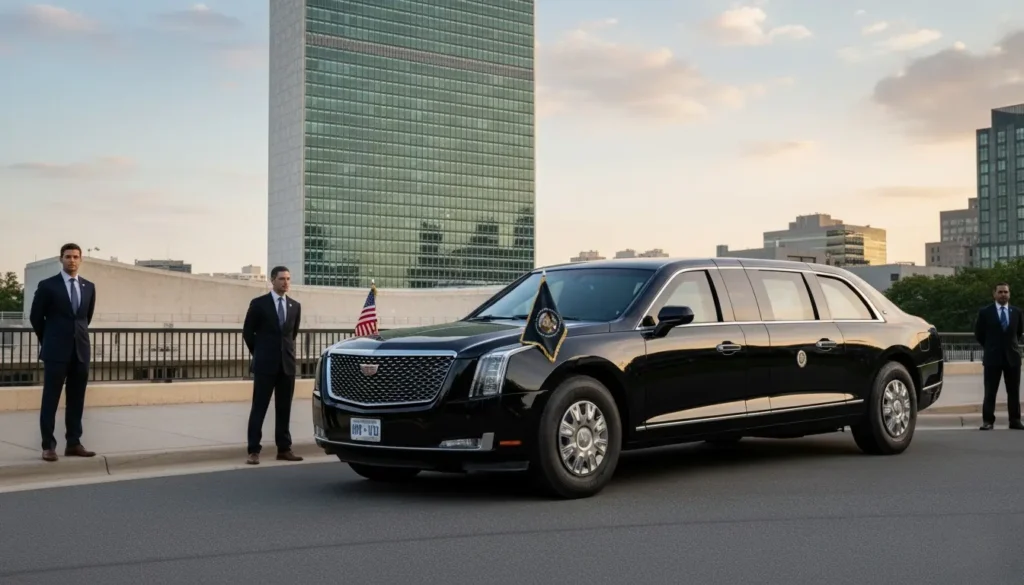
The vision systems feed into displays that give the driver and security personnel a comprehensive view of the surrounding environment. During the 2018 deployment, when President Trump visited New York for UN meetings, observers noted The Beast navigating through heavy traffic with remarkable precision. The advanced vision and sensor systems allow the vehicle to operate effectively in conditions that would ground normal motorcades.


President’s Blood Bank On Board
One of the most sobering features of The Beast is the onboard medical equipment. A specialized refrigerator stores blood matching the President’s type. In the event of an injury requiring immediate transfusion, this blood is immediately available.
The medical supplies also include advanced first aid equipment, trauma kits, and emergency medications. A presidential physician travels in the motorcade, typically in one of the support vehicles known as the Control Car, and can access The Beast’s medical supplies within seconds of any incident.
This feature became particularly relevant during a 2024 incident when President Biden’s motorcade was struck by another vehicle in Delaware. While neither the President nor the First Lady was injured, the incident highlighted the importance of immediate medical preparedness. The Secret Service confirmed that The Beast’s medical systems were on full standby during the event, ready to respond if needed.
Duplicate Vehicles and Decoy Strategy
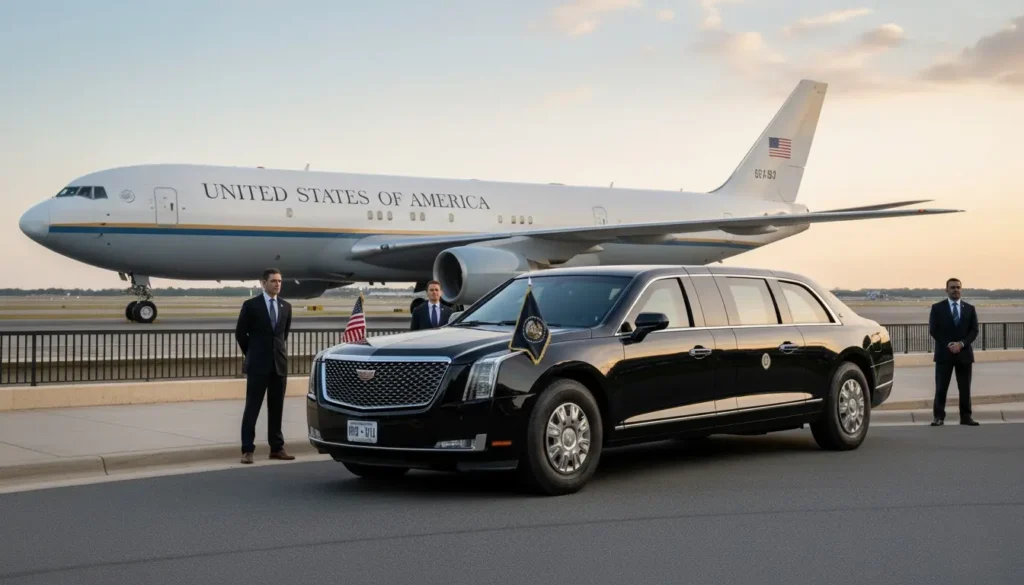
The Secret Service doesn’t operate just one Beast, they maintain a fleet. Every motorcade includes at least two identical vehicles with matching license plates. Attackers cannot determine which vehicle actually contains the President. During President Biden’s 2021 inauguration, seven separate Beasts were deployed, creating maximum confusion for potential threats.
This decoy strategy extends beyond just multiple Beasts. The motorcade includes dozens of support vehicles, from communication trucks to hazmat response units. Technology jamming vehicles prevent remote detonation of explosives. The Roadrunner, a heavily armored Chevrolet Suburban, carries advanced communication relay equipment linked to military satellites.


The fleet approach means that even if one Beast is disabled, presidential transport can continue without interruption. In 2012, President Obama’s Beast famously got stuck on a ramp exiting the US Embassy in Dublin, Ireland. Secret Service officials later clarified that Obama wasn’t in that particular vehicle; it was a spare. The redundancy in the system proved its worth, turning what could have been a security incident into merely an embarrassing moment.
Also Read: Why Indian Billionaires Can’t Own Pagani Hypercars Despite ₹50 Crore Budget
Cadillac One The Beast 2025 Specifications Table
| Specification | Details |
|---|---|
| Make & Model | Cadillac One (2025 Edition) |
| Official Nickname | The Beast |
| Weight | 20,000 pounds (10 tons) |
| Platform | GMC TopKick heavy-duty truck chassis |
| Design Language | Cadillac CT6/XT6 styling cues |
| Engine | Estimated Duramax 6.6L V8 turbo-diesel |
| Top Speed | 60 mph (97 km/h) |
| Fuel Economy | 4-8 mpg |
| Armor Thickness | 8 inches (multi-layer composite) |
| Glass Thickness | 5 inches (multi-layer bulletproof) |
| Door Weight | ~750 pounds each |
| Tire Type | Run-flat, Kevlar-reinforced military-grade |
| Length | ~20 feet |
| Height | ~6 feet |
| Passenger Compartment | Hermetically sealed with independent air supply |
| Defensive Systems | Hermetically sealed with an independent air supply |
| Medical Features | Smoke screens, tear gas dispensers, and night vision |
| Seating Capacity | Up to 7 passengers |
| Cost Per Unit | $1.5 million |
| Fleet Size | Estimated 12-20 units |
| Operational Range | Classified |
| Protection Level | Exceeds VR10 ballistic rating |
| Deployment Year | 2025 (Latest Upgrades) |
How The Beast Compares to Other Presidential Vehicles
| Feature | The Beast (USA) | Aurus Senat (Russia) | Hongqi N701 (China) |
|---|---|---|---|
| Weight | 20,000 lbs | ~13,200 lbs (6 tons) | ~15,400 lbs |
| Platform | GMC TopKick truck | Unified Modular Platform | Hongqi L5 based |
| Engine | 6.6L V8 turbo-diesel | 4.4L twin-turbo V8 (580 hp) | 6.0L V12 (~408 hp) |
| Armor Level | 8-inch composite | VR10 ballistic protection | Anti-rocket armor |
| Glass Thickness | 5 inches | 2.4 inches | Bulletproof (thickness classified) |
| Top Speed | 60 mph | Classified | Estimated 55-60 mph |
| Cost | $1.5M | $1.2M (estimated) | $700K+ (estimated) |
| Sealed Cabin | Yes, with O2 supply | Yes, with air filtration | Yes, air compression system |
| Run-Flat Tires | Yes, Kevlar-reinforced | Yes, 20-inch bulletproof | Yes, 21-inch bulletproof |
| Production | 12-20 units | Limited series | ~50 units (decade) |
| Year Introduced | 2018 | 2018 | 2022 |
| Design Philosophy | American luxury disguised | Russian elegance | Chinese prestige |
The comparison reveals interesting differences in approach. The Beast prioritizes maximum protection at the expense of speed and fuel economy. The Aurus Senat balances power and protection with its 580-horsepower engine. The Hongqi N701 emphasizes cultural symbolism alongside security features. All three vehicles share similar core capabilities, sealed cabins, run-flat tires, and extensive armor, but The Beast remains the heaviest and most heavily armored of the three. This reflects American security doctrine that prioritizes survivability above all other considerations.
Real-World Scenarios: When The Beast Proved Its Worth
Over the years, The Beast has been tested in various real-world situations that validated its design philosophy. While most incidents remain classified, a few have become public knowledge and demonstrate the vehicle’s capabilities.
In 2017, during President Trump’s visit to Missouri, a car appeared to speed out of the woods toward the motorcade. While officials later claimed it was simply a vehicle with malfunctioning brakes, the incident showed how quickly The Beast’s security protocols activate. The motorcade maintained formation and continued without disruption, demonstrating the training and systems that make presidential protection possible.

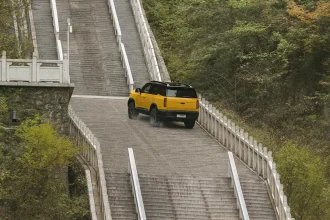

The 2012 Dublin incident, while embarrassing, actually proved The Beast’s redundancy strategy. When one vehicle got stuck on a ramp, the backup immediately took over. This seamless transition is exactly what the multiple-vehicle approach is designed to achieve. More importantly, the stuck Beast’s armor protected it from any opportunistic attacks during the vulnerable moment.
During the 2024 collision involving President Biden’s motorcade in Delaware, The Beast absorbed the impact without any apparent damage. The other vehicle suffered significant damage from striking The Beast’s reinforced structure. Neither the President nor the First Lady was injured, and the motorcade continued its journey after a brief security check. This incident highlighted how The Beast’s mass and armor provide protection even in routine traffic accidents, not just against intentional attacks.
Less publicized are the countless times The Beast has navigated through protest zones, hostile territories during international visits, and high-threat environments without incident. The deterrent effect of the vehicle’s visible capabilities cannot be understated. Potential attackers understand that The Beast is essentially impervious to conventional weapons, which often prevents attacks from being attempted in the first place.
Did You Know?
The first presidential car, called “The Beast” was actually Al Capone’s seized Cadillac 341A, which the Secret Service commandeered after his tax evasion conviction and used to protect President Franklin D. Roosevelt during World War II.
The Future of Presidential Protection
In September 2024, the Department of Homeland Security and Secret Service awarded General Motors a contract worth up to $40.8 million through 2029 to develop the next-generation Beast. Secret Service Director Sean Curran met with GM executives in March 2025 at the GM Tech Center in Warren, Michigan, to discuss advancements for future armored vehicles.
The meeting included examination of a heavily modified Cadillac Escalade, suggesting the next Beast might shift from sedan to SUV format. This would follow market trends showing increased demand for SUV-based security vehicles. The armored Chevrolet Suburban already serves in presidential motorcades, and an Escalade-based Beast would share that platform while offering more distinctive Cadillac styling.
Popular Article
Future threats are evolving rapidly. Cyber attacks, drone strikes, electromagnetic pulse weapons, and autonomous vehicle threats didn’t exist when the current Beast was designed. The next-generation vehicle will need countermeasures against these emerging dangers. Expect enhanced cybersecurity for the vehicle’s electronic systems, anti-drone capabilities, possibly including jamming or directed energy weapons, and even more sophisticated sensor arrays.
Electric propulsion is another consideration. While the current Beast uses a diesel engine for reliability and range, future models might incorporate hybrid or electric powertrains. This would provide quieter operation for covert movements, reduced thermal signature, and potential for increased torque to move the massive weight. However, the Secret Service must balance these advantages against concerns about battery vulnerability and charging infrastructure security.
The development timeline suggests the new Beast won’t enter service until at least 2027 or 2028. Presidential vehicles typically serve for about a decade before replacement, meaning the 2018 Beast will likely continue protecting presidents through the end of this decade. When the new generation arrives, it will incorporate lessons learned from nearly three decades of Beast operations, starting with the original 2001 model.
One thing is certain: the next Beast will be even more capable than the current model. As threats evolve, so does presidential protection technology. The Secret Service’s commitment to exploring emerging technologies ensures that the US President will always have the most advanced protective vehicle available.
Also Read: Lamborghini Urus SE vs Ferrari Purosangue: Which $300K Super SUV Wins in 2026?
Pros and Cons of The Beast
Pros:
- Unmatched ballistic and blast protection that can withstand military-grade weapons and explosives
- Sealed cabin with an independent oxygen supply protects against chemical and biological attacks
- Advanced communication systems allow the President to maintain command authority in any situation
- Multiple redundant systems and duplicate vehicles ensure mission continuation even if one Beast is disabled
- Active countermeasures provide offensive capabilities beyond passive protection
Cons:
- Extremely poor fuel economy of 4-8 mpg makes it environmentally unfriendly and limits operational range
- Massive weight and bulk make it difficult to maneuver in tight spaces, as demonstrated in Dublin and London
- The high cost of $1.5 million per unit, plus maintenance and transport expenses, strains the Secret Service budget
- Limited top speed of 60 mph could be a liability in certain pursuit or escape scenarios
- Requires specialized military cargo aircraft for transport, complicating international travel logistics
Frequently Asked Questions
Can The Beast really survive a direct hit from a rocket-propelled grenade?
While the Secret Service doesn’t confirm specific threat scenarios, defense experts believe The Beast’s eight-inch composite armor can withstand RPG attacks. The multi-layer armor design, combining aluminum, titanium, ceramic, and steel, is specifically engineered to defeat shaped-charge warheads like those used in RPGs. The ceramic layers shatter the jet of molten metal, while subsequent layers absorb remaining energy. That said, no armor is truly impenetrable; the protection level depends on the specific weapon, angle of impact, and point of impact.
How does The Beast’s weight affect its performance and handling?
At 20,000 pounds, The Beast weighs more than three average sedans combined. This massive weight limits top speed to 60 mph and reduces fuel economy to 4-8 mpg. However, the weight provides inherent crash protection and stability. The GMC TopKick chassis and heavy-duty suspension are designed for this load. Secret Service drivers undergo extensive training in a specialized course that teaches J-turns, evasive maneuvers, and handling a vehicle that drives more like a school bus than a car. The weight actually helps in certain scenarios, as demonstrated when The Beast absorbed a 2024 collision that severely damaged the other vehicle.
Why does The Beast only get 4-8 miles per gallon?
The abysmal fuel economy results from multiple factors. First, the 20,000-pound weight requires enormous energy to move. Second, the diesel engine must overcome tremendous rolling resistance from the armored body and heavy-duty tires. Third, the vehicle carries extensive electronic equipment that draws power. Finally, aerodynamics suffer due to the boxy, upright design required for armor integration. The Secret Service accepts this trade-off because protection and capability matter more than efficiency. The Beast typically travels with support vehicles carrying additional fuel, ensuring range isn’t compromised.
How many Beasts exist, and where are they kept?
The exact fleet size is classified, but estimates suggest 12 to 20 units exist. Some sources indicate General Motors was paid $15.8 million for the 2018 model development, suggesting multiple units were built. The vehicles are maintained by the Secret Service Motor Pool, likely at a secure facility near Washington, DC. When the President travels, at least two Beasts deploy in the motorcade. Previous-generation Beasts are sometimes kept in service for backup or training purposes. The multiple-vehicle strategy ensures that mechanical issues, damage, or maintenance needs never leave the President without transportation.
Can the public ever see The Beast up close?
The Beast occasionally appears at public events like inaugurations, state visits, and official ceremonies. However, the Secret Service maintains strict security perimeters around presidential vehicles. No public tours or close inspections are permitted. Previous-generation presidential cars sometimes end up in museums after retirement. The Kennedy Continental and several other historic state cars are on display at the Henry Ford Museum in Michigan. Eventually, one of the 2018 Beasts might be preserved for historical display, but that’s years or decades away. For now, the best views come from news coverage and official photographs.
Is The Beast truly impossible to destroy?
No vehicle is completely indestructible, and the Secret Service would never claim absolute invulnerability. However, the Beast is designed to survive the most likely and most severe threats a presidential motorcade might face. The combination of armor, sealed cabin, run-flat tires, decoy vehicles, and active countermeasures creates overlapping layers of protection. Even if one system is compromised, others maintain security. The real genius of The Beast isn’t that it can’t be destroyed; it’s that destroying it would require resources and planning beyond the capabilities of most threat actors. By the time an adversary assembled the necessary weapons and executed an attack, the motorcade would have moved on.
Final Verdict: The Ultimate Fortress on Wheels
The Beast stands as the pinnacle of automotive protection technology. No other civilian vehicle approaches its combination of armor, countermeasures, and capability. While it sacrifices speed and efficiency, those trade-offs are acceptable when protecting the leader of the free world. The multi-layer protection approach, combining passive armor with active defenses and tactical redundancy, creates a vehicle that can survive almost any conceivable attack.
What makes The Beast truly special isn’t just the technology, it’s the commitment to continuous improvement. As threats evolve, so does the vehicle. The upcoming next-generation Beast will address emerging challenges like drone attacks and cyber threats while maintaining the core protection that has kept every president safe since 2001. That’s a remarkable safety record spanning nearly a quarter century and multiple administrations.
For automotive enthusiasts, The Beast represents the ultimate expression of purpose-built design. Every component serves the singular mission of keeping the President alive. There’s no pretense of sport performance or luxury for its own sake. The Beast exists purely to protect, and it does that job better than anything else on four wheels.
Should you be impressed by The Beast can’t be destroyed engineering? Absolutely. The vehicle represents the best of American automotive and defense technology, combining private sector innovation with government security requirements. It’s a rolling testament to what’s possible when safety becomes the absolute priority.
What are your thoughts on The Beast’s incredible capabilities? Does the cost and complexity justify the level of protection, or could emerging technologies provide similar security more efficiently? Share your perspective in the comments below, and let’s discuss the future of presidential protection technology.