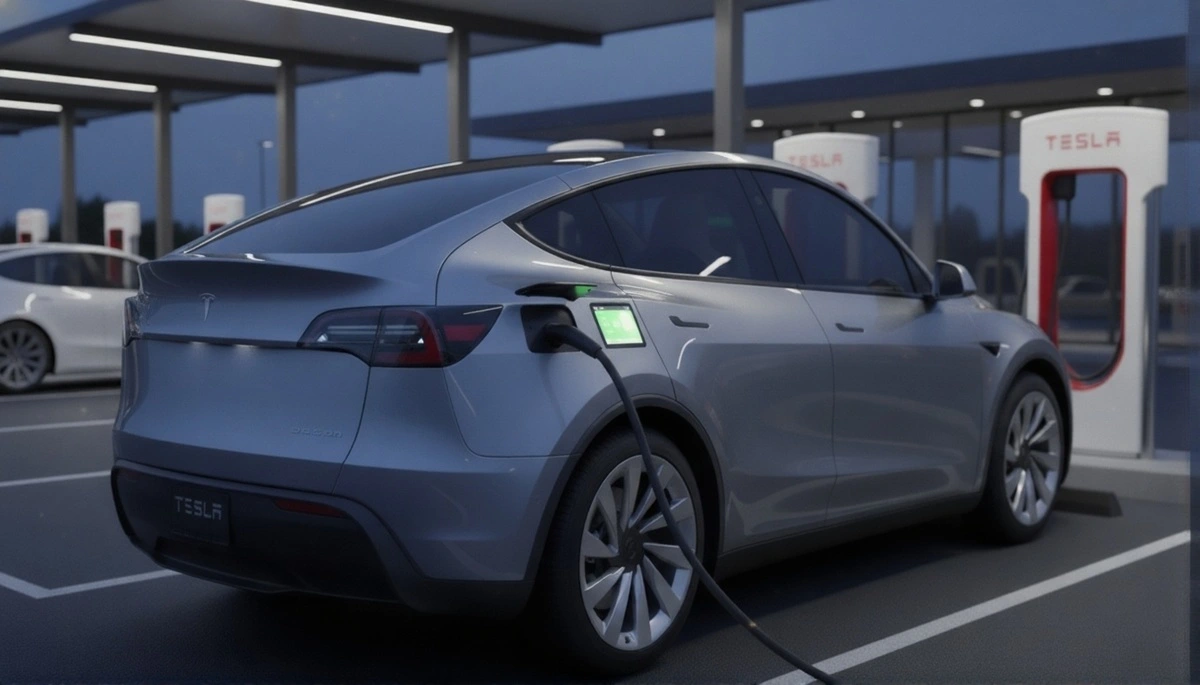
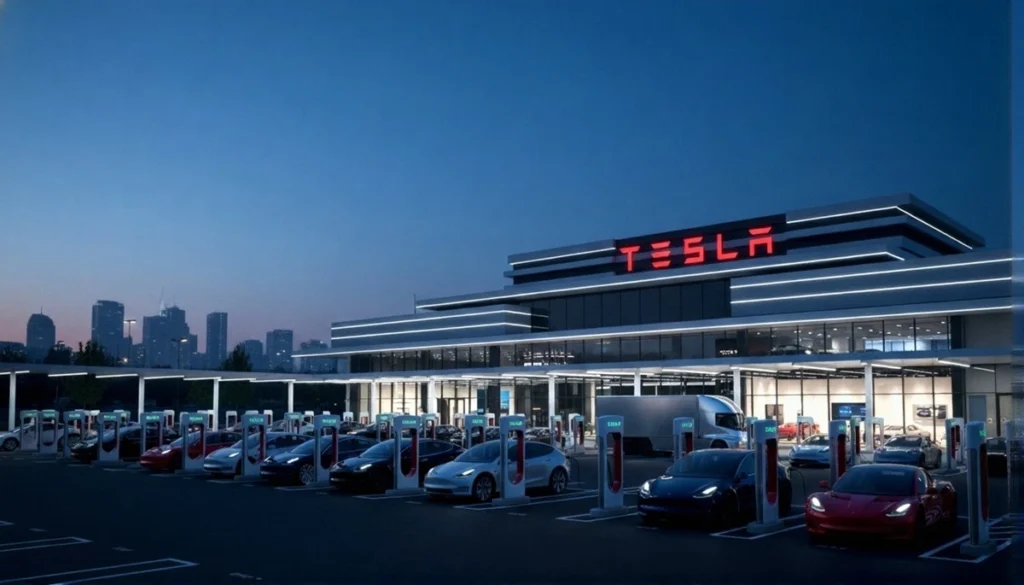
Imagine walking into a space where you can touch a Tesla, charge it at lightning speed, get it serviced, and take delivery, all without stepping outside. That’s exactly what Tesla just made possible in India. On November 27, 2025, Tesla opened its first integrated center in Gurugram, and it’s unlike anything the Indian automotive market has seen before. This isn’t just a showroom. It’s a complete Tesla ecosystem under one roof at Orchid Business Park, Sector 48.
After years of speculation, tariff negotiations, and false starts, Tesla has finally arrived in India with a bold statement. I’ve been following Tesla’s India journey since the first rumors in 2016, and this opening marks a historic shift in how premium electric vehicles will be sold and serviced in the country. Here’s everything you need to know about what this center offers and what it means for Indian car buyers.
What Makes the Tesla Gurugram Center Different?
Most car showrooms in India follow a familiar pattern. You walk in, look at display models, talk to sales staff, maybe take a test drive, and then begin the negotiation dance. Service centers exist separately, delivery happens at dealerships, and charging is your problem to solve at home.
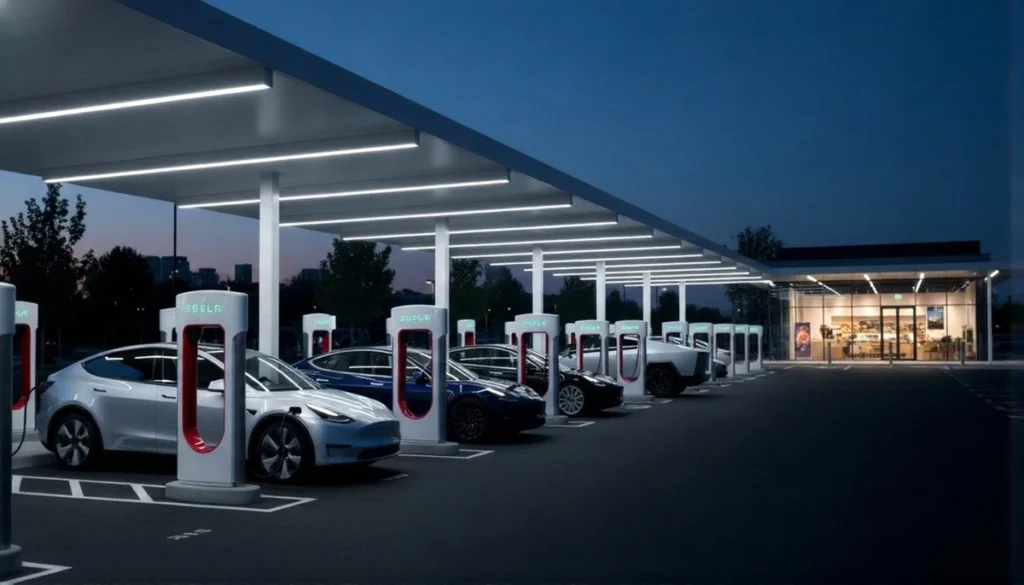
Tesla just threw that entire playbook out the window. The Tesla Gurugram center combines four critical functions that traditionally exist in separate locations. Retail space lets you experience the Model Y firsthand. The service bay handles maintenance and repairs with Tesla-certified technicians. A dedicated delivery area makes vehicle handovers seamless. And perhaps most importantly, the on-site V4 Supercharging station means you can charge while you wait or during service appointments.
This integrated approach solves one of India’s biggest EV adoption barriers. Range anxiety isn’t just about how far your car can go. It’s about knowing where you’ll charge and how long it’ll take. Having a Supercharger at the same location where you buy and service your vehicle creates a complete ownership experience that feels less intimidating for first-time EV buyers.


The center also showcases Tesla’s Optimus Gen 2 humanoid robot, a glimpse into the company’s broader vision beyond cars. While Optimus isn’t for sale and won’t be for years, its presence signals Tesla’s ambitions to be more than just an automaker in India.
Inside the Orchid Business Park Facility
Retail Experience
The showroom floor at Orchid Business Park follows Tesla’s minimalist design philosophy. Large glass panels flood the space with natural light, highlighting the Model Y on display. Unlike traditional dealerships cluttered with posters and promotional materials, Tesla’s approach is clean and uncluttered.
You won’t find pushy sales representatives here. Tesla employees act more as product specialists who answer questions rather than closing deals. The company’s direct-to-consumer model means no haggling over prices, no dealer markups, and transparent pricing that’s the same whether you buy in Mumbai or Delhi.
Interactive displays let you configure your Model Y digitally, exploring different color options, wheel choices, and feature packages. You can complete most of the purchase process on the spot using tablets, or do it later from home through Tesla’s website. This digital-first approach reduces paperwork and speeds up the buying process significantly.
Service and Delivery
The service area features Tesla-specific equipment and diagnostic tools. Technicians undergo extensive training at Tesla’s facilities to work on the brand’s unique electric architecture. Over-the-air software updates handle many issues remotely, but physical service remains necessary for mechanical components, tires, brakes, and bodywork.
Tesla promises a service experience that respects your time. Many routine maintenance tasks that take hours at traditional service centers can be completed much faster on electric vehicles. There’s no oil to change, no spark plugs to replace, no transmission fluid to service. The simplified drivetrain means fewer parts that can fail.
The delivery area handles the final handover process. Tesla aims to make this moment special, with dedicated staff walking you through every feature, setting up your smartphone app, and ensuring you’re comfortable with charging procedures before you drive away.
V4 Supercharging Technology
The on-site Supercharger uses Tesla’s latest V4 hardware. While it currently operates at rates similar to V3 Superchargers at around two hundred fifty kilowatts, the infrastructure supports future upgrades that could push speeds even higher. The V4 cabinet architecture can eventually deliver up to five hundred kilowatts for compatible vehicles.
For context, charging the Model Y Long Range from ten to eighty percent takes approximately 30 minutes at a Supercharger. That’s enough time to grab lunch, use the restroom, and check emails. Compare this to home charging, which adds about 40 to 50 kilometers of range per hour on a standard home connection.
The V4 system also features longer cables compared to previous generations, making it easier to charge regardless of where your charging port is located. This seems minor, but it matters significantly for daily usability.


Did You Know?
Tesla’s V4 Superchargers support vehicles with battery architectures ranging from four hundred to one thousand volts, making them compatible with upcoming EVs from other manufacturers that might adopt higher voltage systems.
The Model Y: Tesla’s India Debut Vehicle
Tesla chose the Model Y for its India launch for good reasons. This compact SUV sits at the sweet spot between affordability and practicality for Indian buyers who want space, performance, and range.
Pricing and Variants
The Model Y Long Range Rear-Wheel Drive starts at 59.89 lakh rupees. This isn’t cheap by Indian standards, but it positions Tesla against premium offerings from BMW, Mercedes-Benz, and Audi rather than mass-market EVs.
For this price, you get a vehicle that competes directly with the BMW iX1 LWB, which costs around 49 lakh rupees, and the Kia EV6, priced at 65.97 lakh rupees. Tesla’s direct sales model means this price includes everything; there are no dealer margins or surprise fees.
The company offers home charging equipment as part of the package. A Wall Connector can be installed at your residence, providing faster charging than a standard outlet. Installation costs vary depending on your home’s electrical setup and distance from the main panel.
Performance Specifications
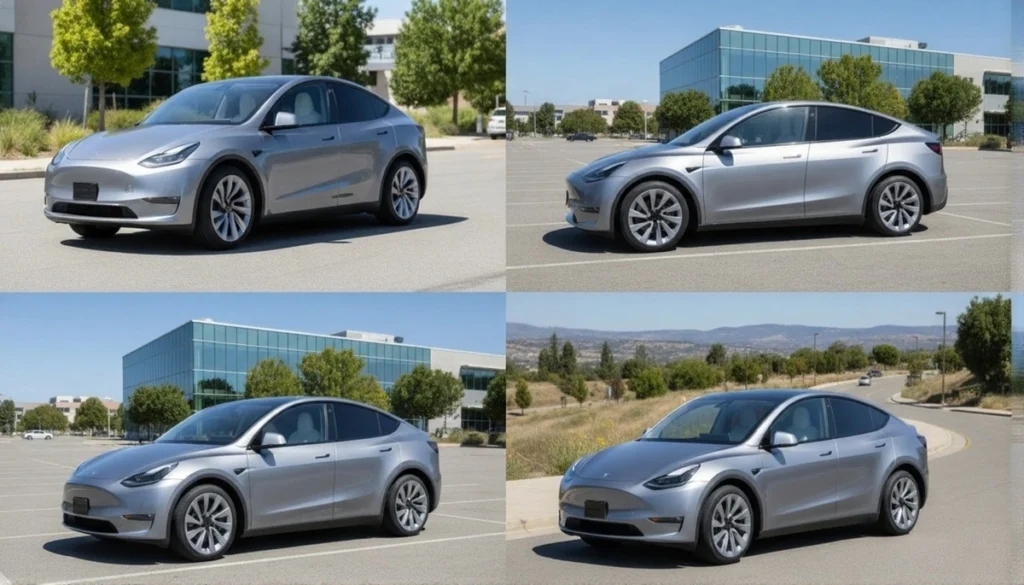
The Model Y Long Range RWD isn’t the fastest variant Tesla makes, but it’s no slouch either. The rear-mounted electric motor produces approximately three hundred thirty-one kilowatts, propelling the SUV from zero to one hundred kilometers per hour in about 5.6 seconds.


| Specification | Model Y Long Range RWD |
|---|---|
| Motor Configuration | Single Motor, Rear-Wheel Drive |
| Power Output | 331 kW (450 HP) |
| Torque | 493 Nm |
| 0-100 km/h | 5.6 seconds |
| Top Speed | 201 km/h |
| Battery Capacity (Gross) | 82 kWh |
| Battery Capacity (Usable) | 79 kWh |
| WLTP Range | Up to 622 km |
| Charging Speed (DC Fast) | Up to 250 kW |
| Seating Capacity | 5 Adults |
| Cargo Space | 2,158 liters (with rear seats folded) |
| Length x Width x Height | 4,797 x 1,920 x 1,624 mm |
Real-world range typically falls between 500 to 550 kilometers, depending on driving conditions, speed, climate control usage, and terrain. Highway driving at higher speeds reduces range, while city driving with regenerative braking can actually extend it.
The Model Y’s hatchback design provides impressive cargo space. With the rear seats up, you get enough room for several suitcases. Fold them down, and you can fit furniture, bicycles, or camping gear. The front trunk, or frunk, offers additional storage for items you want to keep separate.
Home Charging Solutions
Tesla includes a Mobile Connector with every Model Y. This basic charging cable plugs into a standard 15-amp socket and adds about 10 to 15 kilometers of range per hour. For overnight charging, this works fine if you don’t drive long distances daily.
The Wall Connector installation provides significantly faster charging at 11 kilowatts. This adds approximately 60 to 70 kilometers of range per hour, meaning you can fully charge an empty battery overnight in about 8 to 9 hours.
Solar panel owners can integrate their systems with Tesla’s charging setup, potentially powering their vehicle with clean, self-generated electricity. The economics get interesting here, as electricity from solar panels costs significantly less than grid power in most Indian cities.


Also Read: Why Indian Billionaires Can’t Own Pagani Hypercars Despite ₹50 Crore Budget
How Tesla’s Direct Sales Model Changes Everything
India’s automotive industry has always operated through dealerships. Manufacturers sell to dealers, dealers sell to customers, and multiple middlemen take their cut. Tesla bypasses this entire structure.
You can’t walk into a Tesla dealership because none exist. Instead, you visit Tesla’s company-owned center, interact with Tesla employees, and buy directly from the manufacturer. This direct relationship continues throughout ownership through the Tesla app, service appointments, and software updates.
The implications are significant. First, pricing remains consistent nationwide. A Model Y costs the same in Gurugram, Bangalore, or Mumbai. Second, Tesla captures all profit margins that would normally go to dealers, allowing them to price more competitively despite import duties. Third, the customer experience stays under Tesla’s control rather than varying by dealer quality.
This model faces regulatory challenges in India. Several states require franchise dealerships, and Tesla has lobbied for changes to allow direct sales. The Gurugram center operates in a region where these regulations are less restrictive, but expansion to other states might require navigation of complex local laws.


The Optimus Robot: A Glimpse into Tesla’s Future
Why would Tesla showcase a humanoid robot at a car center? Because Elon Musk doesn’t see Tesla as just an automaker. He positions the company as an AI and robotics leader that happens to make cars.
The Optimus Gen 2 robot on display can’t do much yet beyond controlled demonstrations. It walks, manipulates objects with surprising dexterity, and performs programmed tasks. But its presence serves a purpose. It tells visitors that Tesla thinks bigger than four wheels and a battery pack.
The robot uses similar AI technology that powers Tesla’s Autopilot and Full Self-Driving features. Neural networks trained on millions of miles of driving data help cars navigate roads. Those same principles apply to teaching robots to navigate homes and workplaces.
Will Indian customers care about a robot when they’re shopping for a car? Probably not immediately. But it reinforces Tesla’s brand as a technology company, which helps justify the premium pricing. You’re not just buying transportation, you’re buying into a vision of an electrified, AI-powered future.
India’s EV Infrastructure Challenge and Tesla’s Solution
Here’s the uncomfortable truth about India’s EV market. Vehicle sales are growing faster than the charging infrastructure. The ratio of electric vehicles to charging stations has worsened from 12 to 1 in 2024 to 20 to 1 in 2025.


India needs at least 1.3 million charging stations by 2030 to support projected EV adoption. That requires installing roughly 400 thousand new chargers annually. Current installation rates fall far short of this target.
Tesla’s solution is characteristically bold. Rather than wait for India to build charging infrastructure, they’re building their own. The Gurugram Supercharger is just the beginning. The company plans additional locations along major highways and in metropolitan areas.
This creates a classic chicken-and-egg scenario. EVs need a charging infrastructure to be practical. But charging networks aren’t profitable without enough EVs using them. Tesla solves this by vertically integrating; they control both the vehicles and the charging network, ensuring profitability across the ecosystem rather than from any single piece.
For Indian customers, this means less range anxiety when buying a Tesla compared to other EVs. You know exactly where Tesla Superchargers exist, how fast they charge, and what they cost per kilowatt-hour. This predictability matters enormously for purchase decisions.
Tesla vs the Competition: Where Does It Stand?
Tesla enters an Indian market that’s not empty. Several established players already sell premium electric SUVs. Let’s see how they compare.


Competitor Comparison Table
| Model | Price (₹ Lakh) | Range (km) | Power (HP) | 0-100 km/h (sec) | Charging Network |
|---|---|---|---|---|---|
| Tesla Model Y LR RWD | 59.89 | 622 | 450 | 5.6 | Tesla Supercharger |
| BYD Sealion 7 | 48.90 | 550 | 308 | 6.7 | Third-party networks |
| Hyundai Ioniq 5 | 46.05 | 631 | 217 | 8.5 | Hyundai charging stations |
| Kia EV6 | 65.97 | 528 | 226 | 7.3 | Third-party networks |
| BMW iX1 LWB | 49.00 | 465 | 313 | 5.6 | Third-party networks |
Tesla’s advantages are clear. Superior range, impressive performance, and access to the Supercharger network. The Model Y also benefits from Tesla’s software reputation, over-the-air updates, and the brand’s tech-forward image.
But competitors have their own strengths. BYD and Hyundai prices are significantly lower. The Ioniq 5 actually edges out Tesla slightly on claimed range. BMW offers established dealer networks and service centers across India. Kia provides longer warranty coverage.
The real differentiator isn’t specifications. It’s the complete ownership experience. Tesla owners rave about the seamless integration between car, app, and charging network. The vehicle feels like a smartphone on wheels, constantly improving through software updates. Competitors are catching up, but Tesla maintains a multi-year lead in user experience.
Also Read: Why Everyone Calls Tata Sierra the Mini Defender?
What This Means for India’s EV Market
Tesla’s arrival isn’t just about one more EV option. It forces established automakers to accelerate their electric strategies. When a brand with Tesla’s prestige commits to India, it validates the market.
Luxury car buyers have historically favored German brands. Tesla breaks this pattern by offering comparable or superior technology at similar prices. This puts pressure on Mercedes-Benz, BMW, and Audi to price their electric offerings more competitively.
The direct sales model could spark regulatory discussions. If Tesla succeeds with company-owned centers, other manufacturers might push for similar arrangements. This threatens India’s extensive dealer network, which employs millions directly and indirectly.
Charging infrastructure development should accelerate. If Tesla builds Superchargers along major routes, other networks will need to match this coverage to remain competitive. This benefits all EV owners, not just Tesla customers.
Most importantly, Tesla brings brand prestige to EVs in India. Wealthy buyers who might have ordered a diesel BMW X5 will now consider an electric Model Y. This normalization of EVs in the luxury segment eventually trickles down to mass-market models.
Future Predictions: What’s Next for Tesla India?
Manufacturing Possibilities
Tesla explored manufacturing in India during initial discussions with the government. Those talks stalled over import duty disagreements. The company wanted lower tariffs on imported vehicles before committing to local production. India wanted manufacturing commitments before offering tax concessions.
The Gurugram center might be Tesla’s way of proving market demand before making bigger bets. If Model Y sales meet expectations, local manufacturing becomes more attractive. Tesla’s pattern in China, where it started with imports before building Gigafactory Shanghai, offers a potential roadmap.
A Tesla factory in India would be transformative. It would create thousands of jobs, develop local supplier ecosystems, and significantly reduce vehicle costs by avoiding import duties. The Model Y could potentially sell for 15 to 20 lakh rupees less if manufactured locally.
Expansion Timeline
Expect Tesla to open centers in Mumbai, Bangalore, and Delhi over the next 12 to 18 months. These metros have the highest concentration of potential customers, EV-friendly policies, and existing charging infrastructure from other networks that Tesla owners can use via adapters.
Supercharger expansion will follow major highways connecting these cities. The Mumbai-Pune expressway, Delhi-Jaipur highway, and Bangalore-Chennai route are likely priorities. Each station needs grid connectivity capable of handling high-power loads, which limits location options.
By late 2026 or early 2027, Tesla should have a network of ten to 15 centers and thirty to 50 Supercharger locations across India. This would make long-distance EV travel feasible for Tesla owners across much of the country.
Model Portfolio
The Model Y serves as Tesla’s India entry point, but it won’t remain the only option. The Model 3 sedan will likely follow within twelve months. It shares most components with the Model Y but appeals to buyers who prefer sedan styling and slightly lower pricing.
A more affordable model, potentially based on Tesla’s rumored compact platform, could arrive by 2028 or 2029. This would price closer to mass-market EVs from Tata and Mahindra, opening Tesla to a much broader customer base.
The Cybertruck remains unlikely for India. Its enormous size doesn’t suit Indian roads or parking situations. The Model S and Model X, Tesla’s most expensive offerings, might come later if the brand establishes strong demand.
Should You Wait or Buy Now?
If you’re ready to buy an electric SUV in the 60 lakh rupee range, the Model Y deserves serious consideration. The combination of range, performance, charging network, and software maturity is hard to beat.
However, several factors might make waiting sensible. First, early adopters often face higher prices. If Tesla sees weak initial demand, price adjustments could come within 6 to 12 months. Second, service network limitations mean you’re dependent on the Gurugram center for now. If you live far away, service appointments become complicated.
Third, competitors are launching new models throughout 2025 and 2026. BYD, Hyundai, and others have electric SUVs in development that might offer better value or features. Fourth, government EV policies continue evolving. Changes to FAME subsidies, state incentives, or import duties could affect pricing.
If you’re not in immediate need of a new vehicle, waiting until late 2025 gives Tesla time to expand their service network, work out any initial issues, and possibly adjust pricing based on market response. You’ll also have more data from real-world owners about reliability, service quality, and long-term ownership costs.
For enthusiasts who want to be part of Tesla’s India story from day one, the Model Y offers a compelling package now. The Supercharger network alone provides massive peace of mind compared to other EVs relying on fragmented third-party charging. Just be prepared for the realities of being an early adopter.
Practical Advice: Before buying any EV, including the Model Y, evaluate your daily driving needs, access to home charging, and typical long-distance routes. Take an extended test drive that includes highway speeds, parking maneuvers, and climate control usage. Most importantly, calculate the total cost of ownership over five years, including electricity costs, insurance, maintenance, and expected resale value. EVs often cost less to operate than comparable petrol or diesel vehicles, but higher upfront prices mean you need to keep the vehicle long enough to realize those savings.
Also Read: Can Defender D7X-R Dethrone Toyota at Dakar 2026?
Frequently Asked Questions
Can I test drive the Model Y at the Gurugram center?
Yes, Tesla offers test drives by appointment. You can book through their website or by visiting the center. Test drives typically last thirty to 60 minutes and include both city and highway driving conditions.
How long does delivery take after ordering?
Current estimates suggest deliveries beginning by the end of 2025. Initial orders will be fulfilled first, so timing depends on when you place your order. Tesla provides regular updates through your account dashboard.
What warranty does Tesla offer in India?
The Model Y comes with a 4-year or 50 thousand-kilometer basic vehicle warranty, whichever comes first. The battery and drive unit are covered for eight years or one hundred twenty thousand kilometers. This matches Tesla’s global warranty structure.
Can I charge a Tesla at non-Tesla charging stations?
Yes, with the proper adapter. The Model Y can use CCS2 charging stations common in India. Tesla may provide adapters or sell them separately. However, Superchargers remain the fastest and most convenient option for Tesla owners.
What happens if I need service and I’m far from Gurugram?
Tesla offers mobile service for some repairs, where technicians come to your location. For major repairs requiring specialized equipment, you’ll need to visit the Gurugram center. As Tesla expands in India, service options will increase. Insurance coverage may include towing for vehicles that can’t be driven.
Is the Model Y eligible for any government subsidies?
Currently, the Model Y’s price exceeds the limits for most state-level EV subsidies in India, which typically target vehicles under fifteen to twenty lakh rupees. However, you may benefit from lower road tax in some states, exemption from certain tolls, and potential incentives that emerge as policies evolve. Check with your state transport department for current incentives.
Closing Thoughts on Tesla Opened Its First Integrated Center In Gurugram
Tesla’s Gurugram center represents more than a new showroom opening. It’s a statement that India matters in the global EV transition. After years of speculation about when and how Tesla would enter India, we finally have answers.
The integrated center model makes tremendous sense for a market with underdeveloped EV infrastructure. By controlling the entire customer experience from browsing to charging, Tesla eliminates many pain points that make Indian buyers hesitant about electric vehicles.
The Model Y itself offers impressive specifications that justify its premium pricing. Range anxiety becomes manageable with over 600 kilometers on a full charge and access to Tesla’s Supercharger network. Performance satisfies enthusiasts while remaining practical for family use. Technology integration surpasses anything from traditional automakers.
Challenges remain. The service network needs rapid expansion. Pricing, while competitive for the segment, limits the potential customer base. Import duties make local manufacturing essential for long-term success. Regulatory hurdles around direct sales could slow expansion in some states.
But Tesla has proven globally that it can overcome obstacles that seem insurmountable. The company went from near bankruptcy to becoming the world’s most valuable automaker. It built a charging network when none existed. It made electric vehicles desirable rather than a compromise.
India represents Tesla’s next big bet. Success here unlocks a market of over a billion people, many of whom are buying their first car. The Gurugram center is just the opening move in what promises to be a fascinating game.
So here’s my question for you: Would you trust your daily driving needs to an all-electric SUV backed by a charging network that’s still being built? Or would you wait until the infrastructure matures before making the jump? The answer reveals whether you’re an early adopter or a patient observer in India’s electric revolution.
What are your thoughts on Tesla’s India strategy? Are you considering the Model Y, or waiting to see how the market develops? Share your perspective in the comments, and let’s discuss whether Tesla’s timing is perfect or premature.