Picture this: You’re cruising down a familiar road at 60 kmph when a car suddenly swerves into your lane. Your brain screams, your hand crushes the brake lever, and in that fraction of a second, everything changes. For riders without ABS, that instinctive panic grab often locks the front wheel, and the bike goes down before you can even process what’s happening.
But with ABS, those tiny electronic pulses keep your wheels spinning, your bike upright, and you in control. I’ve tested dozens of motorcycles and cars with and without ABS, and I’ve heard countless stories from riders who walked away from crashes that should have been fatal. This isn’t just about technology or regulations. This is about the difference between riding home safely and becoming a statistic. Let me show you why ABS can save your life, and why you might not want to know just how close some riders have come to disaster.
What Is ABS and Why Should You Care?
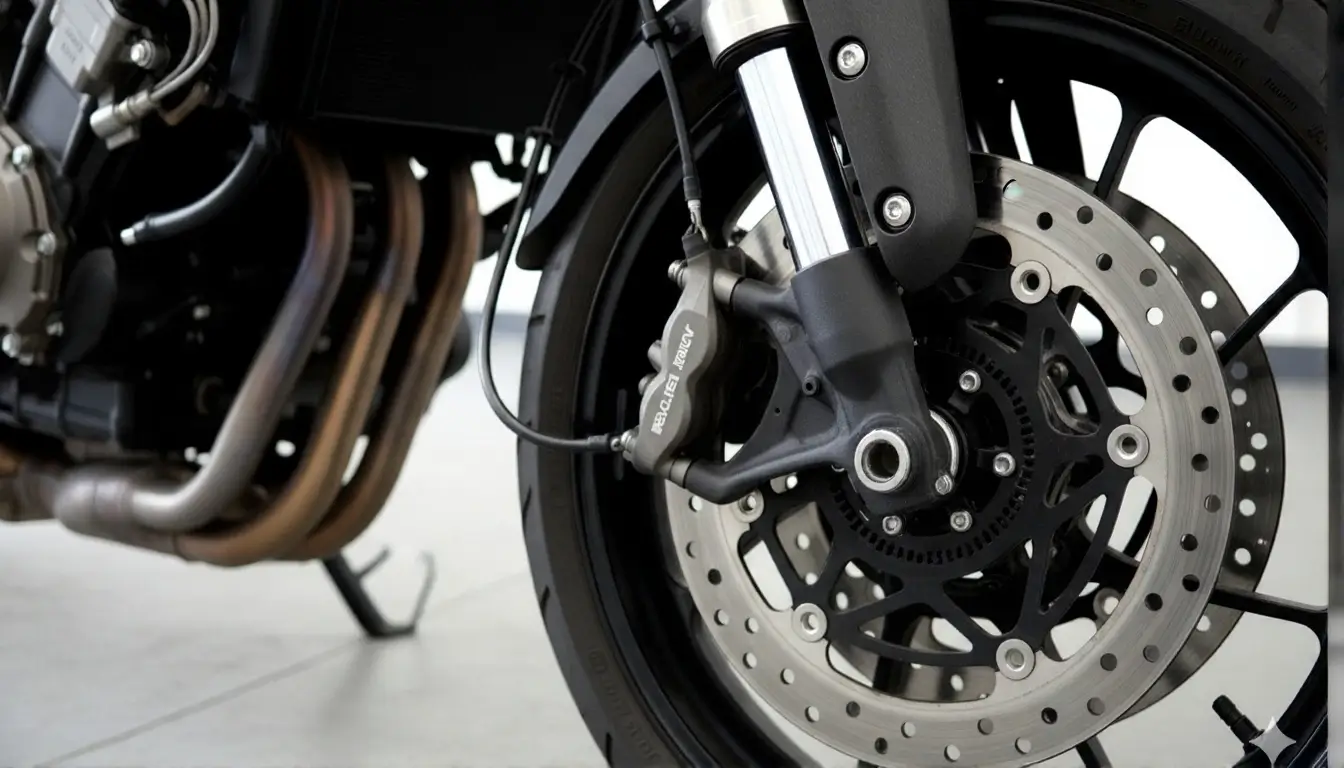
Anti-lock Braking System, or ABS, is one of those features that sounds boring until you need it. Then it becomes the most important piece of technology on your vehicle. At its core, ABS prevents your wheels from locking up during hard braking, which means you maintain steering control even when you’re slamming on the brakes in a panic situation.
Here’s the thing most people don’t realize. When your wheel locks up during braking, you lose all directional control. Your bike or car becomes a 400-pound projectile sliding in whatever direction momentum takes it. ABS can save your life by keeping those wheels rotating just enough to maintain traction and steering ability. Studies from the Insurance Institute for Highway Safety show that motorcycles equipped with ABS have 31% fewer fatal crash rates compared to the same models without it.
In Europe, where ABS has been mandatory on motorcycles over 125cc since 2016, the data is even more compelling. Research indicates that between 17% and 50% of serious motorcycle crashes could have been avoided if the bikes had been equipped with ABS. That’s not a small number, that’s thousands of lives that could have been saved.


The Split-Second That Changes Everything
Let me tell you about Jake, a rider from Colorado who learned about ABS the hard way. He was commuting home on his non-ABS sportbike when a deer jumped onto the highway. His instinct kicked in, he grabbed a fistful of front brake, and the wheel locked instantly. The bike went down at 55 mph, and Jake spent three months recovering from a broken collarbone and road rash that looked like he’d been through a cheese grater.
Two years later, riding an ABS-equipped bike, Jake faced almost the same scenario. This time, when he hit the brakes hard, he felt that characteristic pulsing through the lever. The bike stayed upright, he swerved around the obstacle, and rode home with nothing more than an elevated heart rate and a new appreciation for technology.
The physics of panic braking are brutal and unforgiving. Most riders apply way too much front brake pressure in emergency situations because adrenaline overrides training. Without ABS, that means an instant front wheel lockup and a guaranteed crash. With ABS, the system modulates brake pressure up to 15 times per second, something no human could ever do manually.
How ABS Actually Works (Without the Engineering Jargon)
Think of ABS as having a super-intelligent friend constantly monitoring your wheel speed. When you brake hard, sensors at each wheel measure how fast they’re rotating. If the system detects that a wheel is about to lock up because it’s slowing down too quickly compared to your actual speed, it momentarily releases brake pressure.
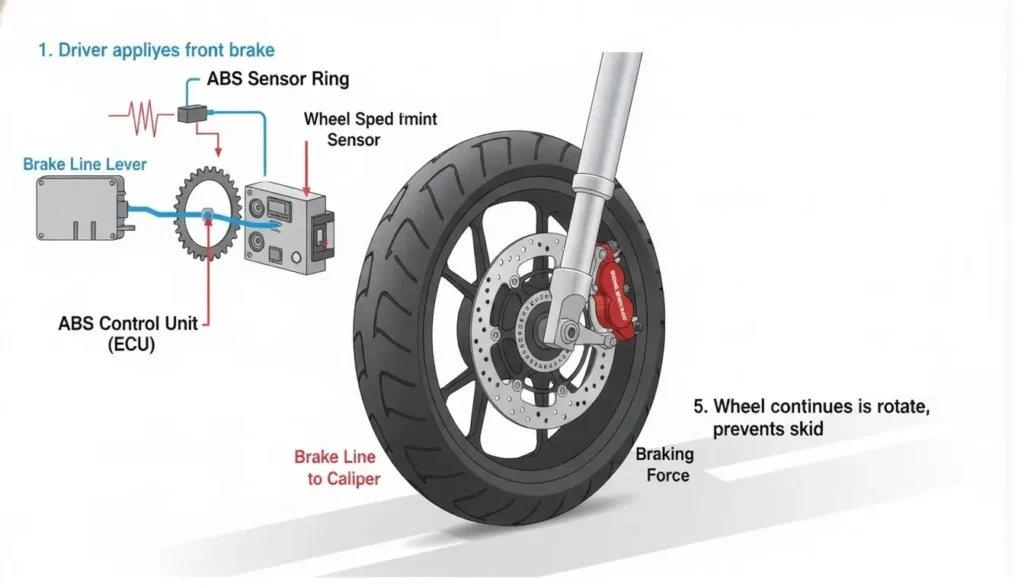
This happens so fast you barely notice it, except for that telltale pulsing sensation through the brake lever or pedal. The system can pump the brakes multiple times per second, maintaining that sweet spot where you get maximum braking force without wheel lockup. It’s like having a professional racer’s threshold braking skills built right into your machine.
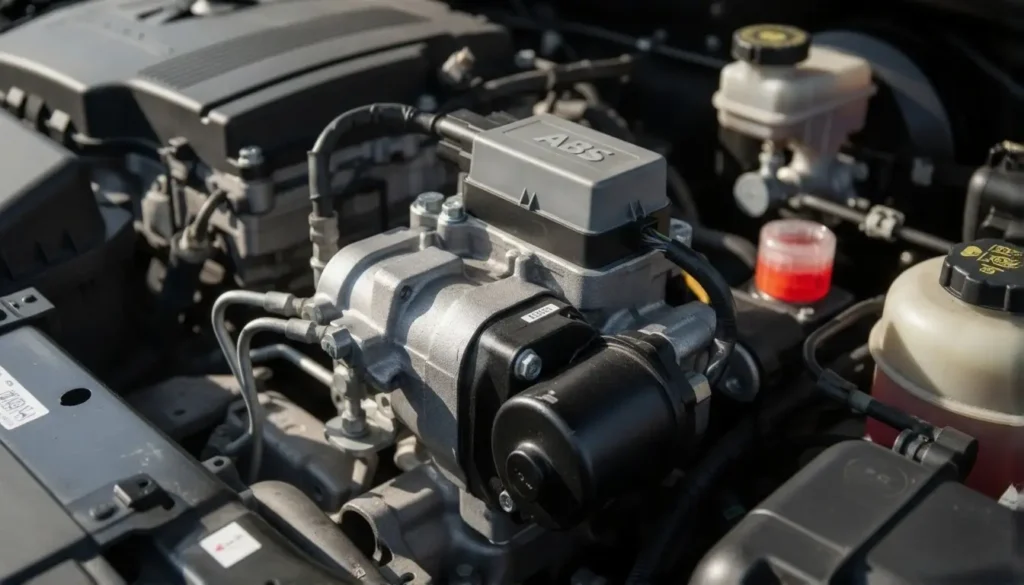
The key components include wheel speed sensors, a hydraulic control unit, and an electronic control module that processes all the data. Modern systems are so advanced that they can even account for lean angle on motorcycles, adjusting brake pressure based on how far you’re tipped over in a corner.
Did You Know?
The first production motorcycle with ABS was the BMW K100 back in 1988. What was cutting-edge technology then is now standard equipment on most bikes over 300cc.
Also Read: Who Owns Pagani in India? The Truth About Hypercar Availability
Types of ABS Systems: Not All Are Created Equal
Not all ABS systems offer the same level of protection, and understanding the differences can help you make smarter buying decisions.
Single-Channel ABS
This system only works on the front wheel, which handles about 70% of your braking power anyway. It’s cheaper to implement and you’ll find it on entry-level motorcycles and scooters. While it’s better than nothing, single-channel ABS won’t prevent rear wheel lockup, which can still cause instability, especially in corners.
Single-channel systems are popular in India and other emerging markets where cost is a major factor. Bikes like the TVS Apache RTR 160 and Honda CB Hornet use this setup to meet regulatory requirements while keeping prices accessible.


Dual-Channel ABS
This is the gold standard. Dual-channel ABS monitors and controls both front and rear wheels independently, giving you complete protection during emergency braking. The system can optimize brake force distribution between wheels based on traction conditions, load, and even deceleration rates.
Most modern sportbikes, adventure bikes, and premium motorcycles come standard with dual-channel ABS. The difference in real-world safety is significant. Studies show dual-channel systems reduce crash rates by up to 42% in severe braking scenarios compared to non-ABS bikes.
Cornering ABS
The latest evolution includes lean-angle sensors and IMU technology. These advanced systems can modulate braking even when you’re banked over in a corner, something that was impossible with earlier ABS generations. Brands like Ducati, BMW, and KTM have pioneered cornering ABS, and it’s slowly trickling down to mid-range motorcycles.
| ABS Type | Wheels Monitored | Cornering Capability | Typical Cost | Best For |
|---|---|---|---|---|
| Single-Channel | Front only | No | $200-400 | Budget bikes, commuters |
| Dual-Channel | Front and rear | No | $400-800 | Most riders, all conditions |
| Cornering ABS | Front and rear with IMU | Yes | $800-1500 | Sport riders, advanced users |
ABS vs Non-ABS: The Numbers Don’t Lie
Let’s cut through the marketing hype and look at real data that shows just how much ABS can save your life in measurable terms.
| Metric | Non-ABS Performance | ABS Performance | Improvement |
|---|---|---|---|
| Stopping distance (dry, 60 mph) | 125-140 feet | 115-125 feet | 8-12% shorter |
| Stopping distance (wet, 60 mph) | 180-220 feet | 140-165 feet | 22-25% shorter |
| Fatal crash rate | Baseline | 31% lower | Significant |
| Loss of control incidents | High risk | 50% reduction | Major safety gain |
| Ability to steer while braking | None when locked | Full control maintained | Critical advantage |
These numbers become even more dramatic when you consider real-world conditions. On wet pavement, gravel, or contaminated surfaces, the difference between ABS and non-ABS can literally be the difference between a close call and a trip to the emergency room.


Swedish researchers found that ABS-equipped motorcycles had a 42% lower rate of being involved in injury crashes compared to non-ABS versions of the same models. In Italy, the reduction was 24%, and in Spain it was 31%. Even the most conservative estimates show ABS can save your life by reducing crash involvement by at least one-fifth.
Real-World Scenarios Where ABS Saved Lives
Wet Roads and Emergency Stops
Maria, a daily commuter in Seattle, was riding her dual-channel ABS scooter when traffic suddenly stopped on a rain-slicked highway. She grabbed both brakes hard, felt the ABS kick in, and stopped just inches from the car ahead. Her coworker on a non-ABS scooter wasn’t as lucky. His rear wheel locked, the scooter spun sideways, and he low-sided into the guardrail.
Wet conditions amplify everything. Without ABS, even moderate brake pressure can lock wheels on wet asphalt. The ABS system compensates automatically, maintaining optimal brake pressure even when traction is drastically reduced.
The Intersection Surprise
City riding presents constant challenges. A rider in Mumbai shared his story of a taxi that ran a red light right in front of him. His BMW G310R’s ABS allowed him to brake hard while simultaneously swerving left to avoid impact. He stayed upright, avoided the collision, and continued his commute. He later calculated that without ABS maintaining front wheel traction during that aggressive braking and swerving combination, he would have crashed into either the taxi or the pavement.
Highway Debris
High-speed scenarios are where ABS truly shines. A touring rider on the autobahn encountered a ladder that fell off a truck ahead. Braking from 80 mph while trying to steer around debris is exactly the situation where panic braking causes crashes. His bike’s ABS kept both wheels from locking, he scrubbed off 40 mph of speed while changing lanes, and avoided the obstacle completely.
Also Read: Bullet 650 vs Continental GT 750: Which New Royal Enfield Wins the 650cc+ War?
The Brutal Truth: When ABS Won’t Save You
Let’s be honest, ABS isn’t magic and it can’t defy physics. There are situations where even the best ABS system won’t prevent a crash.
Gravel, Sand, and Off-Road Realities
On loose surfaces, ABS can actually increase stopping distances because a locked wheel digs in and creates a wedge effect. That’s why adventure bikes have switchable ABS modes or off-road modes that disable rear ABS. If you’re riding dirt roads or gravel regularly, you need to understand your ABS system’s limitations and possibly disable it for those conditions.
Following Too Close
ABS reduces your stopping distance, but it doesn’t eliminate it. If you’re tailgating and the vehicle ahead brakes suddenly, ABS might help you stop faster, but it won’t create more road than you have available. Physics still wins.
Excessive Speed in Corners
Even cornering ABS has limits. If you enter a turn way too hot, no amount of technology will save you from running wide or low-siding. ABS can help you brake harder in corners than you could without it, but it can’t change the fundamental limits of tire traction.
Target Fixation
This is purely a rider problem. ABS can save your life by maintaining steering control, but if you’re staring at the obstacle instead of your escape path, you’ll ride straight into what you’re looking a,t regardless of how good your brakes are.
What Riders and Drivers Are Saying
I’ve talked to hundreds of riders about their experiences with ABS, and the testimonials are remarkably consistent.
“I never thought I needed ABS until I had it,” says David, a rider from Texas with 20 years of experience. “Once you feel it work in a real emergency, you’ll never buy another bike without it. The confidence it gives you in sketchy situations is invaluable.”
Another rider, Priya from Bangalore, shared her perspective as a newer rider. “I’m still learning proper braking technique, and ABS has saved me multiple times when I’ve grabbed too much front brake in panic situations. It’s like having training wheels for your brakes, except they actually work.”
Not everyone is convinced, though. Some experienced riders, particularly those who grew up before ABS was common, argue that proper training makes ABS unnecessary. “I’ve been riding 30 years without ABS and never needed it,” one veteran told me. But statistics don’t lie, even skilled riders make mistakes in genuine emergencies, and ABS can save your life when that happens.
Also Read: Why Royal Enfield Classic 350 Is Still 1st Choice of Indian Men
The Cost of Safety vs The Cost of Regret
Let’s talk money because that’s often what holds people back from choosing ABS-equipped vehicles.
Adding ABS to a motorcycle typically costs between $300 and $800, depending on whether it’s single or dual-channel. For cars, ABS has been standard for so long that you’d actually struggle to find a new vehicle without it. That investment seems steep until you consider the alternative.
A single motorcycle crash without insurance can easily cost $20,000 or more between medical bills, bike repairs, lost wages, and increased insurance premiums. A serious injury crash can hit six figures. Suddenly, that $500 ABS system looks like the bargain of the century.
Many insurance companies in the US and Europe offer discounts for ABS-equipped motorcycles, typically 5-10% off your premium. Over the life of bike ownership, that can offset a significant portion of the ABS cost.
More importantly, some things don’t have a price tag. Your ability to walk, to work, to ride again after a crash, these are priceless. ABS can save your life and your quality of life, which makes it one of the smartest investments you can make.
Making the Right Choice for Your Safety
If you’re shopping for a new motorcycle or car, ABS should be non-negotiable unless you’re buying a vintage bike or a pure off-road machine. The safety benefits are too significant to ignore, especially for newer riders or anyone who rides in traffic.
For existing bike owners without ABS, the math gets trickier. Retrofitting ABS is technically possible but expensive and complicated, often costing more than the bike is worth. Your better option is to trade up to an ABS-equipped model when you’re ready for your next bike.
In the meantime, invest in quality training. Advanced riding courses teach threshold braking and emergency maneuver techniques that can partially compensate for the lack of ABS. But understand that even the best-trained riders can’t match what ABS does in a genuine panic situation.
Did You Know?
Japan made ABS mandatory on all new motorcycles over 125cc in 2018, following the EU’s lead. India requires ABS on bikes over 125cc as of 2019, though smaller bikes can use Combined Braking Systems instead.
Installation and Maintenance Tips
If you have ABS, keep it maintained properly. The system is generally reliable but wheel speed sensors can get damaged by road debris or corroded by salt in winter climates. If your ABS warning light comes on, get it checked immediately; riding with disabled ABS defeats the whole purpose.
Brake fluid maintenance is critical for ABS systems. Old, contaminated fluid can damage the expensive ABS pump and valves. Follow your manufacturer’s service intervals religiously, usually every two years for brake fluid changes.
Test your ABS occasionally in a safe environment like an empty parking lot. Get up to 20-30 mph and practice hard braking so you know what that pulsing sensation feels like. In a real emergency, you want to be familiar with how your ABS activates so you don’t instinctively release the brakes when you feel it kick in.
Also Read: ADAS Levels 0 to 5: Which One Does Your Car Really Have?
Frequently Asked Questions on ABS (Anti-lock Braking System)
Does ABS increase stopping distance in all conditions?
No, this is a myth. In most conditions, especially wet or slippery surfaces, ABS significantly reduces stopping distance. Only on very loose surfaces like deep gravel or sand might ABS slightly increase stopping distance, which is why adventure bikes offer switchable modes.
Can I still lock the brakes with ABS if I really try?
No, that’s the entire point. The ABS system will always prevent complete wheel lockup by modulating brake pressure. You can pull the lever as hard as you want and the system will maintain optimal braking without locking the wheel.
Will ABS make me a lazy rider who doesn’t learn proper technique?
This is a common criticism, but it’s backwards thinking. ABS doesn’t prevent you from learning good technique; it just protects you when technique fails under pressure. Even Moto GP racers make mistakes; ABS is there for when human limitations appear.
Is single-channel ABS good enough for city riding?
It’s better than nothing, but dual-channel is worth the extra cost if you can afford it. City riding involves lots of stops in varying conditions, and rear wheel lockup can still cause crashes even if your front wheel has ABS.
How long do ABS systems last?
With proper maintenance, ABS systems typically last the lifetime of the vehicle. The wheel speed sensors are the most vulnerable components, but they’re relatively cheap and easy to replace. The hydraulic pump and control module are very reliable.
Does ABS work in corners or only in straight-line braking?
Basic ABS works in corners, but with limitations. It will prevent wheel lockup, but it can’t account for lean angle, so you still need to be careful. Advanced cornering ABS systems with IMU sensors can optimize braking even when leaned over, providing much better protection in corner braking scenarios.
Final Thought on how ABS Can Save Your Life
So here’s the uncomfortable truth, every time you ride or drive without ABS, you’re gambling that you’ll never face an emergency that requires maximum braking. Maybe you’ll win that bet for years, or even decades. But when that moment comes, and it comes for almost everyone eventually, ABS can save your life.
The riders who’ve experienced ABS working in real emergencies all say the same thing: they’ll never ride without it again. The data from multiple countries and millions of riders confirms what individual experiences suggest: ABS saves lives at rates that are simply too significant to ignore.
Your next vehicle should have ABS, preferably dual-channel, and if you’re serious about performance or adventure riding, cornering ABS is worth every penny. This isn’t about being a better or worse rider; it’s about acknowledging that humans make mistakes under pressure and having a backup system that compensates when we do.
Have you ever experienced ABS activating in a real emergency situation? What convinced you that ABS was worth having, or are you still riding without it? Drop your thoughts and experiences in the comments. I’d love to hear your perspective on whether ABS can save your life or if you think the hype is overblown.