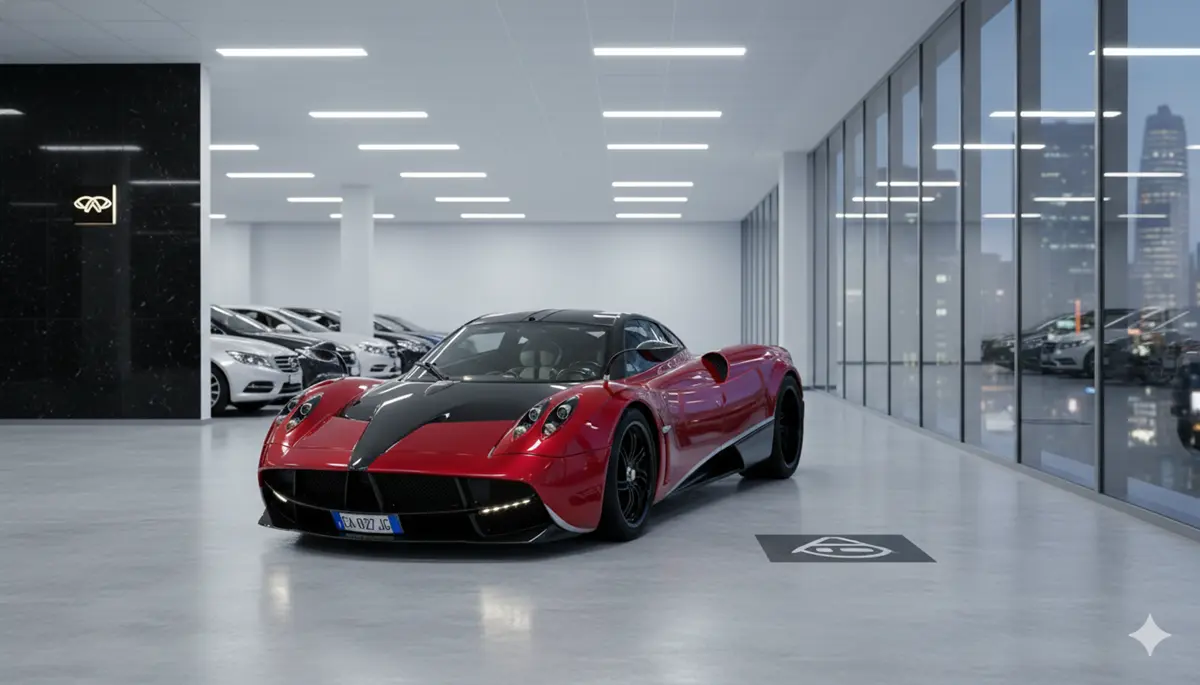
Imagine this. You’re sitting in your Mumbai penthouse, ₹50 crore burning a hole in your bank account, scrolling through Pagani’s website at 2 AM. Utopia’s carbon fiber curves seduce you through the screen. You’ve got the money, the garage space, and the hunger. You call your luxury car dealer, ready to wire the amount. Then comes the cold shower: “Sir, we can’t get you a Pagani in India.” But here’s the brutal truth: you can’t buy it. Not legally, not easily, not even with all that cash.
While your billionaire friends parade around in Bugatti Veyrons and Ferrari LaFerraris, the Pagani remains a forbidden fruit. I’ve spent years tracking the luxury hypercar market in India, watching collectors throw money at imports, and I can tell you this, Pagani isn’t just expensive, it’s nearly impossible. In this deep dive, we’re ripping apart every barrier, every regulation, and every reason why Indian billionaires are locked out of owning one of the world’s most exclusive hypercars. Let’s unpack this ₹50 crore tragedy and discover why Indian billionaires can’t own Pagani hypercars, no matter how deep their pockets run.
The ₹60 Crore Dream That Money Can’t Buy
Let’s get one thing straight. Money isn’t the problem here. India has billionaires who casually drop ₹22 crore on custom Rolls-Royce Phantoms like Yohan Poonawalla. Gautam Singhania owns a Ferrari LaFerrari. Shah Rukh Khan drives a Bugatti Veyron worth ₹12 crore. The Singh Collection in Punjab houses every Bugatti World Record Edition ever made, including the Veyron Super Sport, Chiron Super Sport 300 plus, and the W16 Mistral that hit 282 mph. These are not people constrained by budgets.
Yet, walk into any of these garages, and you’ll find a glaring absence. No Pagani. Not a Zonda, not a Huayra, definitely not the latest Utopia. It’s not because they don’t want one. Trust me, they do. It’s because the system, the regulations, and Pagani itself have created an impenetrable wall between Indian money and Italian carbon fiber.
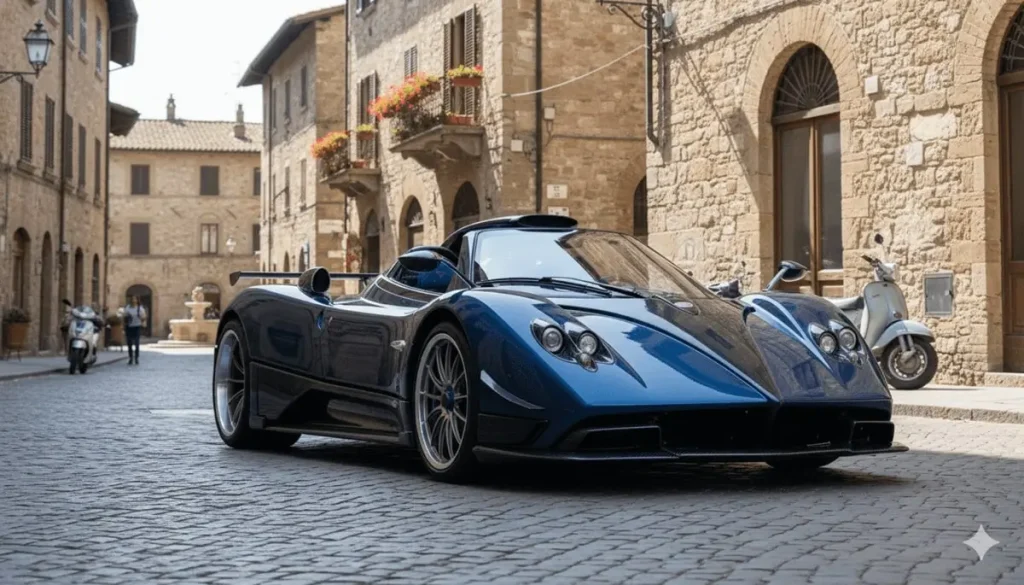
What Makes Pagani So Exclusive?
Before we dissect why you can’t own one, let’s understand what makes Pagani the forbidden fruit of hypercars.



Pagani Automobili builds some of the world’s most desirable hypercars. The Huayra, the Utopia, each one is a rolling piece of art that costs more than most people’s homes. But here’s the kicker, you can’t legally drive one on Indian roads. Not because they’re too fast, too loud, or too flashy. The problem is far more bureaucratic and frankly, more frustrating.
Limited Production Philosophy
Horacio Pagani, the Argentine-Italian maestro behind these machines, doesn’t believe in mass production. The man started sweeping floors at Lamborghini in 1982, worked his way up to chief engineer, and when Lamborghini refused to buy an autoclave for carbon fiber work, he took out a loan and bought one himself in 1987. That’s the level of obsession we’re talking about.

The Pagani Utopia, his latest creation, will see only 99 coupes and 130 roadsters built. Ever. That’s 229 units globally. Compare that to Ferrari’s production of over 13,000 cars annually, or Lamborghini’s 10,000 plus units. Pagani operates in a different dimension of exclusivity.
Hand-Built Masterpieces
Every Pagani takes four months to build. Four months of artisans hand-laying carbon fiber, machining titanium exhaust systems, and crafting bespoke leather interiors. The Utopia’s interior alone requires 280 hours of work. The exterior carbon body, 320 hours. This isn’t a factory, it’s a Renaissance workshop that happens to make hypercars.
The company employs just 220 people at its Modena facility. For context, Ferrari has over 4,600 employees. Pagani’s production capacity is deliberately kept microscopic. They could scale up, sure, but Horacio Pagani would rather retire than dilute his brand.
The Real Barriers Indian Billionaires Face
Now we get to the meat of the problem. Here are the five iron walls standing between Indian money and Pagani metal.
No Official Dealership in India
Pagani has exactly zero official presence in India. No dealership, no showroom, no service center, not even a regional representative. The closest official Pagani dealer to India is in Dubai, over 3,000 kilometers away. For a brand that demands intimate customer relationships and bespoke customization processes that can take months, this distance is a dealbreaker.
Pagani’s distribution network is insanely selective. They have around 15 official dealers globally. Compare that to Lamborghini’s 170 plus dealers or Ferrari’s 200 plus locations. To get a Pagani dealership, you need to prove consistent hypercar sales volume, have state-of-the-art service facilities, and frankly, kiss the ring. India’s luxury car market, while growing, hasn’t convinced Pagani to invest.
Crash Testing and Emission Requirements
India’s automotive regulations demand that every new car model undergo homologation testing. This includes frontal crash tests, side impact tests, pedestrian safety tests, and emissions certification. For mass-market brands, this cost is spread across thousands of units. For Pagani, which might sell one or two cars in India annually, this investment is impossible to justify.
Bugatti and Koenigsegg face similar challenges, but they’ve occasionally offered homologated models or worked through official importers. Pagani? They’ve shown zero interest in jumping through these hoops.

Homologation Nightmare: ARAI Certification Requirements
Here’s where it gets technical and brutal. To legally drive any car in India on public roads, it must be homologated by the Automotive Research Association of India. ARAI certification ensures the vehicle meets Indian safety, emission, and manufacturing standards.
For cars valued under $40,000 CIF, this is mandatory. For cars above $40,000 CIF, you’d think you’re exempt, right? Wrong. The catch, even if you’re importing a hypercar as a high-value item, you still need to register it at the Regional Transport Office. And the RTO will demand proof of compliance with the Central Motor Vehicles Rules, 1989.
Pagani doesn’t homologate its cars for India because the market doesn’t justify the expense. Homologation testing costs manufacturers anywhere from $500,000 to several million dollars per model. For a market where they might sell zero to two cars annually, it makes zero business sense.
The 200% Import Duty Reality
Let’s talk numbers. A Pagani Utopia costs around €2.2 million, roughly ₹20 crore at current exchange rates. Now add India’s import duties.
For completely built units valued above $40,000 CIF, you’re looking at 100% basic customs duty plus other applicable taxes including AIDC at 40% and IGST at 28%. This stacks to approximately 165 to 200% total tax. So your ₹20 crore Utopia suddenly costs ₹53 to ₹60 crore after duties. And that’s before registration, insurance, or any modifications.
Compare this to the UAE, where you’d pay around 5% import duty. Singapore, 20%. Even with their reputation for high taxes, you’re paying a fraction of India’s rate. For Indian billionaires, it’s not about affording the tax, it’s about the absurdity of paying three times the car’s value just to bring it home.
Also, markets like the UK or the US, where import duties are minimal or non-existent. Indian billionaires who want to enjoy their Paganis simply register them abroad and drive them there. It’s not ideal, but it’s the only workaround.
The Right-Hand Drive Mandate
India drives on the left, which means all vehicles must be right-hand drive. Pagani builds its cars primarily in left-hand drive configuration. While they do offer RHD options for markets like the UK and Japan, it’s a bespoke request that adds time and cost to the already lengthy build process.
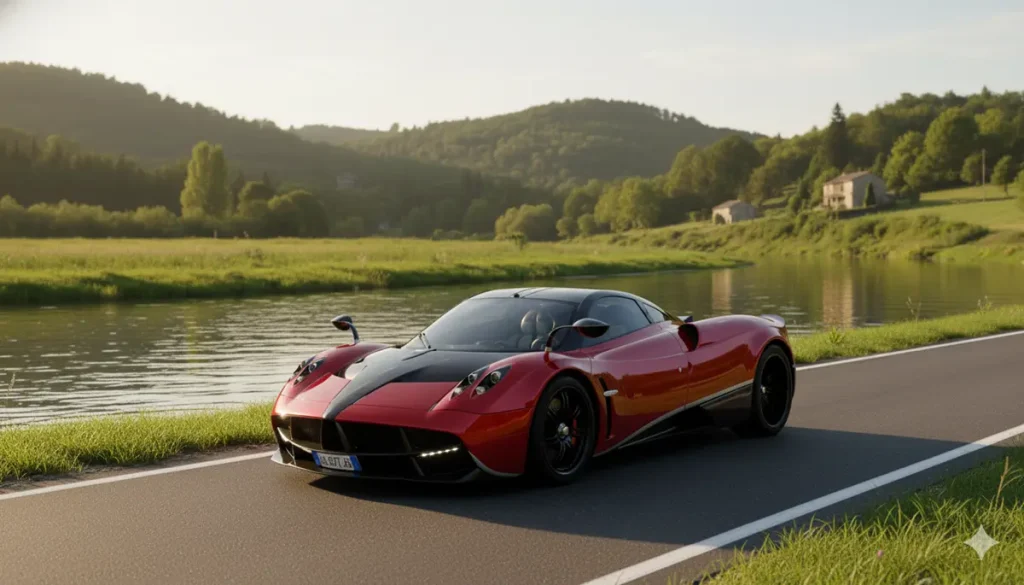
More importantly, importing a left-hand drive car to India is technically illegal for regular use. Only manufacturers can import LHD vehicles for testing or display purposes. Private citizens cannot register LHD cars for road use, period. You could theoretically order a Pagani in RHD, but combined with all the other barriers, it’s a footnote in an already impossible equation.
Pagani’s Selective Distribution Network
Here’s the most frustrating part. Even if you solved every other problem, money, taxes, homologation, even flew to Modena yourself, Pagani might still say no. The company hand-picks its customers. They don’t just sell cars, they curate ownership experiences.
Pagani owners are expected to be brand ambassadors, attend exclusive events, participate in rallies, and maintain relationships with the factory. If you’re based in India with no local support infrastructure, no service network, and no community of fellow owners, Pagani views you as a support liability rather than a valued customer. They’ve turned down buyers for less.
Pagani’s Production Philosophy
To understand why Indian billionaires can’t own Pagani hypercars, you need to understand Horacio Pagani’s mindset. He’s not running a car company in the traditional sense. He’s running an atelier, a workshop where art meets engineering.
Why Pagani Won’t Build RHD Models
Pagani’s production is deeply personal. Every car is hand-assembled in Modena, Italy, by a small team of craftsmen. The company produces around 40-50 cars per year. That’s not a typo, 40 to 50 cars annually. Ferrari builds that many in a single day.
For Pagani, building a right-hand drive version means redesigning dashboard layouts, pedal boxes, control systems, and even the intricate interior details that make each car unique. It’s not just moving the steering wheel to the other side. It’s re-engineering the entire driver experience. Horacio Pagani has repeatedly stated that he won’t compromise his vision for market demands. If you want a Pagani, you accept it as he designed it, left-hand drive.
The Bespoke Manufacturing Process
Each Pagani takes months to build. Buyers customize every detail, from carbon fiber weave patterns to leather stitching colors. The level of personalization is extreme. This artisanal approach means Pagani can’t scale production or adapt quickly to different markets. They build what they want, how they want, and if a market can’t accept that, they simply don’t sell there.
This philosophy has kept Pagani exclusive, desirable, and utterly inaccessible to Indian buyers.
Also Read: Hyundai CRATER Concept: The Ultimate Off-Road SUV Unveiled at AutoMobility LA 2025
Pagani Utopia: Specifications That Make It Worth The Hunt
Let’s talk about what you’re missing out on. Here’s what makes Utopia so desirable.
| Specification | Details |
|---|---|
| Engine | Mercedes-AMG sourced 6.0L twin-turbo V12 |
| Power Output | 864 HP at 6,000 RPM |
| Torque | 1,100 Nm at 2,800 to 5,900 RPM |
| Transmission | 7-speed manual or automated manual |
| 0 to 100 km/h | 3.0 seconds |
| Top Speed | 350 km/h plus |
| Weight | 1,280 kg dry weight |
| Power to Weight | 675 HP per tonne |
| Chassis | Carbon-titanium monocoque |
| Suspension | Double wishbone, pushrod actuated |
| Brakes | Brembo carbon-ceramic, 398mm front, 380mm rear |
| Wheels | 21-inch front, 22-inch rear, forged aluminum |
| Production | 99 coupes, 130 roadsters globally |
| Price | Approximately €2.2 million, ₹20 crore base |
Utopia is Pagani’s purist statement. No hybrid system, no electric motors, just a screaming V12 mated to an optional manual gearbox in 2024. It’s analog heroism in a digital age. The car weighs just 1,280 kg dry, making it lighter than a Porsche 911 GT3 despite packing 864 horsepower. The power-to-weight ratio is obscene, 675 HP per tonne puts it in the same league as a Formula 1 car from the early 2000s.
The interior is a jewelry box of machined aluminum, leather, and carbon fiber. Every switch, every dial, every surface is bespoke. Pagani uses grade-5 titanium for exhaust components, aerospace-grade aluminum for suspension parts, and develops its own carbon fiber weaves. This isn’t a car, it’s a rolling sculpture that happens to do 350 km per hour.
Specification Table: Current Pagani Models
| Specification | Pagani Huayra | Pagani Utopia |
|---|---|---|
| Engine | 6.0L Twin-Turbo V12 (AMG) | 6.0L Twin-Turbo V12 (AMG) |
| Power | 730 hp | 864 hp |
| Torque | 1000 Nm | 1100 Nm |
| Transmission | 7-speed Sequential | 7-speed Manual or Sequential |
| 0-100 km/h | 3.2 seconds | 3.0 seconds |
| Top Speed | 383 km/h | 350 km/h |
| Weight | 1,280 kg | 1,280 kg |
| Price (Approx.) | €2.5 million (₹22 crores) | €2.2 million (₹20 crores) |
| Production | Limited (ended) | Ongoing (40 units) |
| Drive Side | Left-Hand Drive Only | Left-Hand Drive Only |
How Indian Billionaires Own Other Hypercars But Not Pagani
So why can Indians buy Bugattis, Ferraris, McLarens, and Koenigseggs but not Paganis? The answer lies in market strategy and infrastructure.
Bugatti has an official dealer in India through Exclusive Motors in Mumbai. They handle everything from import compliance to after-sales service. Ferrari has been in India since 2011 with official dealerships. Lamborghini has had a presence since 2006. McLaren opened their Mumbai dealership in 2021. These brands invested in the Indian market, bore the costs of homologation, set up service networks, and created legal pathways for their customers.
Koenigsegg, while having no official dealer, benefits from a more flexible ownership model and occasionally works with specialized importers who handle compliance. Their production volume is similar to Pagani’s, but their brand positioning allows for more creative import solutions.
Pagani has chosen not to make these investments. Their brand philosophy prioritizes depth over breadth. They’d rather have 15 exceptional dealers serving 100 customers than 50 mediocre dealers chasing volume. India, for now, doesn’t fit that equation.
Real-World Examples: Indian Billionaires and Their Pagani Dreams
Indian billionaires aren’t blind to Pagani’s appeal. Some have found creative, albeit inconvenient, solutions.
Adar Poonawalla’s Foreign Garage
Adar Poonawalla, CEO of Serum Institute of India and one of India’s richest individuals, is a known supercar enthusiast. While he owns Ferraris, Lamborghinis, and Rolls-Royces in India, his Pagani stays parked abroad. He’s been spotted driving Pagani hypercars in Europe, but never on Indian soil. Why? Because he legally can’t bring them home.
This is the reality for India’s ultra-wealthy. They maintain garages in Dubai, London, or Monaco specifically for cars they can’t own in India. It’s a bizarre situation where money is no object, but geography and regulations are.
The Dubai Workaround
Many Indian billionaires register their Paganis in Dubai or other Gulf countries. The UAE has no import duties, left-hand drive is legal, and the roads are supercar-friendly. When they want to drive their hypercar, they fly to Dubai for the weekend. It’s an expensive hobby made even more expensive by the inability to enjoy it at home.
Some owners joke that their Pagani costs them more in flight tickets than in maintenance.
Competitor Comparison: Hypercars You CAN Buy in India vs Pagani
| Feature | Pagani Utopia | Bugatti Chiron | Ferrari SF90 | Lamborghini Revuelto | McLaren 765LT |
|---|---|---|---|---|---|
| Available in India | No | Yes | Yes | Yes | Yes |
| Official Dealer | No | Yes | Yes | Yes | Yes |
| Price in India | Not available | ₹19 crore plus | ₹7.5 crore | ₹8.89 crore | ₹6.5 crore |
| Engine | 6.0L V12 Twin-Turbo | 8.0L W16 Quad-Turbo | 4.0L V8 Hybrid | 6.5L V12 Hybrid | 4.0L V8 Twin-Turbo |
| Power | 864 HP | 1,500 HP | 1,000 HP | 1,015 HP | 765 HP |
| Production Numbers | 229 units total | 500 units | Unlimited | Unlimited | 765 units |
| Transmission | Manual or Automated | Dual Clutch | Dual Clutch | Dual Clutch | Dual Clutch |
| Service Network India | None | Mumbai | Multiple cities | Multiple cities | Mumbai |
| Homologation Status | Not homologated | Homologated | Homologated | Homologated | Homologated |
| Import Process | Impossible legally | Straightforward | Straightforward | Straightforward | Straightforward |
The table makes the contrast painfully clear. Every other hypercar brand has solved the India puzzle. They’ve established dealer networks, secured homologation, navigated import duties, and created pathways for their customers. Pagani alone remains absent.
Competitor Comparison: Which Hypercars CAN Enter India?
Not all hypercars face the same restrictions as Pagani. Let’s compare.
| Brand | Available in India? | RHD Option? | Homologation Status | Approx. Price in India |
|---|---|---|---|---|
| Pagani | ❌ No | ❌ No | ❌ Not Homologated | N/A |
| Bugatti | ⚠️ Rarely (via CBU) | ❌ No | ⚠️ Limited | ₹50+ crores |
| Koenigsegg | ⚠️ Rarely (via CBU) | ❌ No | ⚠️ Limited | ₹45+ crores |
| Lamborghini | ✅ Yes | ✅ Yes | ✅ Fully Homologated | ₹5-12 crores |
| Ferrari | ✅ Yes | ✅ Yes | ✅ Fully Homologated | ₹5-15 crores |
| McLaren | ✅ Yes | ✅ Yes | ✅ Fully Homologated | ₹4-10 crores |
| Rolls-Royce | ✅ Yes | ✅ Yes | ✅ Fully Homologated | ₹7-20 crores |
Notice the pattern? Brands with official Indian dealerships offer right-hand drive models and have completed homologation. Pagani has done neither and shows no signs of changing course.
The Grey Market Option: Why It’s Not Worth The Risk
You might be thinking, screw the official route, what about grey market imports. Let me save you the trouble, it’s a disaster waiting to happen.
Grey market imports involve bringing in vehicles through unofficial channels, often by exploiting loopholes or using questionable documentation. In India, this can mean registering the car under a different category, using a temporary import permit, or getting it registered through a more lenient RTO in a smaller state.
The problems are endless. First, your car won’t have a legal warranty. Pagani’s factory support is tied to their official dealer network. A grey import is instantly blacklisted from any official service. Second, insurance becomes a nightmare.
Most insurers won’t touch a grey import, and those that do will charge astronomical premiums with severe limitations. Third, the legal risk is constant. If authorities discover your car lacks proper homologation or was imported through fraudulent means, it can be seized and crushed. Yes, crushed.
In the U.S., grey market imports were effectively killed by the Motor Vehicle Safety Compliance Act of 1988. In India, the rules are even stricter. Used cars over three years old cannot be imported at all. Any car must meet ARAI standards regardless of origin. Grey imports might work for a Nissan Skyline in some countries with 15 or 25 year classic car rules, but for a ₹50 crore hypercar in India, you’re playing Russian roulette with your investment.
Also Read: Inside the $17.5 Million Pagani Zonda HP Barchetta: Why Only 3 Exist
Will Pagani Ever Come to India?
The million-rupee question. Honestly, don’t hold your breath. Here’s why.
India’s luxury car market is growing, sure, but it’s still tiny compared to China, the Middle East, or even Southeast Asia. India sold around 50,000 luxury cars in 2023. China sold over 3 million. For ultra-luxury hypercars, India might see 10 to 20 sales annually across all brands combined. That’s not enough to justify Pagani’s investment in homologation, dealer infrastructure, and service networks.

Pagani’s strategy has always been quality over quantity. They’re not chasing volume, they’re chasing perfection. Until India develops a critical mass of hypercar buyers, a stable regulatory environment that doesn’t change every few years, and a service ecosystem that can support their vehicles, Pagani will stay away.
The one glimmer of hope, if India’s ultra-luxury market continues growing at 15 to 20% annually, and if import duties are rationalized under pressure from manufacturers and buyers, we might see Pagani reconsider by 2030. But that’s speculation, not expectation.
Did You Know?
Horacio Pagani named his company after himself, only after friends convinced him that Modena Design, his original choice, sounded too generic. The Zonda was named after a wind in Argentina, Horacio’s homeland. Every Pagani wheel nut is machined from a single block of aluminum and costs more than most car wheels. The titanium exhaust system on a Pagani takes 32 hours to hand-weld and costs over $30,000 to replace. Pagani was the first manufacturer to use a carbon-titanium weave for chassis construction, a technology now adopted by others. Horacio Pagani still personally approves every car before delivery, inspecting fit and finish himself at age 68.
Pagani Facts That Blow Your Mind
FAQs: Why Indian Billionaires Can’t Own Pagani
Can I import a used Pagani to India?
No. India prohibits the import of used cars older than three years. Even if you found a nearly-new Pagani, you’d still face homologation requirements, import duties of 125% for used vehicles, and the impossibility of getting it serviced without an official network.
What if I register the Pagani in Dubai and drive it to India on a temporary permit?
Temporary permits are issued for visiting foreign nationals, not for Indian residents looking to circumvent import laws. You’d be limited to a few months, and the moment you try to extend or make it permanent, authorities will demand full import compliance. This loophole is well-known and heavily monitored.
Are there any Paganis currently in India?
There are unverified claims of one or two Pagani brought in for exhibitions or promotional events under temporary permits, but no Pagani is permanently registered for private ownership in India. Any sightings you’ve seen online are likely from Dubai or other Middle Eastern locations.
Why doesn’t Pagani just homologate for India like other brands?
Homologation costs between $500,000 to $2 million per model variant and requires extensive crash testing, emissions testing, and compliance modifications. For a brand that might sell zero to two cars annually in India, this investment makes no financial sense. Ferrari and Lamborghini can justify it because they sell hundreds of units, Pagani cannot.
Could I buy a Pagani abroad and keep it there, flying in to drive it?
Absolutely. Many ultra-wealthy Indians own hypercars registered in Dubai, Monaco, or London and fly in to enjoy them. This avoids India’s import barriers entirely. It’s not ideal, but it’s the only realistic way for an Indian to experience Pagani ownership currently.
Is there any legal way to own a Pagani in India right now?
No. There is no legal pathway for a private individual to import, register, and operate a Pagani hypercar in India under current regulations without Pagani’s official support, which doesn’t exist.
Who owns Pagani in India?
Currently, no Pagani is registered in India. In India, currently, nobody owns Pagani.
Final Verdict: Should Indian Billionaires Wait or Move On?
Here’s my take after dissecting every angle of this frustrating situation. If you’re an Indian billionaire desperate for a Pagani, your options are limited and unsatisfying.
Option 1: Buy and register it in Dubai or Europe and fly there to drive it. This is what many ultra-wealthy Indians do with cars they can’t bring home. You get the ownership experience, the exclusivity, the driving thrill, just not on Indian roads. It’s expensive and inconvenient, but it’s legal and genuine.
Option 2: Lobby for regulatory change. If enough influential buyers pressure the government to streamline hypercar imports, create special exemptions for ultra-luxury vehicles, or rationalize import duties, things might shift. But this is a long game measured in years, not months.
Option 3: Move on to alternatives. Bugatti, Ferrari, Lamborghini, McLaren, Koenigsegg, even Aston Martin’s Valkyrie, when it eventually makes it to India, these are all incredible machines you CAN own. Yes, they’re not Pagani, but they’re also not sitting in regulatory limbo while your garage stays empty.
The harsh reality is that Pagani is the ultimate forbidden fruit for Indian billionaires. It’s not about money; it’s about systems, regulations, and brand strategy alignment, and right now, they don’t. Will this change? Maybe by 2030, if India’s luxury market matures and regulations evolve. Should you wait? Only if you’re patient enough to sit on ₹50 crore for half a decade while watching your friends enjoy their Bugattis.
So what’s your move? Are you the type to keep dreaming of that Utopia, or will you settle for the LaFerrari parked at your local dealer? Drop a comment below and let’s hear what you’d do with ₹50 crore and a Pagani-sized hole in your heart.