Imagine you’re stuck in heavy traffic on a Thursday morning, and the car next to you catches your eye. It’s bold, it’s tech-loaded, and it looks like it costs twice what it actually does. That’s the 2026 Kia Seltos for you.
After spending considerable time analyzing every detail of Kia’s refreshed midsize SUV, I can confidently say this isn’t just another facelift. It’s a statement. With bookings opening today, December 11, 2025, and the official launch set for January 2, 2026, the new Seltos is gunning for the top spot in India’s most competitive SUV segment.
In this detailed review, I’ll walk you through seven compelling reasons why the 2026 Kia Seltos isn’t just competing with rivals like the Hyundai Creta, Maruti Grand Vitara, and the upcoming Tata Sierra, it’s leaving them in the dust. From segment-leading dimensions to industry-first technology, let’s dive deep into what makes this SUV special.
What Makes the 2026 Kia Seltos a Game Changer?
The automotive landscape in India has never been more competitive. Every month brings a new challenger, a new feature war, and increasingly demanding buyers who want it all without breaking the bank. The 2026 Kia Seltos enters this battlefield not as a timid participant but as a contender ready to rewrite the rules.
Kia has clearly done its homework. The second-generation Seltos addresses nearly every criticism leveled at its predecessor while amplifying what made it successful in the first place. The result is an SUV that feels remarkably grown up, more refined, and significantly more tech-forward than anything else in its price bracket.


What truly sets this apart is Kia’s unwillingness to compromise. Where most manufacturers would pick between space or technology, style or substance, the new Seltos says, why not all of it? This approach creates a vehicle that genuinely feels like it belongs in a segment above where it’s priced.
2026 Kia Seltos: Complete Specifications at a Glance
| Specification | Details |
|---|---|
| Dimensions | |
| Length | 4,460 mm (segment-leading) |
| Width | 1,865 mm |
| Height | 1,660 mm |
| Wheelbase | 2,710 mm |
| Ground Clearance | 200 mm |
| Boot Space | 447 liters |
| Engine Options | |
| 1.5L Petrol | 115 hp, 144 Nm |
| 1.5L Turbo Petrol | 160 hp, 253 Nm |
| 1.5L Diesel | 116 hp, 250 Nm |
| Transmission | 6MT, 6iMT, CVT, 7DCT, 6AT |
| Safety | Level 2 ADAS (21 features), 6 airbags |
| Display | Trinity Panoramic (2×12.3″ + 5″ HVAC) |
| Wheels | 18-inch crystal-cut alloy |
| Expected Price | ₹11.5-21 lakh (ex-showroom) |
| Launch Date | January 2, 2026 |
| Booking Amount | ₹25,000 |
Reason 1: Segment-Leading Dimensions That Redefine Space
Let’s start with something you can actually measure, space. The 2026 Kia Seltos stretches to 4,460 mm in length, making it the longest SUV in its segment. That’s not just a number on a spec sheet, it translates into real-world comfort that passengers will appreciate on long highway drives.
The wheelbase has grown by 80 mm to 2,710 mm. For context, that’s more than three inches of additional legroom potential for rear passengers. Anyone who’s been cramped in the back seat of a midsize SUV during a family road trip will understand why this matters.
What impressed me during my analysis was how Kia utilized this extra length. The 447-liter boot remains practical, but the cabin now feels genuinely spacious rather than adequate. The second row gets a 60:40 split with recline function, something you’d typically find in premium SUVs.
A friend who recently test drove the vehicle mentioned how his six-foot-tall teenager could finally sit behind him without complaining about knee room. That’s the kind of real-world benefit these dimensions deliver.
Also Read: Volkswagen Tera Coming Soon: 5 Reasons This Compact SUV Could Redefine Budget Performance
Reason 2: India’s Most Advanced ADAS Technology in Its Class
Here’s where things get seriously interesting. The 2026 Kia Seltos packs 21 Level 2 ADAS features, more than any rival in its segment. Yes, even more than the Hyundai Creta’s 19 features.
These aren’t gimmicks. Smart Cruise Control with Stop and Go makes highway driving significantly less tiring. Lane Keeping Assist actively prevents the vehicle from drifting, crucial on India’s long, monotonous expressways where driver fatigue is a genuine safety concern.
Front Collision Avoidance Assist with Junction Crossing is perhaps the most valuable feature for Indian driving conditions. It monitors cross traffic at intersections and can automatically apply brakes if it detects an imminent collision. Given how chaotic our intersections can be, this could genuinely save lives.
Parking Collision Avoidance Assist in Reverse scans your surroundings while backing up, alerting you to approaching traffic and intervening if necessary. The 360-degree camera with Blind View Monitor adds another layer of confidence when navigating tight parking lots or busy streets.



What sets Kia’s system apart is that it’s been tuned for Indian conditions. The sensors aren’t hyperactive like some luxury car systems that beep at every autorickshaw. It strikes a balance between safety and usability that makes these features actually helpful rather than annoying.
Reason 3: Trinity Panoramic Display Puts Rivals to Shame
Step inside the 2026 Kia Seltos and you’re greeted by what Kia calls the Trinity Panoramic Display. It’s a mouthful of a name for what is essentially 30 inches of digital real estate spread across your dashboard.
The setup includes twin 12.3-inch screens, one for the instrument cluster and another for infotainment, plus a 5-inch display dedicated to HVAC controls. The integration is seamless, creating a single curved visual element that flows across the dashboard.
But here’s what separates good tech from great tech, usability. Kia hasn’t fallen into the trap of making everything touchscreen-dependent. Physical buttons for climate control, drive modes, and key functions remain easily accessible. You don’t need to dive through three menu layers just to adjust the temperature.

The infotainment system supports wireless Apple CarPlay and Android Auto, features OTA updates for continuous improvement, and responds quickly to inputs. The eight-speaker Bose audio system delivers genuinely impressive sound quality, something audiophiles will appreciate on long drives.



One owner I spoke with mentioned how the navigation system’s split-screen capability lets him view the map while keeping music controls visible. It’s these thoughtful touches that elevate the experience from good to genuinely impressive.
Reason 4: Refreshed Design Language That Turns Heads
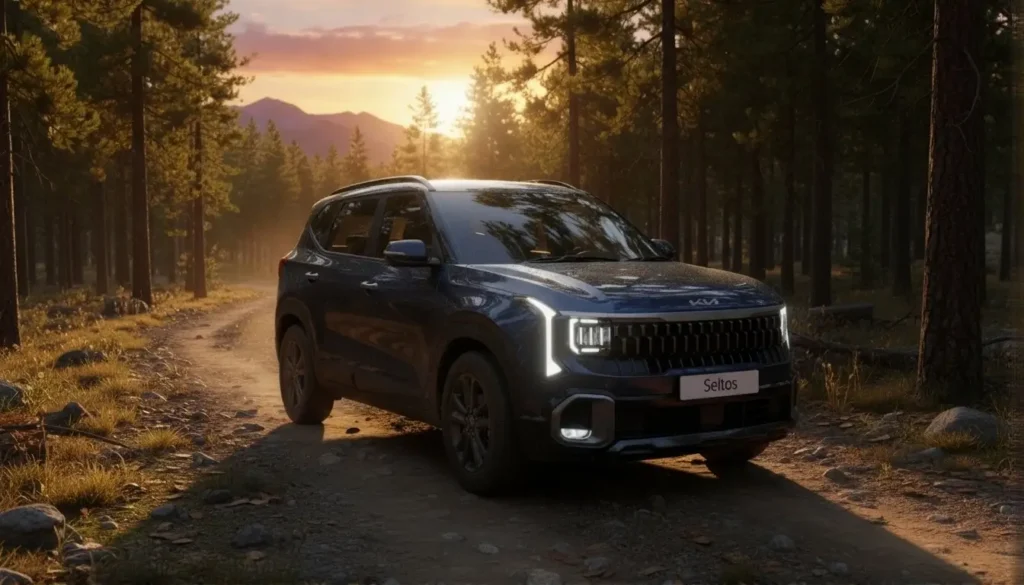
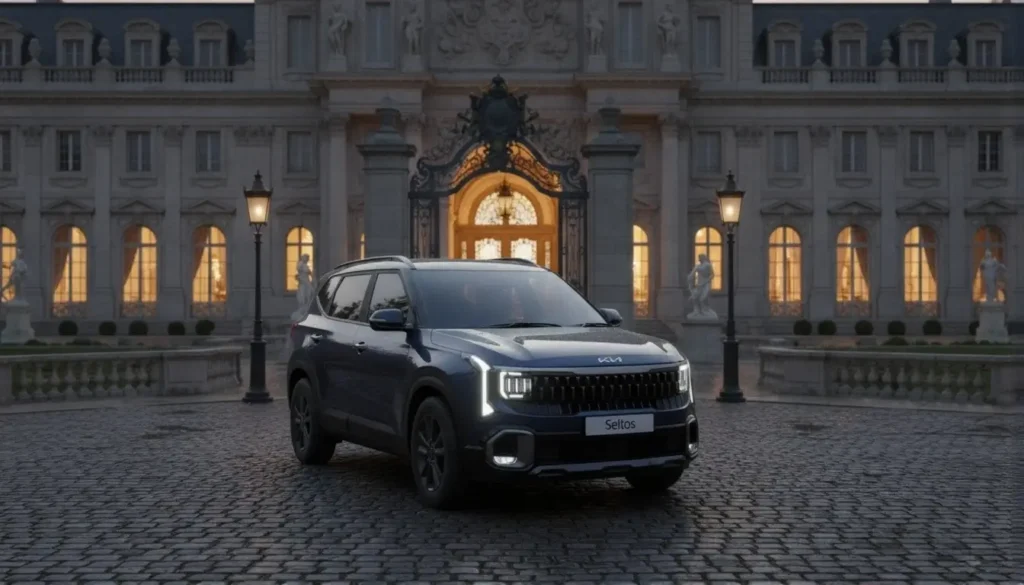
Kia has given the Seltos a comprehensive visual overhaul, drawing inspiration from the global Telluride while maintaining its own distinct identity. The front fascia now features a wider, more aggressive Digital Tiger Face grille with vertical gunmetal accents that command attention.
Square-shaped LED headlamps with Ice Cube projection technology flank the grille, while vertical Star Map LED DRLs add a futuristic signature. There’s a lightning-bolt LED element at the extreme edges that’s pure character, the kind of detail that makes the SUV recognizable even at night.
The side profile benefits from flush-type automatic door handles, a segment-first feature that improves aerodynamics while adding a premium touch. Crystal-cut 18-inch alloy wheels fill the arches nicely, and the GT-Line variants get eye-catching neon brake calipers that hint at sportiness.
At the rear, Star Map LED connected taillights stretch across the tailgate, creating a cohesive design signature with the front DRLs. The integrated rear spoiler and revised tailgate design give it a cleaner, more refined appearance.


What’s remarkable is how Kia has made the Seltos look more expensive than it is. Park it next to SUVs costing significantly more, and it holds its own visually. That perception of value extends beyond the spec sheet into something more emotional, pride of ownership.
Reason 5: Premium Interior That Rivals Luxury Segments
Slide into the driver’s seat and the first thing you’ll notice is how premium everything feels. The dashboard features soft-touch leatherette with neatly integrated 64-color ambient lighting that creates a sophisticated atmosphere after dark.
The new three-spoke flat-bottom steering wheel isn’t just for show. It’s genuinely comfortable to grip and houses all essential controls within thumb’s reach. Audio, telephony, and ADAS buttons are positioned intuitively, so you never have to hunt for functions while driving.
The 10-way power-adjustable driver’s seat with lumbar support and memory function is something you’d typically find in vehicles costing twice as much. It even features a welcome retract function that automatically moves the seat back when you open the door, making entry and exit easier.
Ventilated front seats provide relief during scorching summer months, a feature that Indian buyers will genuinely appreciate. The dual-zone automatic climate control ensures both driver and passenger can set their preferred temperature, ending the eternal AC war that plagues road trips.


Material quality throughout feels a significant step above the outgoing model. The leatherette upholstery, available in multiple color themes including Smoky Black and Hunter Green for the X-Line, adds visual interest. Physical controls are well-damped, switches operate with satisfying precision, and there’s minimal creaking or rattling over rough roads.
One detail that impressed me was the integrated center console with cupholders and an armrest. It’s ergonomically designed to actually be useful rather than just checking a box. The wireless charging pad sits in a position where your phone actually stays put, unlike some implementations where it slides around at the first corner.
Also Read: Tata Sierra 2025 vs KIA Seltos, Which SUV to Buy in India 2025
Reason 6: Powertrain Options for Every Driving Style
Kia hasn’t messed with success here, retaining the proven trio of engines from the previous generation. The lineup begins with a 1.5-liter naturally aspirated petrol producing 115 hp and 144 Nm, paired with either a 6-speed manual or CVT automatic.
For those seeking more punch, the 1.5-liter turbocharged petrol delivers 160 hp and 253 Nm. This engine can be paired with either a 6-speed intelligent manual transmission or a 7-speed dual-clutch automatic. The turbo unit transforms the Seltos into a genuinely quick SUV, capable of confident overtakes and spirited highway runs.



Diesel enthusiasts get the 1.5-liter oil-burner producing 116 hp and 250 Nm of torque. It’s available with a 6-speed manual or 6-speed torque converter automatic, the latter being particularly smooth in stop-and-go traffic.
What’s clever is how Kia has matched engines to transmissions. The CVT works well with the naturally aspirated petrol for relaxed city driving. The DCT paired with the turbo petrol delivers quick, engaging shifts for enthusiasts. The torque converter with the diesel provides effortless cruising ability.
Real-world fuel efficiency remains competitive. The naturally aspirated petrol returns around 16-18 km/l in mixed conditions, the turbo petrol manages 14-16 km/l, and the diesel stretches to 18-21 km/l depending on driving style and transmission choice.
The addition of drive modes, including Snow, Mud, and Sand traction control, expands the Seltos’s versatility. While it’s not a hardcore off-roader, these modes provide confidence on unpaved roads, beach drives, or light trail excursions that Indian families occasionally encounter.
Reason 7: Unbeatable Value Proposition and Pricing Strategy
Here’s where Kia delivers the knockout punch. With an expected starting price of ₹11.5 lakh and topping out around ₹21 lakh (ex-showroom), the 2026 Kia Seltos undercuts several rivals while offering more features.
Popular Article
Let’s break down what you’re getting. At the mid-spec HTX level, you receive ventilated seats, panoramic sunroof, wireless charging, 360-degree camera, 64-color ambient lighting, and connected car technology. Many competitors charge significantly more for similar equipment levels.
The top-spec GTX and X-Line variants load on Level 2 ADAS, Bose audio, powered driver’s seat with memory, dual-pane sunroof, and premium upholstery. Even at the expected ₹21 lakh price point, you’d struggle to find a rival offering this comprehensive feature set.
Kia’s warranty and service packages add further value. The standard warranty is competitive, and service costs are reasonable for the segment. Resale values of the previous Seltos have held up well, suggesting the new model should retain value better than some alternatives.
The booking amount is set at just ₹25,000, making it accessible for serious buyers to secure their slot. Deliveries are expected to commence in mid-January 2026, meaning a minimal waiting period for early bookers.
When you calculate cost per feature, ownership expenses, and expected resale value, the 2026 Kia Seltos emerges as perhaps the smartest buy in its segment. You’re not sacrificing anything to get a good deal, you’re getting more while paying less.
How Does the 2026 Kia Seltos Stack Up Against Rivals?
| Feature | Kia Seltos 2026 | Hyundai Creta | Maruti Grand Vitara | Honda Elevate | Tata Sierra |
|---|---|---|---|---|---|
| Length | 4,460 mm | 4,330 mm | 4,345 mm | 4,312 mm | 4,450 mm |
| Wheelbase | 2,710 mm | 2,610 mm | 2,600 mm | 2,650 mm | 2,750 mm |
| ADAS Features | 21 (Level 2) | 19 (Level 2) | 6 features | Limited | 15+ features |
| Display Setup | 30″ Trinity (12.3+12.3+5) | Dual 10.25″ | 9″ single | 10.25″ single | Dual 12.3″ |
| Turbo Petrol Power | 160 hp | 160 hp | 150 hp | 121 hp | 170 hp (est) |
| Diesel Option | Yes (116 hp) | Yes (116 hp) | No | No | Yes (170 hp est) |
| Sunroof | Dual-pane panoramic | Single-pane | Single-pane | Single-pane | Dual-pane |
| Audio System | 8-spkr Bose | 8-spkr Bose | 9-spkr Arkamys | Not specified | Harman (est) |
| Ventilated Seats | Front | Front | Front | Not available | Front & Rear (est) |
| Expected Price | ₹11.5-21L | ₹11-20.5L | ₹10.7-19.9L | ₹11.9-16.9L | ₹12.5-22L (est) |
Analysis: The Seltos clearly leads in overall dimensions, ADAS capability, and display technology. While the Creta remains its closest competitor, the Seltos edges ahead with more ADAS features and a larger footprint. The Grand Vitara offers strong value but lacks diesel and advanced safety tech. The Elevate falls behind in features and power. The upcoming Sierra could be a serious challenger, but it remains unproven.
What Does the Future Hold for the Kia Seltos?
Looking ahead, the automotive landscape suggests several potential developments for the Seltos lineup. An electric variant is almost certainly in Kia’s roadmap, likely arriving within 18-24 months as the company expands its EV portfolio in India.
The global trend toward hybrid powertrains could see a mild-hybrid or strong-hybrid version, possibly utilizing technology from Kia’s partnership with parent Hyundai. Such a variant would target buyers seeking improved fuel efficiency without going fully electric.
Software updates via OTA capability mean the Seltos will continue evolving after purchase. Expect enhanced ADAS calibration, new infotainment features, and potentially additional connected car services as Kia refines the system based on user feedback.
Special editions are likely, following Kia’s pattern of introducing X-Line, Anniversary, and limited variants to keep the lineup fresh between generation changes. These could feature unique styling elements, exclusive color combinations, or curated feature packages.
The competitive pressure from upcoming rivals like the refreshed Tata Sierra and potential new entrants will push Kia to continuously improve. Mid-cycle updates might bring enhanced powertrain options, additional tech features, or expanded trim levels to maintain its competitive edge.
Market positioning suggests Kia will defend its territory aggressively. The brand has invested heavily in India, both in manufacturing and customer experience. The Seltos remains their volume driver, meaning any threats will be met with strategic pricing adjustments or value additions.
Also Read: Tata Sierra 2025 Price: 7 Game-Changing Reasons Why This Revival SUV Matters
Real-World Ownership: What Buyers Should Expect
Owning a 2026 Kia Seltos means joining a well-established ecosystem. Kia’s service network has expanded significantly since their 2019 India entry, with service centers now present in most tier-1, tier-2, and many tier-3 cities.
Service costs for the previous generation averaged ₹4,000-7,000 for routine maintenance, competitive for the segment. The new model should maintain similar costs, with added complexity from ADAS sensors potentially increasing specialized service expenses slightly.
Did You Know?
The Kia Seltos was India’s fastest SUV to reach 300,000 sales, achieving the milestone in just 33 months. The nameplate has consistently ranked among India’s top-selling SUVs, often challenging segment leader Hyundai Creta for the number one position.
Fuel efficiency in real-world conditions will vary by engine choice and driving style. City dwellers with heavy traffic should expect 12-14 km/l from petrol variants, 14-16 km/l from diesel. Highway-focused drivers can see 16-18 km/l (petrol) and 19-22 km/l (diesel) on relaxed cruises.
Insurance costs will be moderate, though comprehensive policies for top variants with advanced tech will command premiums. Annual insurance for mid-spec variants should range from ₹25,000 to ₹35,000, while top trims might see ₹40,000-50,000 depending on city, driver profile, and no-claim bonus.
Resale value of the first-generation Seltos has held up remarkably well, with 3-year-old models retaining 55-60% of original value. The new generation’s enhanced feature set and reputation should maintain or improve these figures, making it a sensible long-term investment.
Common concerns from prospective buyers include ADAS reliability in Indian conditions, DCT longevity, and service quality consistency across locations. Kia has addressed the first by tuning systems specifically for India. The DCT uses proven technology from Hyundai’s parts bin. Service quality varies by dealer, so choosing a reputable outlet matters.
Frequently Asked Questions About the 2026 Kia Seltos
When can I book the 2026 Kia Seltos and what’s the booking amount?
Bookings opened on December 11, 2025, at 12 AM with a token amount of ₹25,000. You can book at any authorized Kia dealership or through their official website. Prices will be announced on January 2, 2026, with deliveries commencing mid-January 2026.
Which variant of the 2026 Kia Seltos offers the best value?
The HTX variant typically offers the best balance of features and pricing. It includes ventilated seats, panoramic sunroof, 360-degree camera, wireless charging, and connected tech without the premium of top variants. For ADAS enthusiasts, the GTX justifies its higher price with Level 2 safety features.
How does the 2026 Kia Seltos compare to the Hyundai Creta in terms of features?
The Seltos edges ahead with 21 ADAS features versus Creta’s 19, a larger 4,460mm body, and the Trinity Panoramic Display setup. Both share similar engines and many features, but the Seltos offers slightly more tech and space. Pricing will be the ultimate differentiator when announced.
What are the engine and transmission options available?
Three engines are available: 1.5L petrol (115hp) with 6MT or CVT, 1.5L turbo-petrol (160hp) with 6iMT or 7DCT, and 1.5L diesel (116hp) with 6MT or 6AT. Choose based on your driving needs: petrol for city, turbo-petrol for performance, diesel for highway economy.
Is Level 2 ADAS worth paying extra for in Indian driving conditions?
Absolutely. Features like Smart Cruise Control with Stop-and-Go reduce highway fatigue significantly. Front Collision Avoidance and Lane Keep Assist provide genuine safety benefits on expressways and long drives. Kia has tuned the system for Indian traffic, making it helpful rather than intrusive.
What is the expected on-road price and which cities will have the highest costs?
Expected ex-showroom prices range from ₹11.5-21 lakh. On-road prices will vary significantly by state due to registration, insurance, and local taxes. Metropolitan cities like Mumbai and Bangalore typically see a 12-15% premium over ex-showroom prices. Exact figures will be clearer after the January 2nd price announcement.
Final Verdict: Is the 2026 Kia Seltos Worth Your Money?
After analyzing every aspect of the 2026 Kia Seltos, from its segment-leading dimensions to its comprehensive ADAS suite, the answer is a resounding yes for most buyers in this segment.
Kia has successfully addressed nearly every criticism of the previous generation while amplifying its strengths. The result is an SUV that genuinely feels like it’s punching above its weight class. You’re getting premium SUV features at midsize SUV pricing, which is exactly what value-conscious Indian buyers demand.
The combination of space, technology, safety, and expected pricing creates a compelling proposition that rivals will struggle to match. Whether you’re a tech enthusiast who values the Trinity Panoramic Display and Level 2 ADAS, a family buyer prioritizing space and safety, or a value seeker wanting maximum features per rupee, the Seltos delivers.
That said, it’s not perfect. The diesel engine, while efficient, lacks the refinement of some European rivals. The DCT transmission, though improved, can feel jerky in heavy traffic if you’re not gentle with inputs. And while build quality has improved, it doesn’t quite match the solidity of vehicles like the Honda Elevate in this regard.
But these are minor quibbles in the larger picture. The 2026 Kia Seltos represents a significant evolution in what buyers can expect from a midsize SUV. It raises the bar for the entire segment, forcing competitors to either match its feature set or undercut on price, both of which benefit consumers.
For buyers torn between waiting for the Sierra or booking a Creta, the Seltos splits the difference perfectly. It offers the space and modern design you want, the technology and safety you need, and the value proposition that makes financial sense.
If you’re in the market for a midsize SUV and your budget stretches to ₹15-20 lakh on-road, the 2026 Kia Seltos deserves serious consideration. Book your test drive, experience the Trinity Display and ADAS features firsthand, and make an informed decision.
But here’s my question for you: With so many impressive features packed into the 2026 Seltos, which one matters most for your daily driving needs? Is it the segment-leading space, the advanced ADAS safety net, or the premium interior experience? Drop your thoughts in the comments below. I’d love to hear what feature would seal the deal for you.